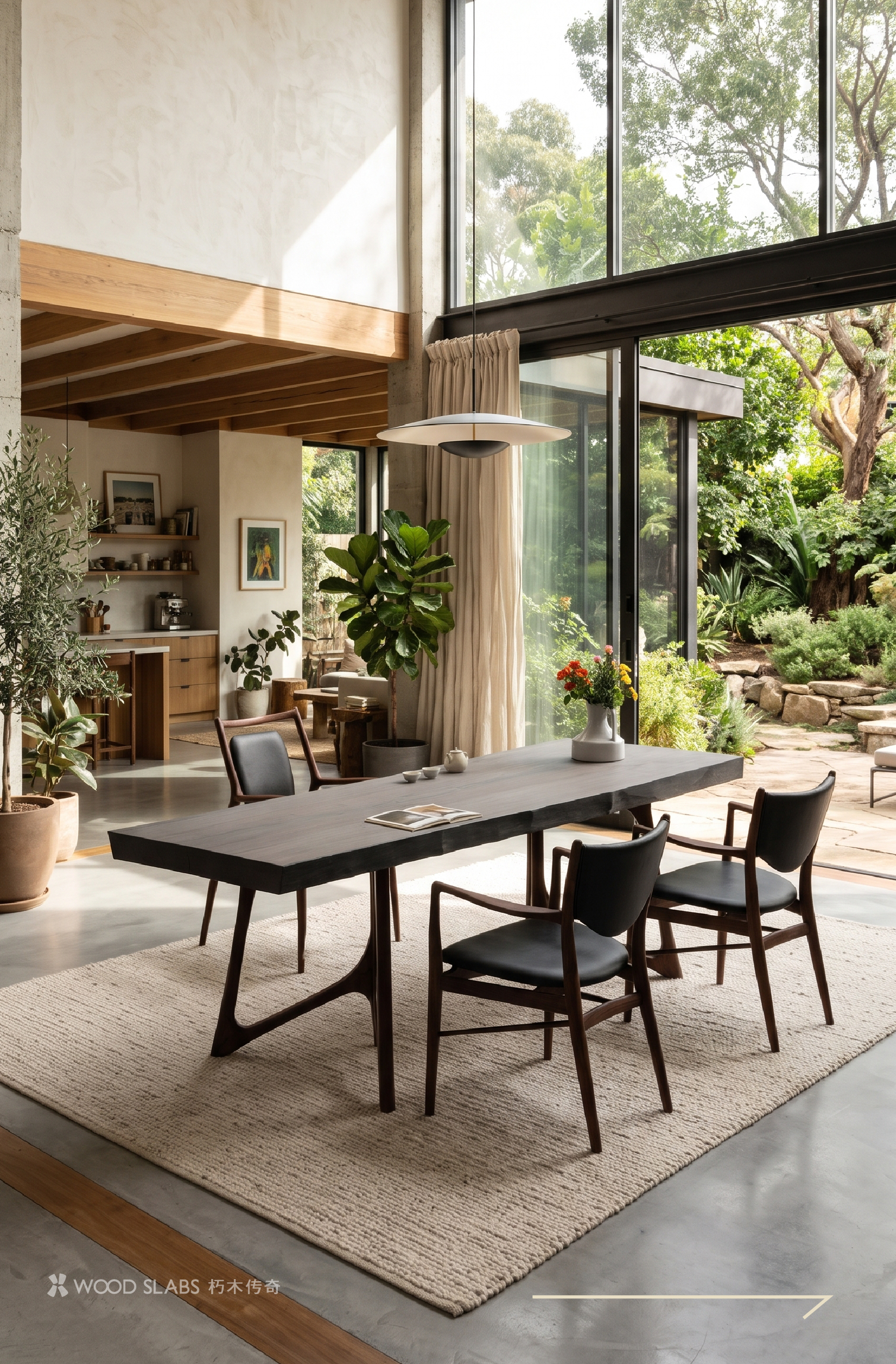
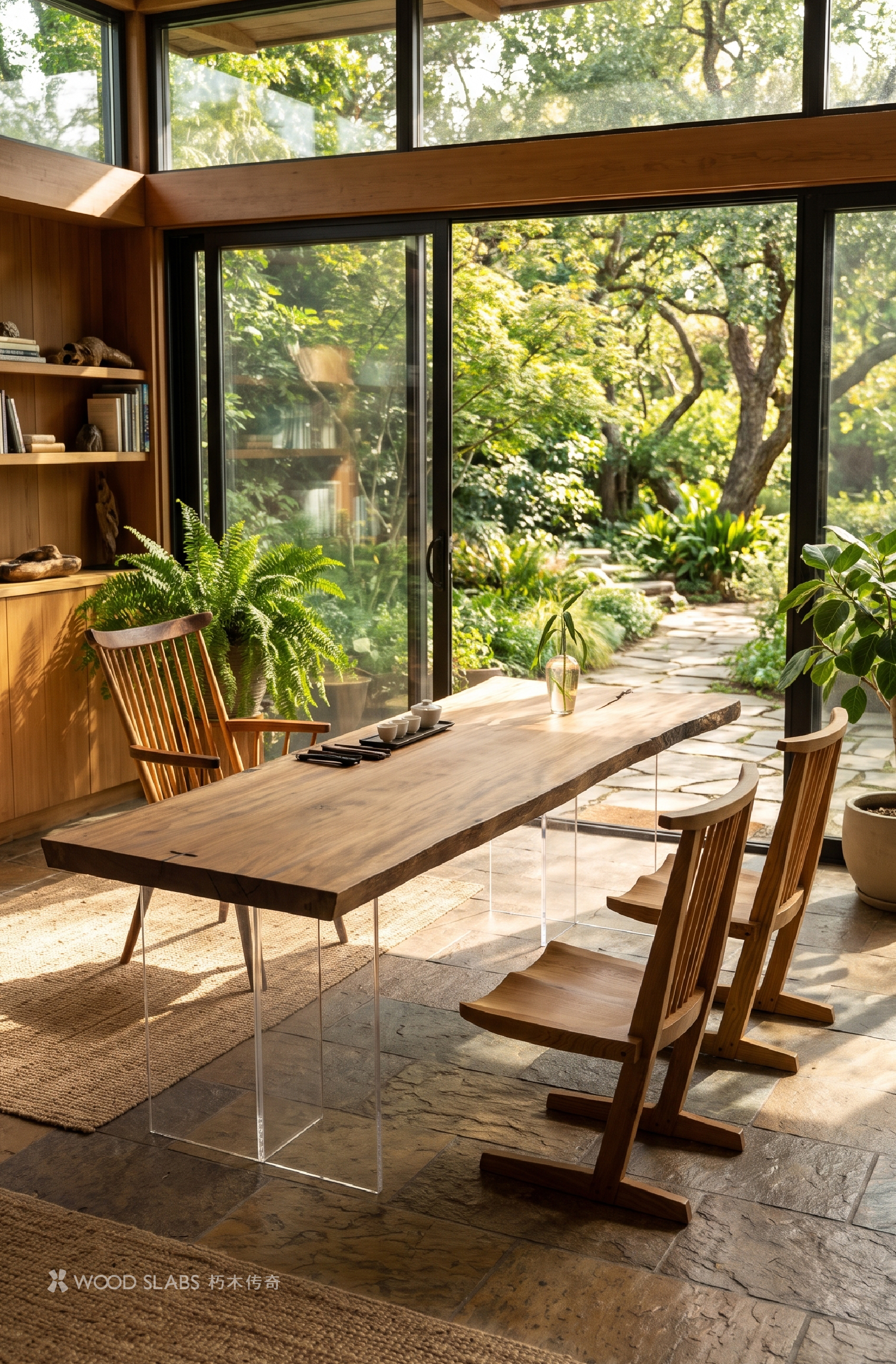
朽木传奇|12种小众稀有木材,从自然到空间表达
从生长之地到生活之器
发布于:2026/10/29
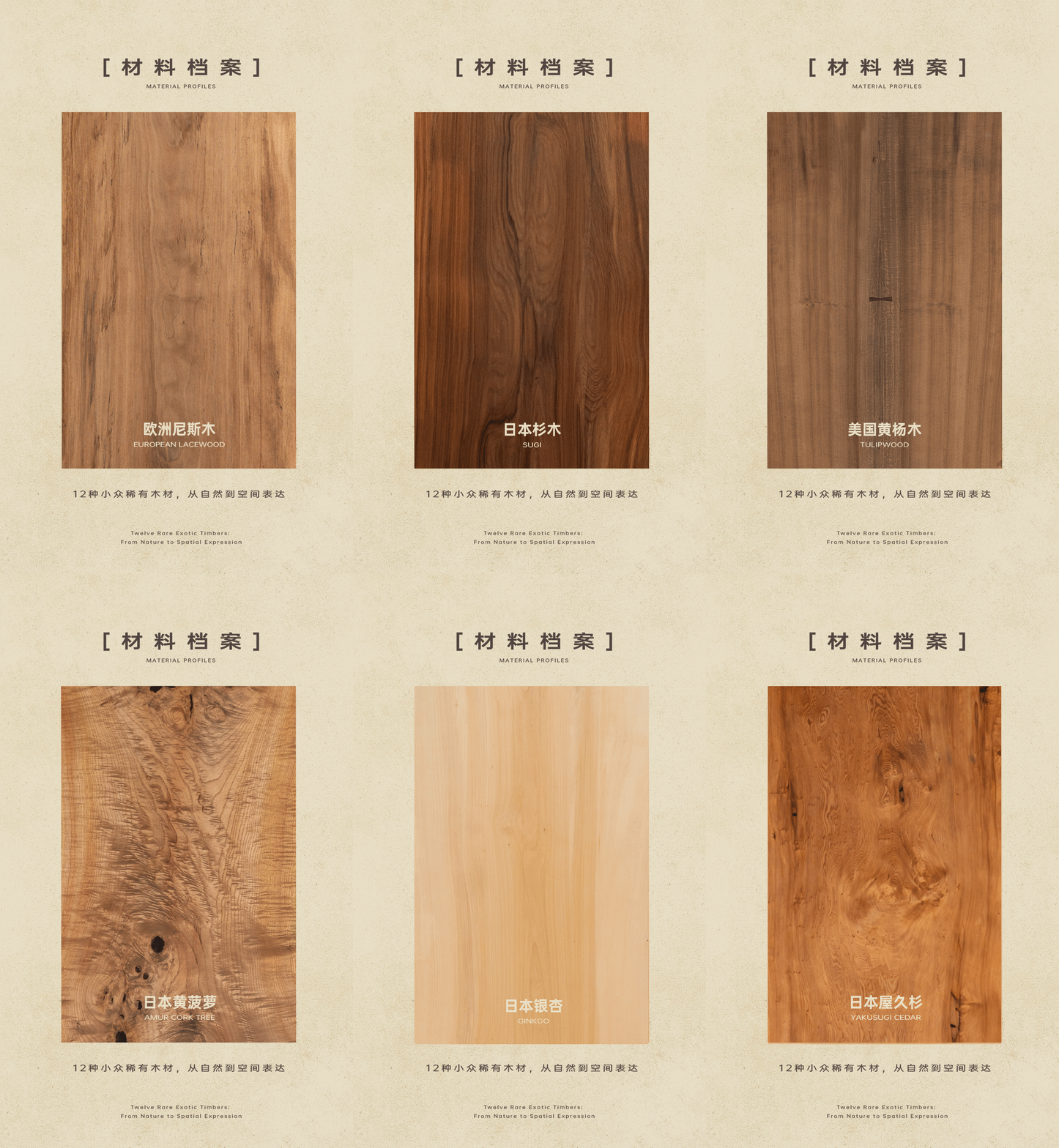
木材的世界,远不止常见的几种。
The world of wood extends far beyond the few familiar species.
相比北美黑胡桃木、法国白橡木、日本榉木等常见材种,日本柞木、西班牙雪松、屋久杉、老挝寮桧等木材,少有机会进入大众视野。它们来自不同的地域,拥有着各自独特的生长背景,也在色泽、纹理与材性上呈现出不同的面貌。
Compared with familiar woods such as American black walnut, French white oak, and Japanese beech, Japanese oak, Spanish cedar, Yakusugi cedar, and Cypress from Laos rarely enter the public eye. Originating in different regions, each has its own distinctive growing conditions and presents a different character in color, grain, and material properties.
01
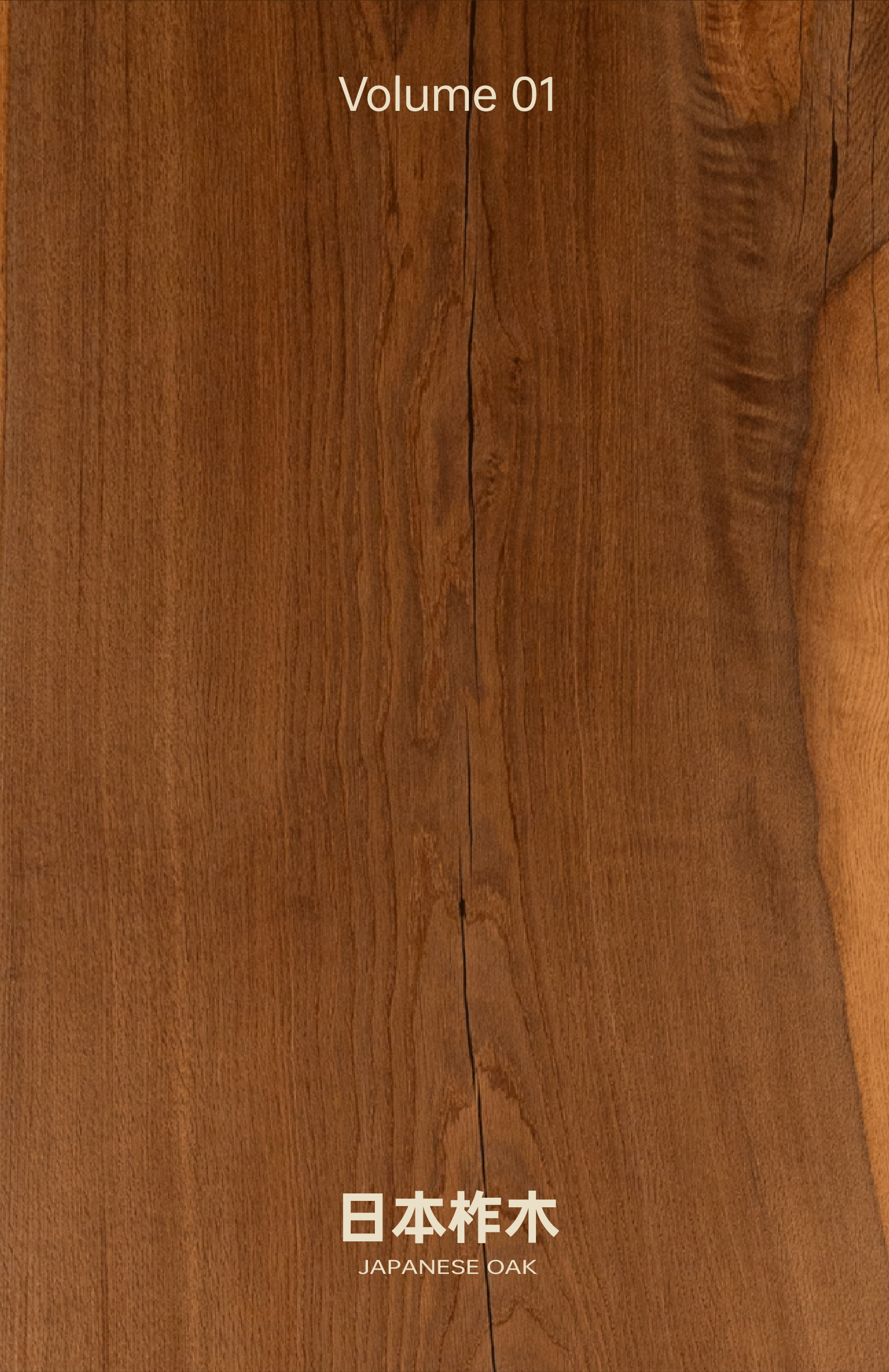
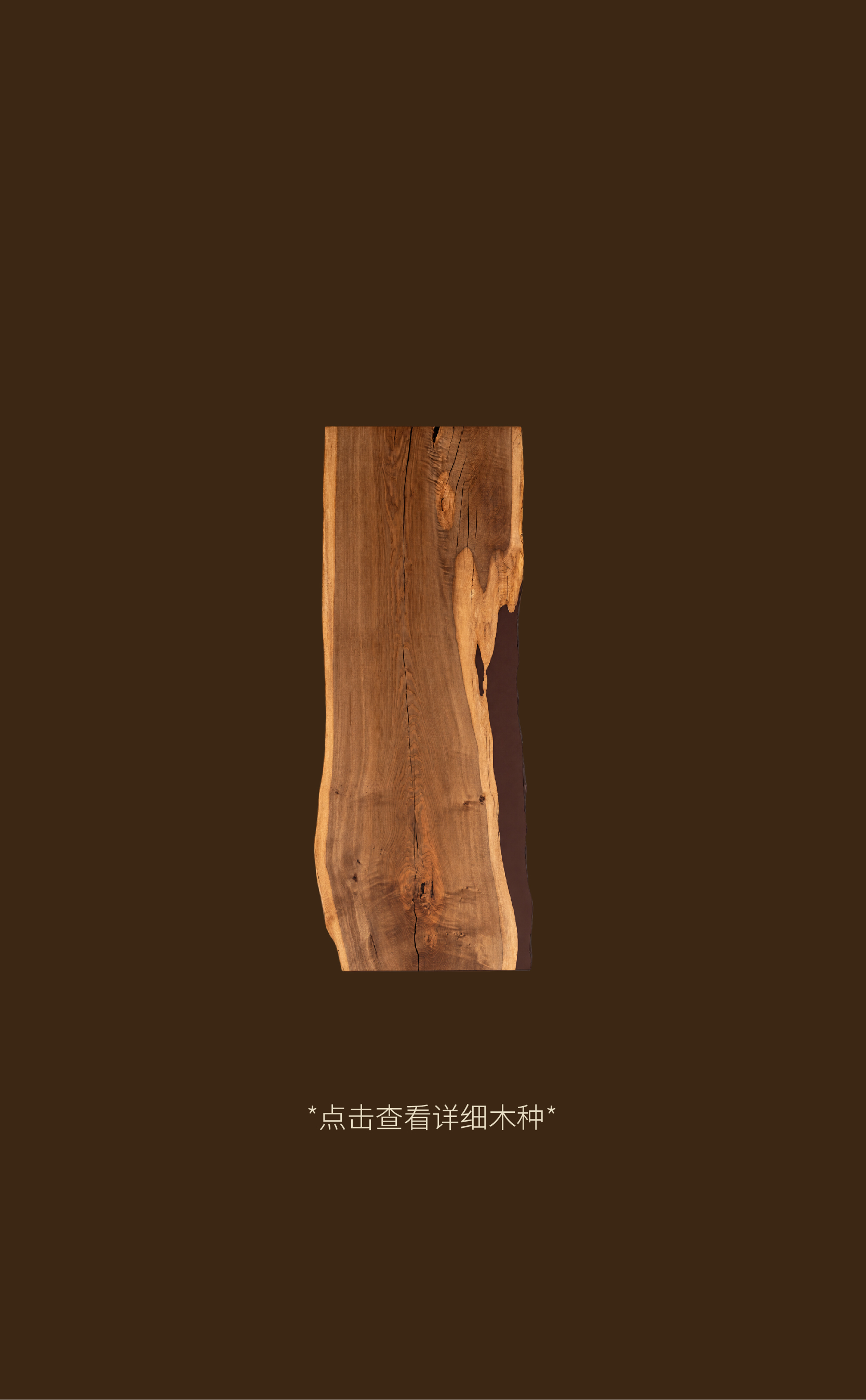
日本柞木
Japanese oak
「基本性质」
Basic Properties
日本柞木、楢木与白橡在日本木材语境中常有交叠,常见来源为水楢、小楢等栎属树种,主要分布于北海道至本州的温带地区。材质硬实,承重与耐磨性能良好;底色由浅米黄、灰黄过渡至灰褐色,弦切面形成舒展的山形纹,径切面则可能出现银色髓斑。它的纹理有秩序,却不显得机械,使用和氧化会令颜色逐渐加深。
In Japanese timber terminology, Japanese oak, nara, and white oak often overlap; the wood commonly comes from Quercus species such as mizunara and konara, which are distributed mainly across the temperate regions from Hokkaido to Honshu. Hard and substantial, it offers good load-bearing capacity and wear resistance. Its base color ranges from pale beige and grayish yellow to grayish brown. Tangential cuts reveal broad cathedral grain, while radial cuts may display silvery medullary rays. The grain is orderly without feeling mechanical, and use and oxidation gradually deepen the color.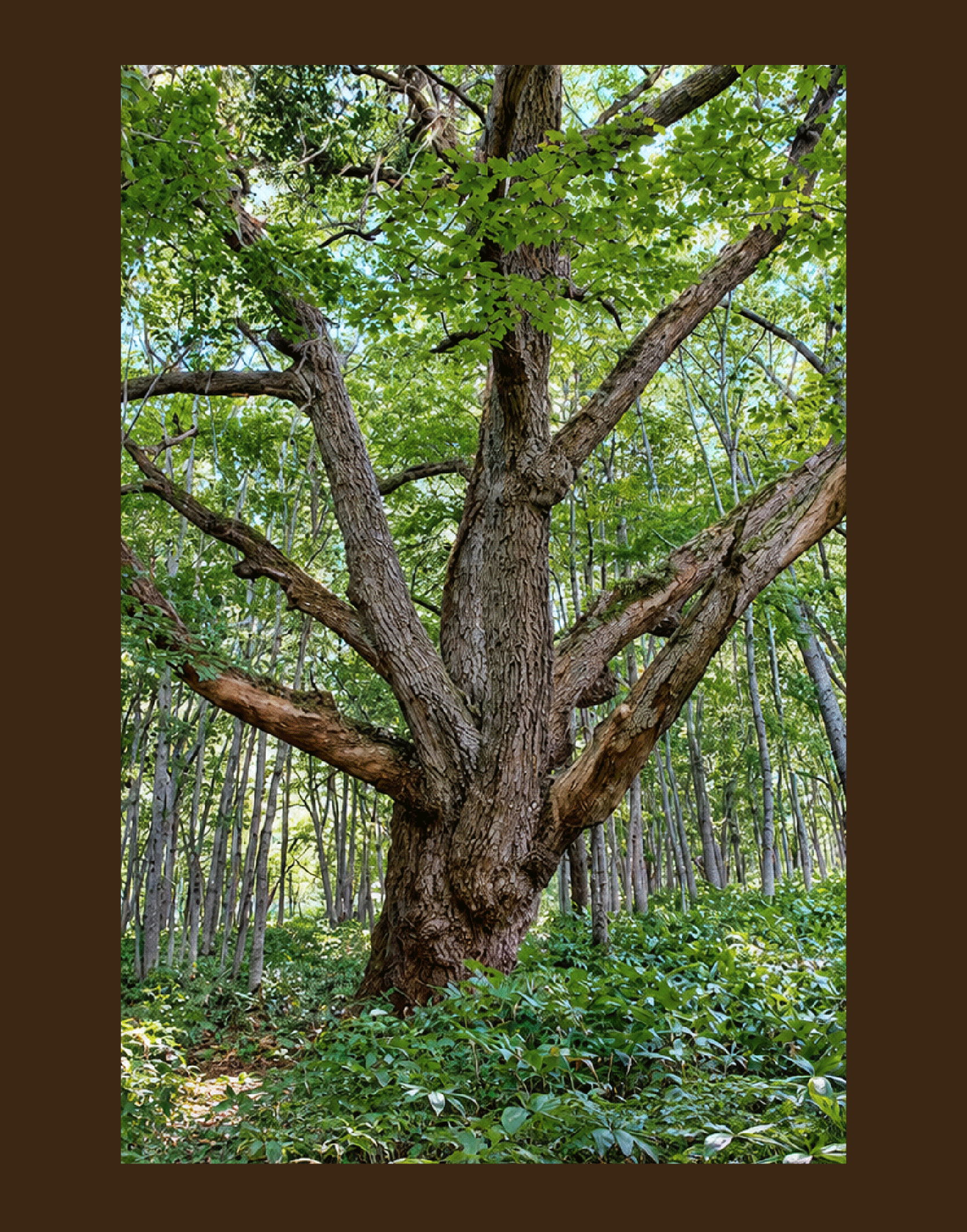
「应用与价值」
Applications and Value
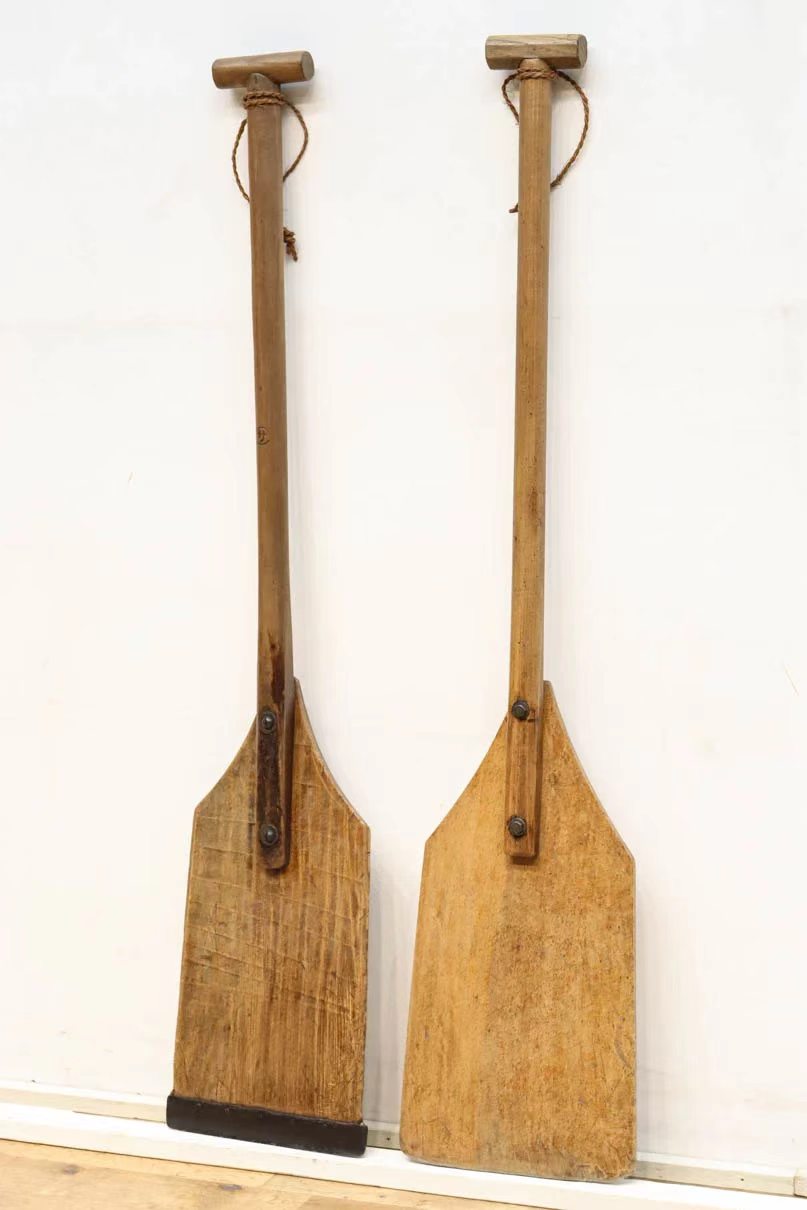
柞木在日本长期用于建筑构件、家具、地板、雪橇及生活器具。优质大径材需要漫长生长,制材时还需避开内裂、节疤与变形,能够完整保留天然边缘与连贯纹理的大幅板材尤为难得,其价值不仅在于稀少,更在于承载了日本木作文化对坚固、节制与长久使用的理解。
Japanese oak has long been used in Japan for architectural components, furniture, flooring, sleds, and household implements. High-quality, large-diameter timber takes many years to grow, and milling must avoid internal checks, knots, and deformation. Wide slabs that retain their natural edges and continuous grain are especially difficult to obtain. Their value lies not only in scarcity, but also in embodying the Japanese woodworking tradition’s understanding of strength, restraint, and enduring use.
「现代空间表现」
Expression in Contemporary Spaces
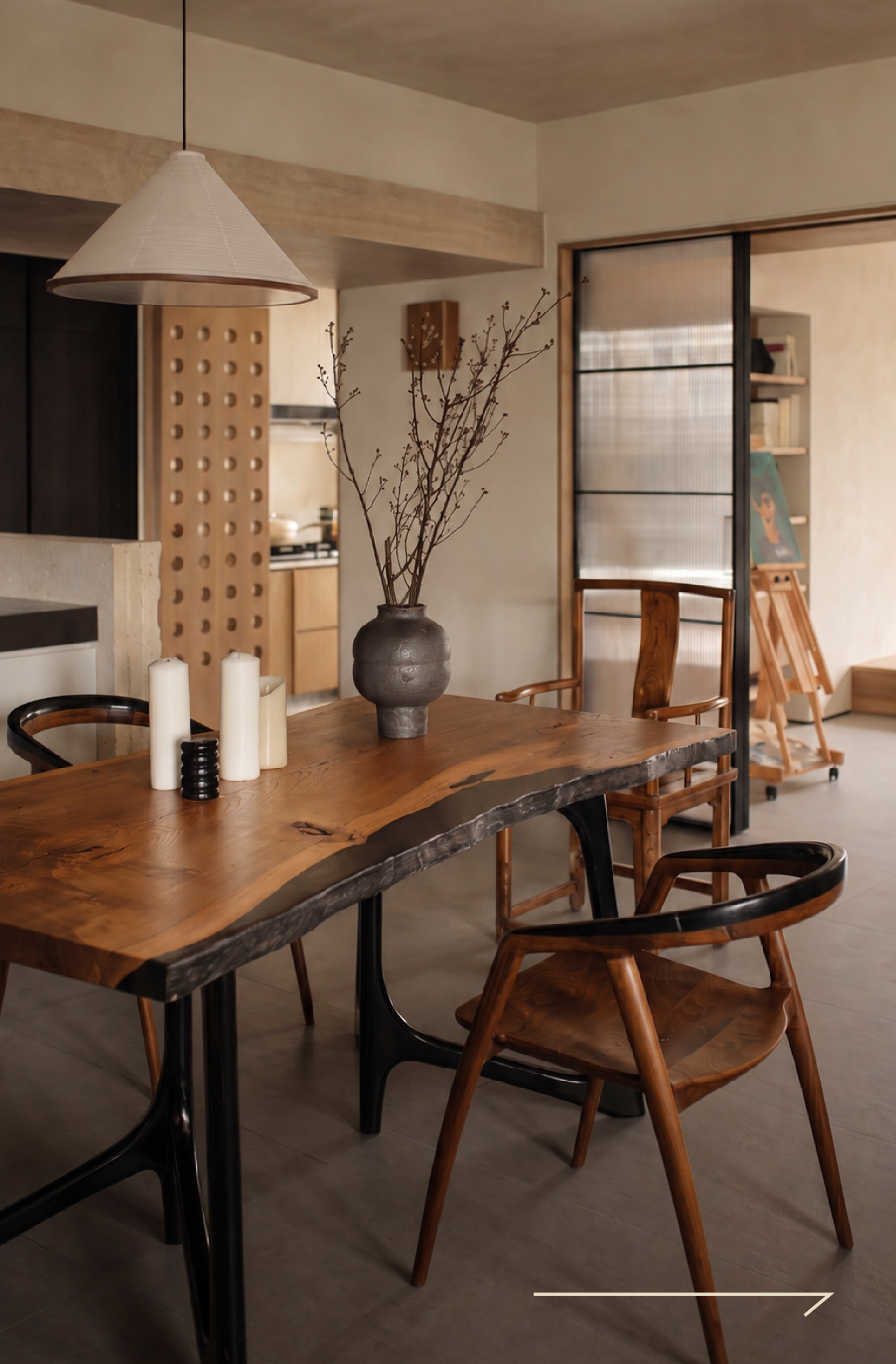
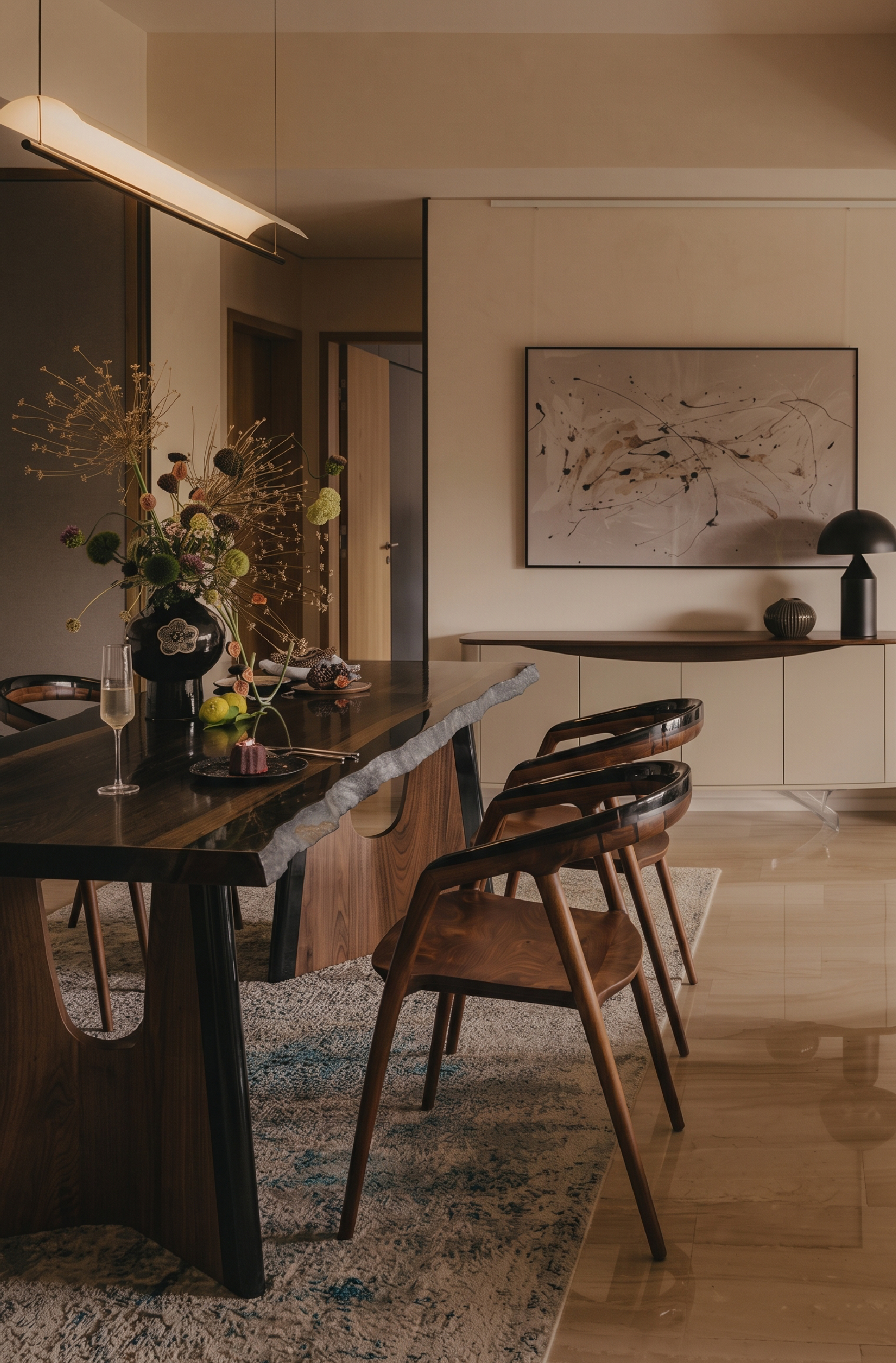
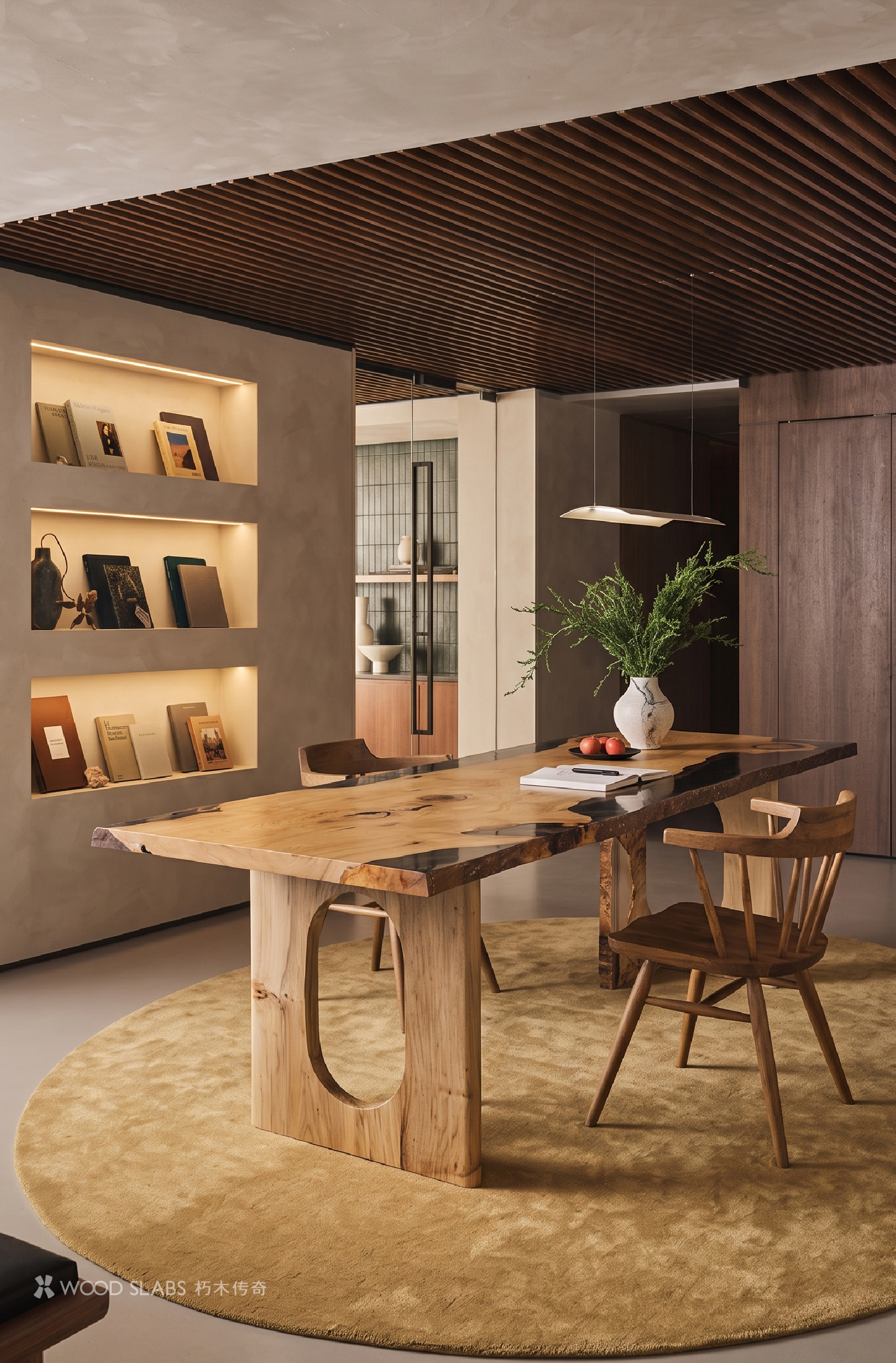
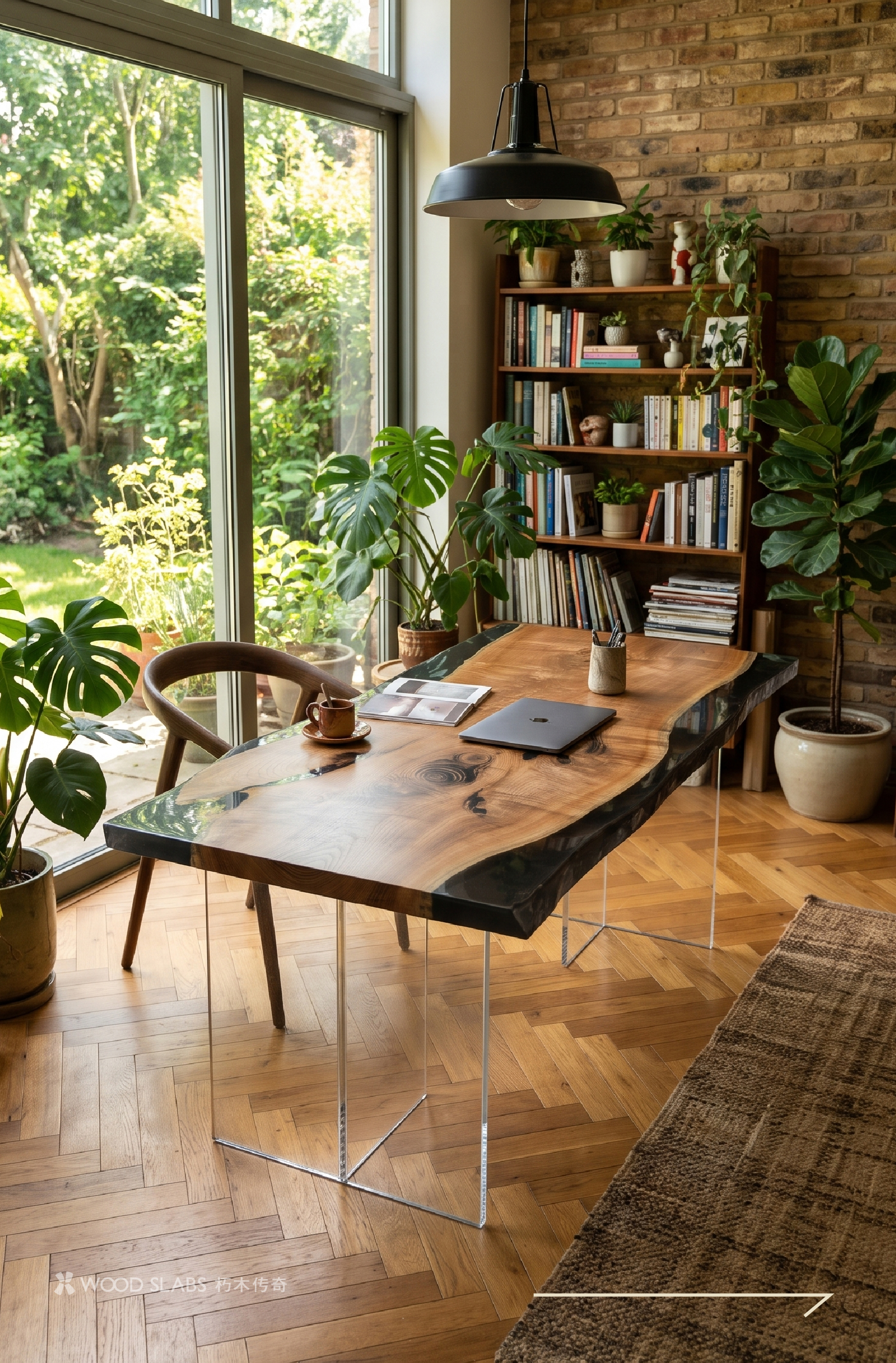
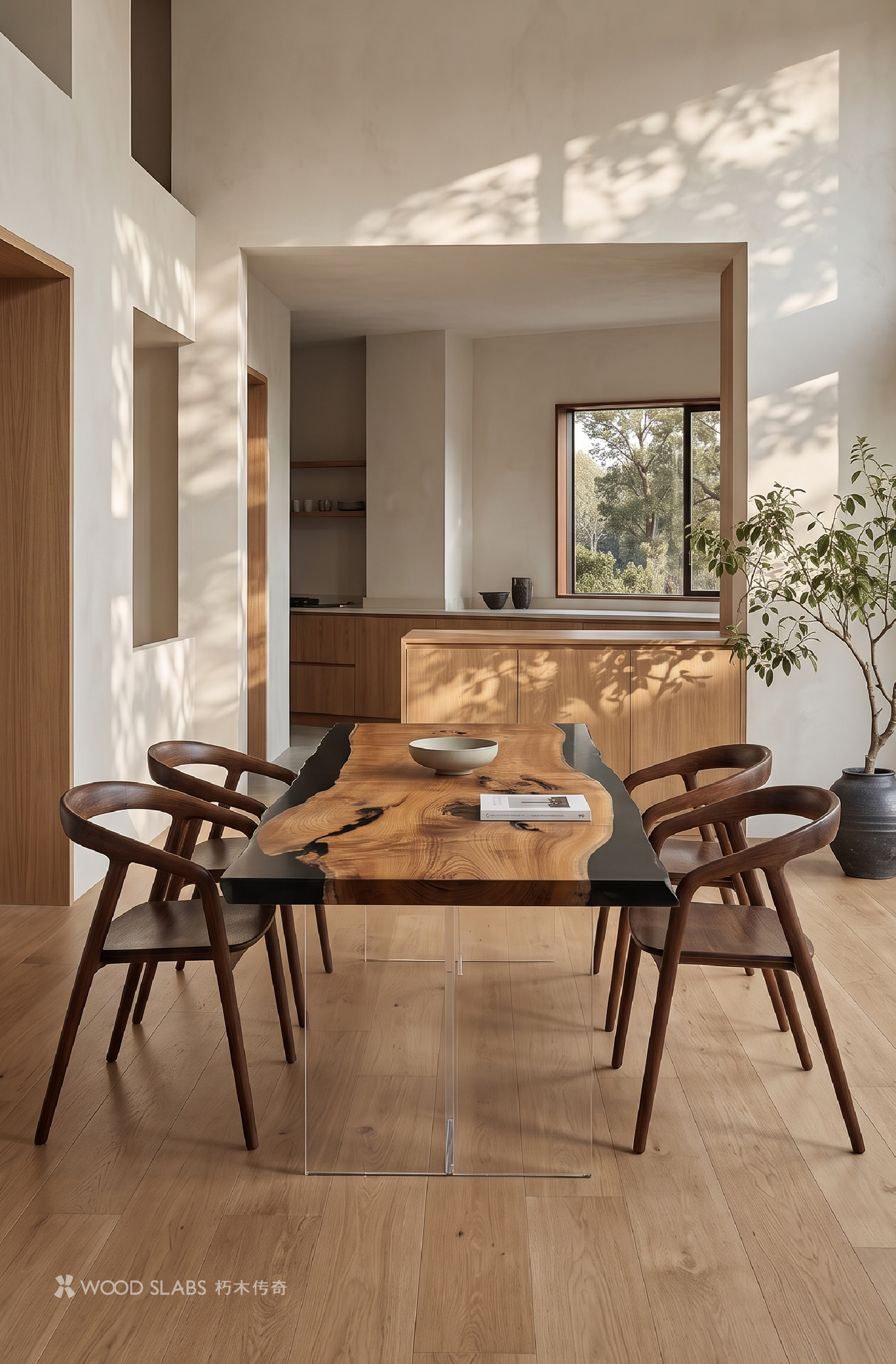
日本柞木有一种克制而清朗的力量。作为餐桌,温厚而有分量;作为茶桌,质朴安静,适合留白与独处;作为书桌,则多了一份稳定、专注的秩序感。它可以轻松融入现代极简、日式侘寂与自然主义空间,无需繁复陈设,木材本身的轮廓与肌理,便足以成为空间的视觉中心。
Japanese oak has a restrained, lucid strength. As a dining table, it feels warm and substantial; as a tea table, simple and quiet, it suits open space and solitude; as a desk, it brings a sense of stability, focus, and order. It slips easily into modern minimalist, Japanese wabi-sabi, and naturalist interiors. With no need for elaborate decoration, the wood’s own outline and texture are enough to become the visual focus of the space.
 02
西班牙雪松
Spanish cedar
「基本性质」
Basic Properties
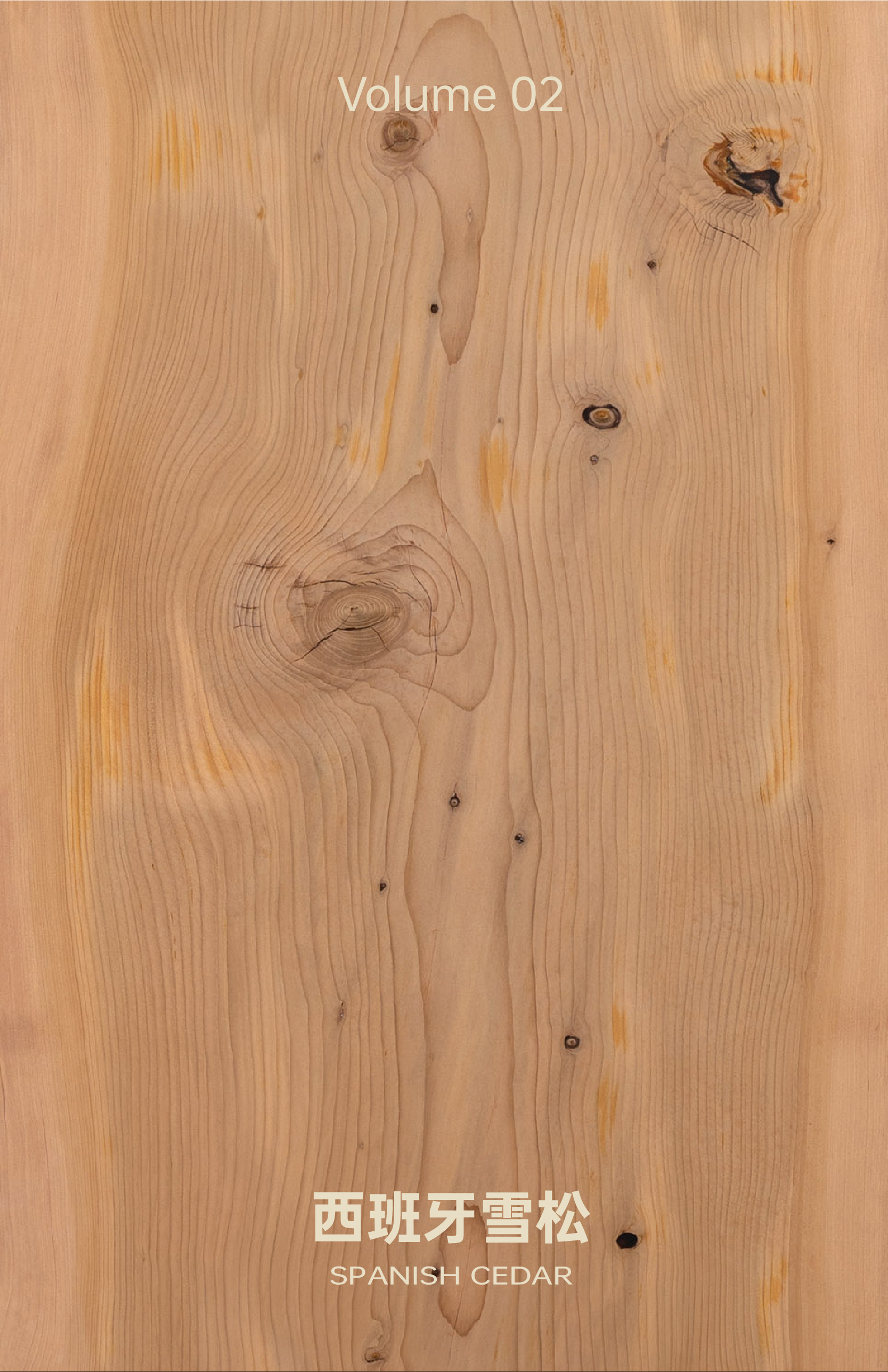
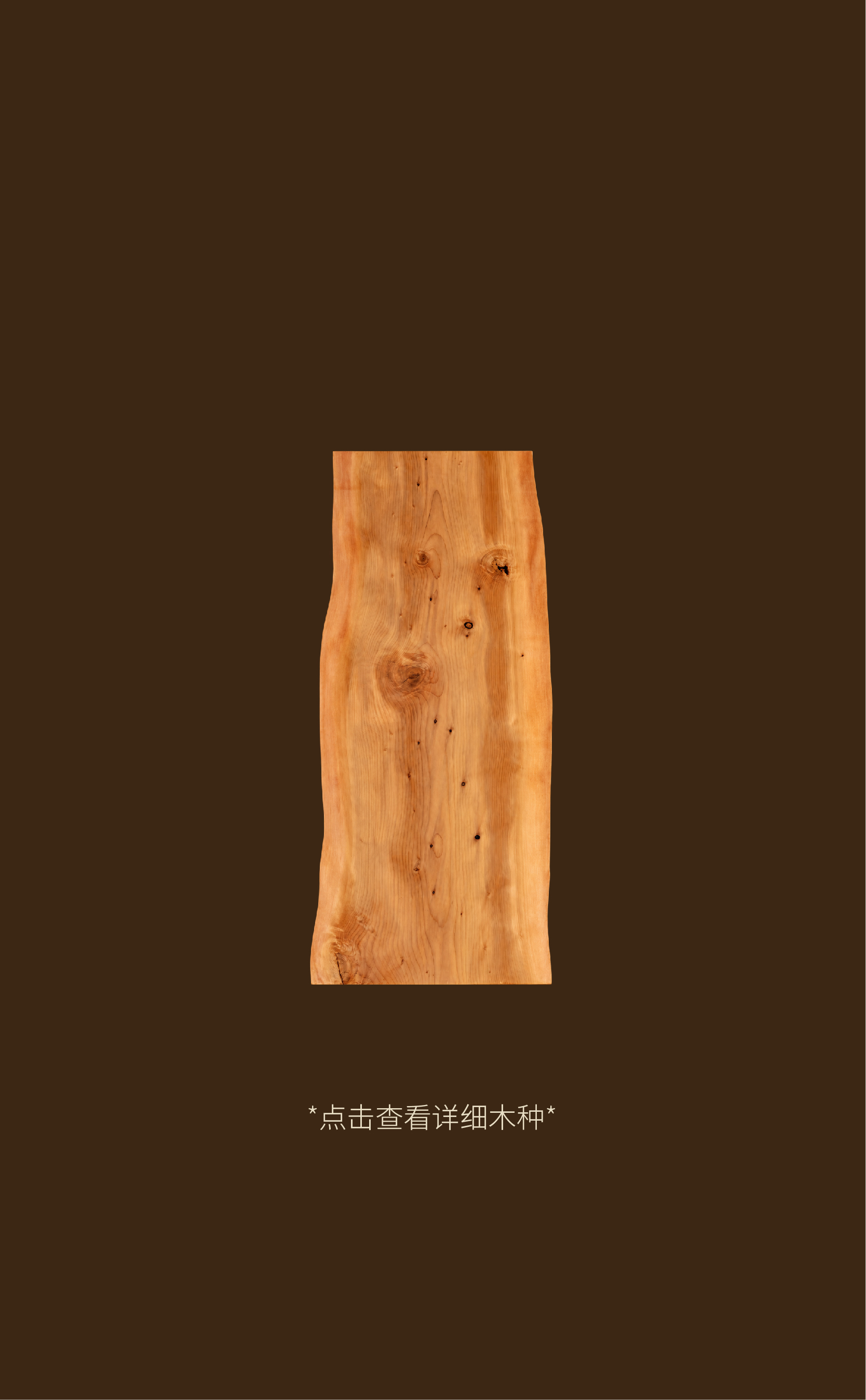
西班牙雪松质地轻至中等,带有温润而清晰的天然香气,具备一定的防虫性能。色泽由浅粉褐色至红棕色,随着时间推移逐渐加深,呈现温暖沉稳的视觉效果。纹理以平直线条为主,局部可见交错或波状变化,板面偶见散布着的深色节疤与细小木结,为流畅的纹理增添变化
Spanish cedar is light to medium in weight and carries a warm, distinct natural aroma, along with a degree of insect resistance. Its color ranges from pale pinkish brown to reddish brown and gradually deepens over time, creating a warm and composed visual effect. The grain is predominantly straight, with occasional interlocked or wavy variations. Scattered dark knots and small pin knots sometimes appear across the board, adding variation to the flowing grain.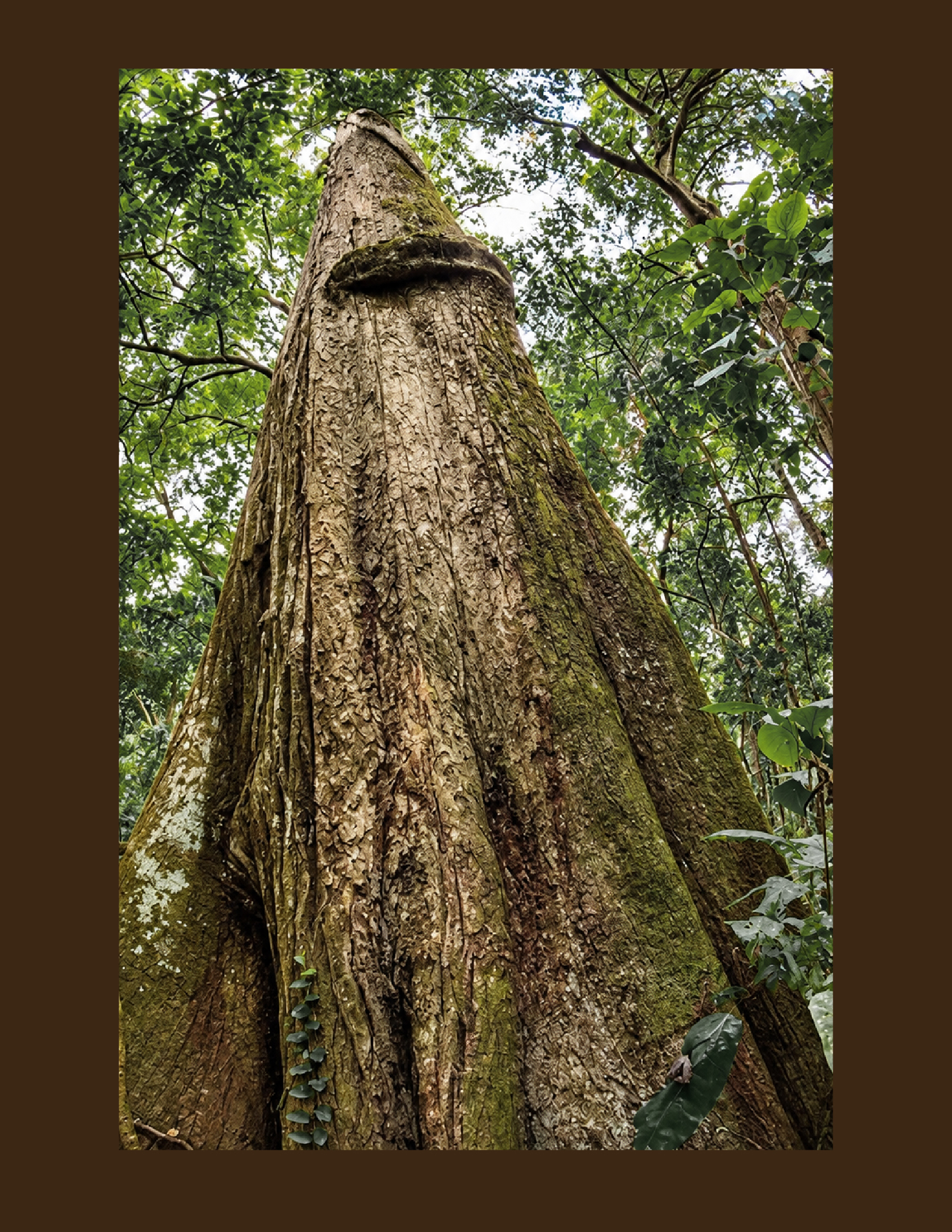
「应用与价值」
Applications and Value
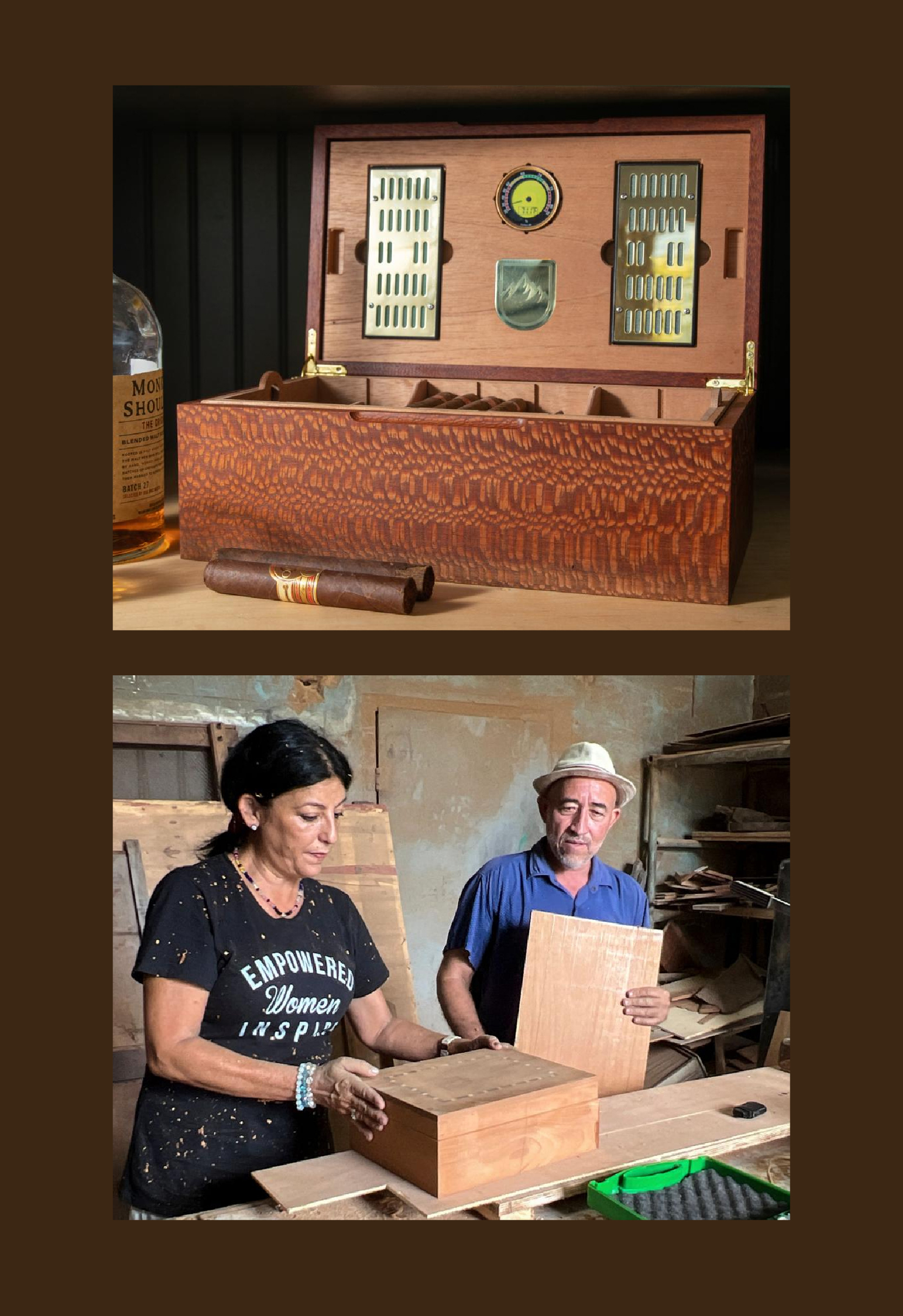
自美洲殖民时期起,西班牙雪松便是当地重要用材;十九世纪随着雪茄贸易兴盛,大量出口至欧美制作雪茄盒,香气与吸湿表现使它成为保湿柜的经典内衬;它也用于衣箱、家具、室内木作、舟船与乐器。长期采伐令优质野生资源减少,来源合规、色泽稳定的大径整板因此更显难得。
Spanish cedar has been an important local timber since the colonial era in the Americas. In the nineteenth century, the flourishing cigar trade led to large exports to Europe and North America for cigar-box production; its aroma and moisture-regulating performance made it the classic lining for humidors. It has also been used for chests, furniture, interior joinery, boats, and musical instruments. Prolonged harvesting has reduced high-quality wild resources, making legally sourced, large-diameter slabs with stable color increasingly difficult to find.
「现代空间表现」
Expression in Contemporary Spaces
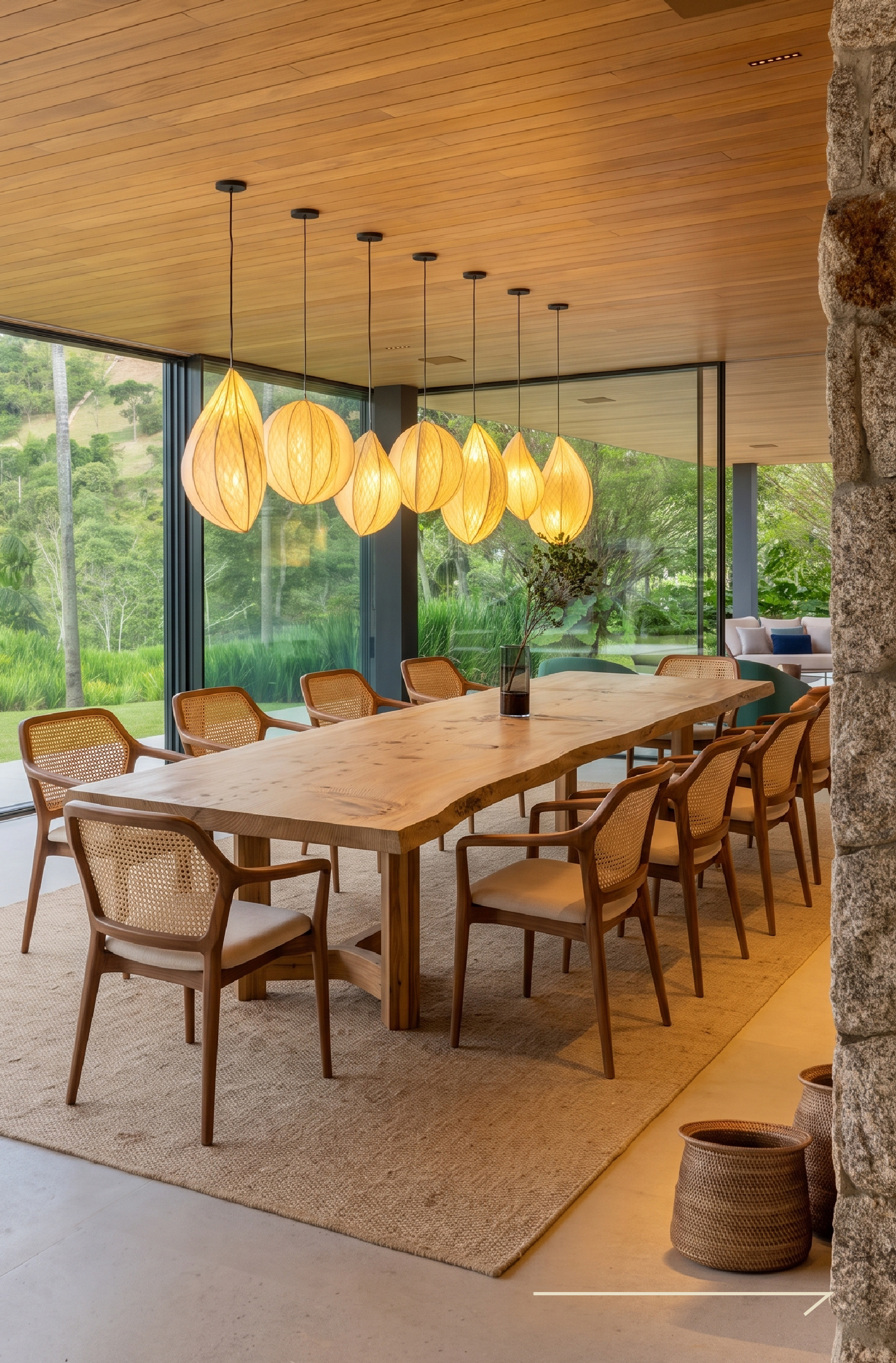
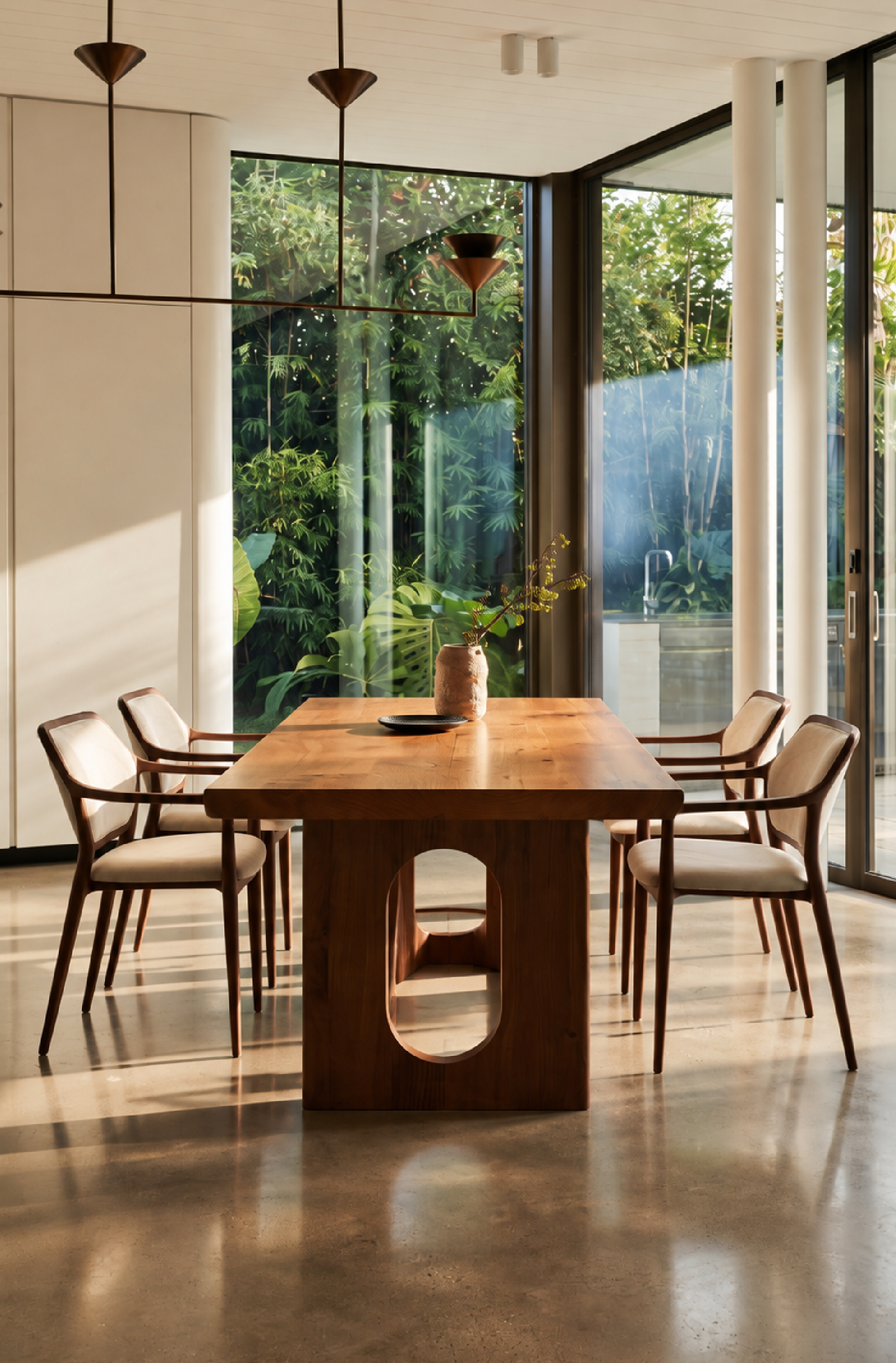
西班牙雪松温暖的橙褐色调,为空间注入自然明亮的气息。舒展的木纹与深浅不一的色彩变化,让大板在简洁的现代空间中形成视觉焦点,也为冷静的空间增添几分温润与松弛。搭配简约的家具与中性色软装,既保留原木的质朴感,也让整体氛围更显轻松、自然。
The warm orange-brown tones of Spanish cedar bring a naturally bright quality to a space. Its expansive grain and varied shades make a slab a focal point in a clean modern interior while adding warmth and ease to an otherwise restrained setting. Paired with simple furniture and neutral textiles, it preserves the honest character of natural wood and gives the overall atmosphere a more relaxed, organic feel.
03
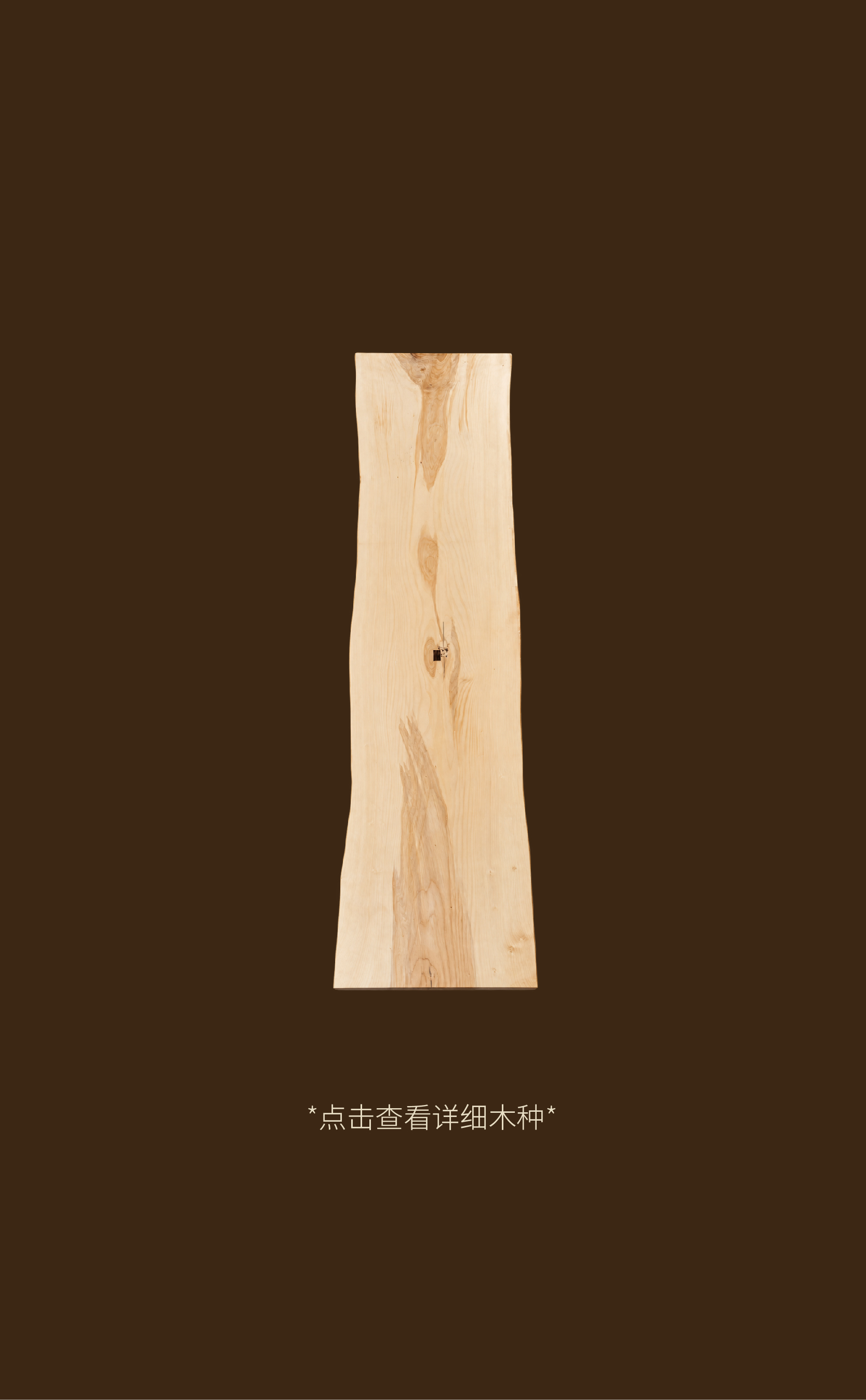
日本银杏
Ginkgo
「基本性质」
Basic Properties
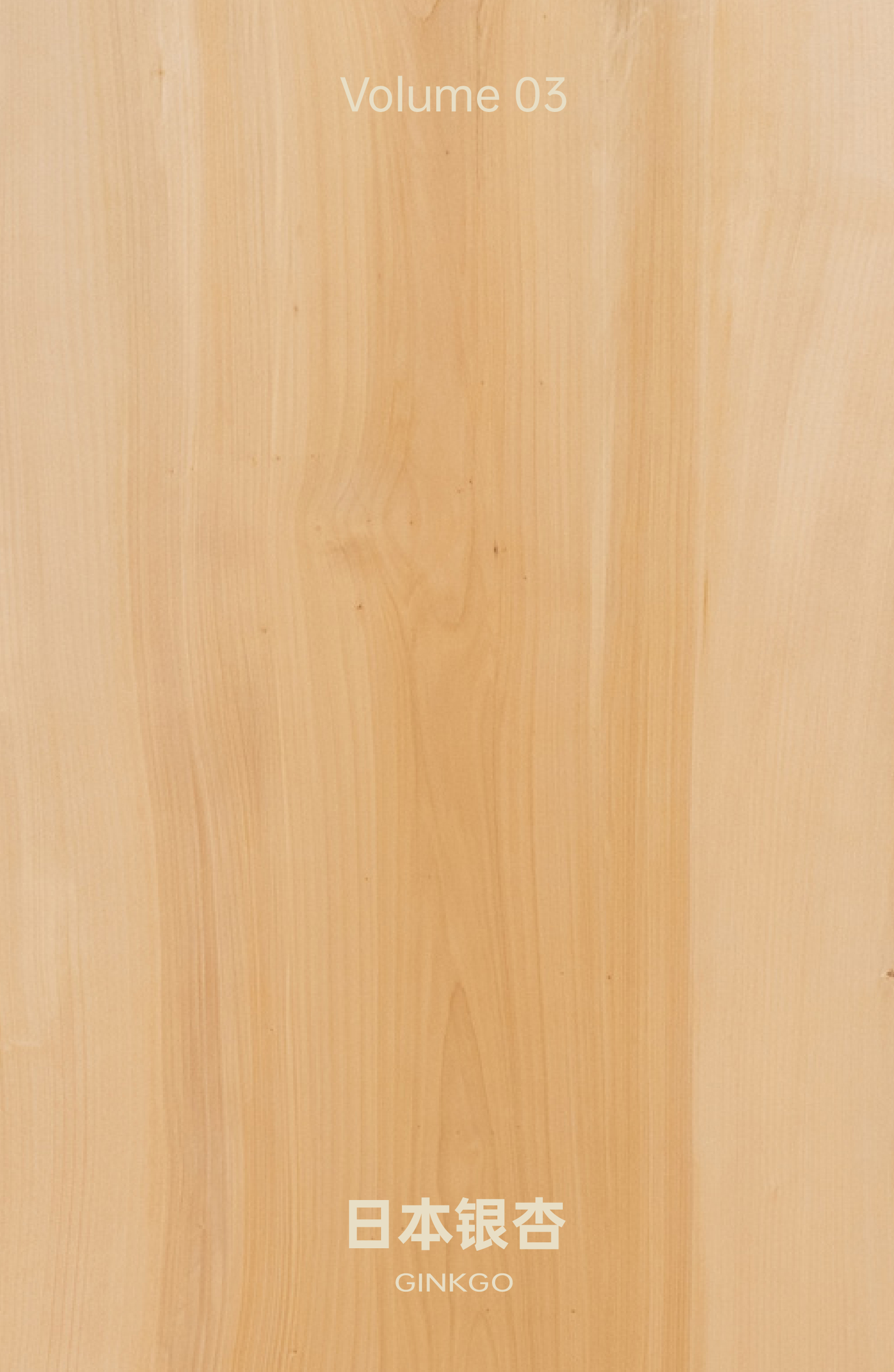
日本银杏主要产自日本,木材色泽以淡黄、浅黄褐色为主,整体色调柔和清雅随着时间推移可能逐渐加深;纹理多呈直纹,年轮清晰,木质结构均匀,局部带有自然的明暗变化;材质相对轻软,质地细腻,加工性能良好,整体呈现出清雅、朴素的自然质感。
Ginkgo from Japan is predominantly pale yellow to light yellowish brown, with an overall tone that is soft and refined and may gradually deepen over time. Its grain is mostly straight, with clearly defined growth rings, an even wood structure, and natural variations of light and shade in places. Relatively light and soft, the wood is fine-textured and easy to work, presenting an understated and elegant natural character.
「应用与价值」
Applications and Value
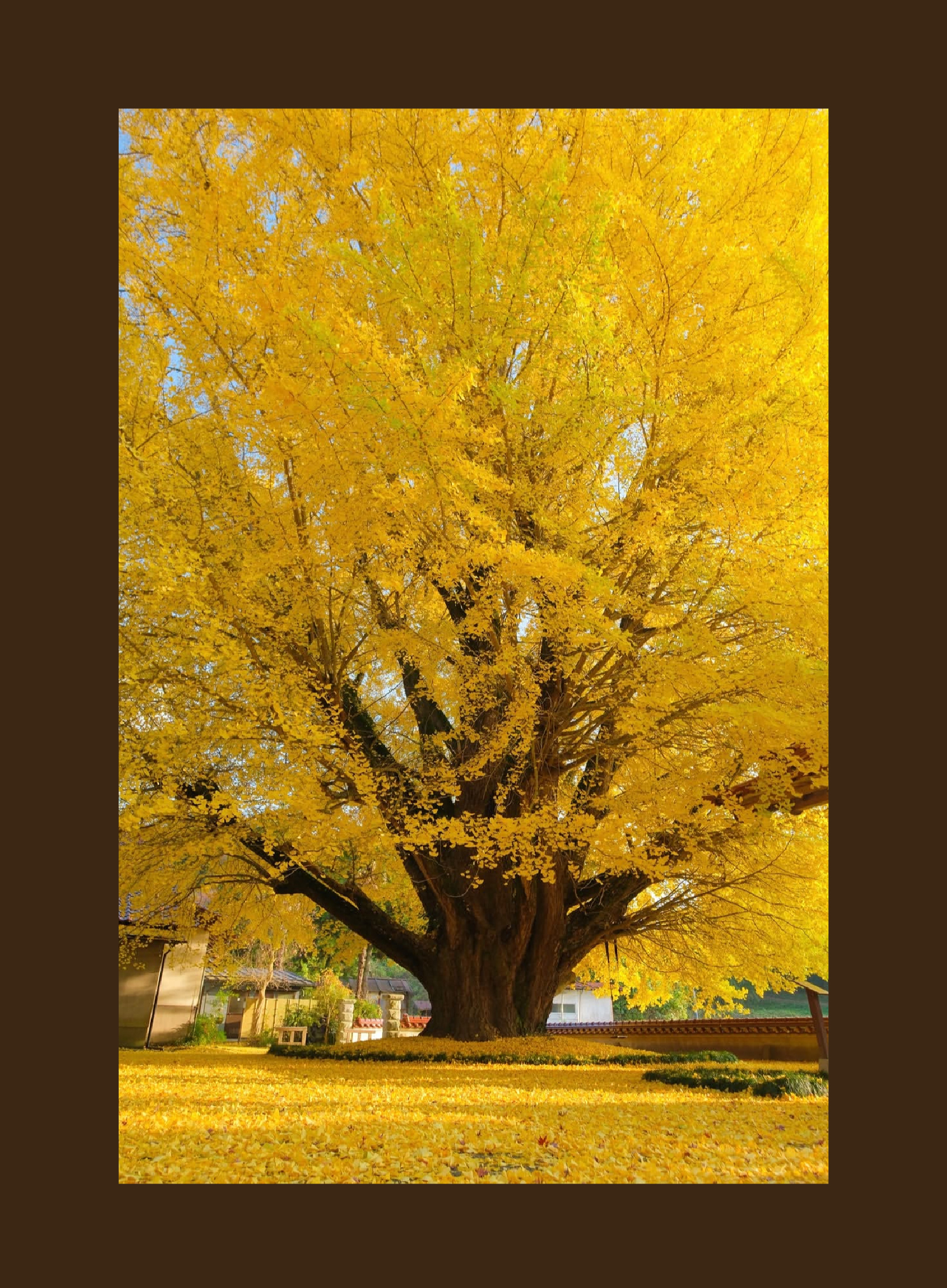
在日本,银杏木长期用于木雕、佛像及传统木作,更由于银杏古树的寿命悠长而受到珍视,部分被奉为神木,象征长寿、健康与平安,也寄托着人们对生命延续的美好祈愿。随着古树保护意识增强,优质大径银杏木材的获取受到一定限制,兼具自然纹理、完整板面与良好保存状态的原木更显珍贵。
In Japan, ginkgo wood has long been used for woodcarving, Buddhist statues, and traditional woodworking. Ancient ginkgo trees are also cherished for their longevity; some are revered as sacred trees, symbolizing longevity, health, and peace, and embodying hopes for the continuation of life. As awareness of protecting old trees has grown, access to high-quality, large-diameter ginkgo timber has become more restricted, making logs with natural grain, an intact surface, and good preservation especially valuable.
「现代空间表现」
Expression in Contemporary Spaces
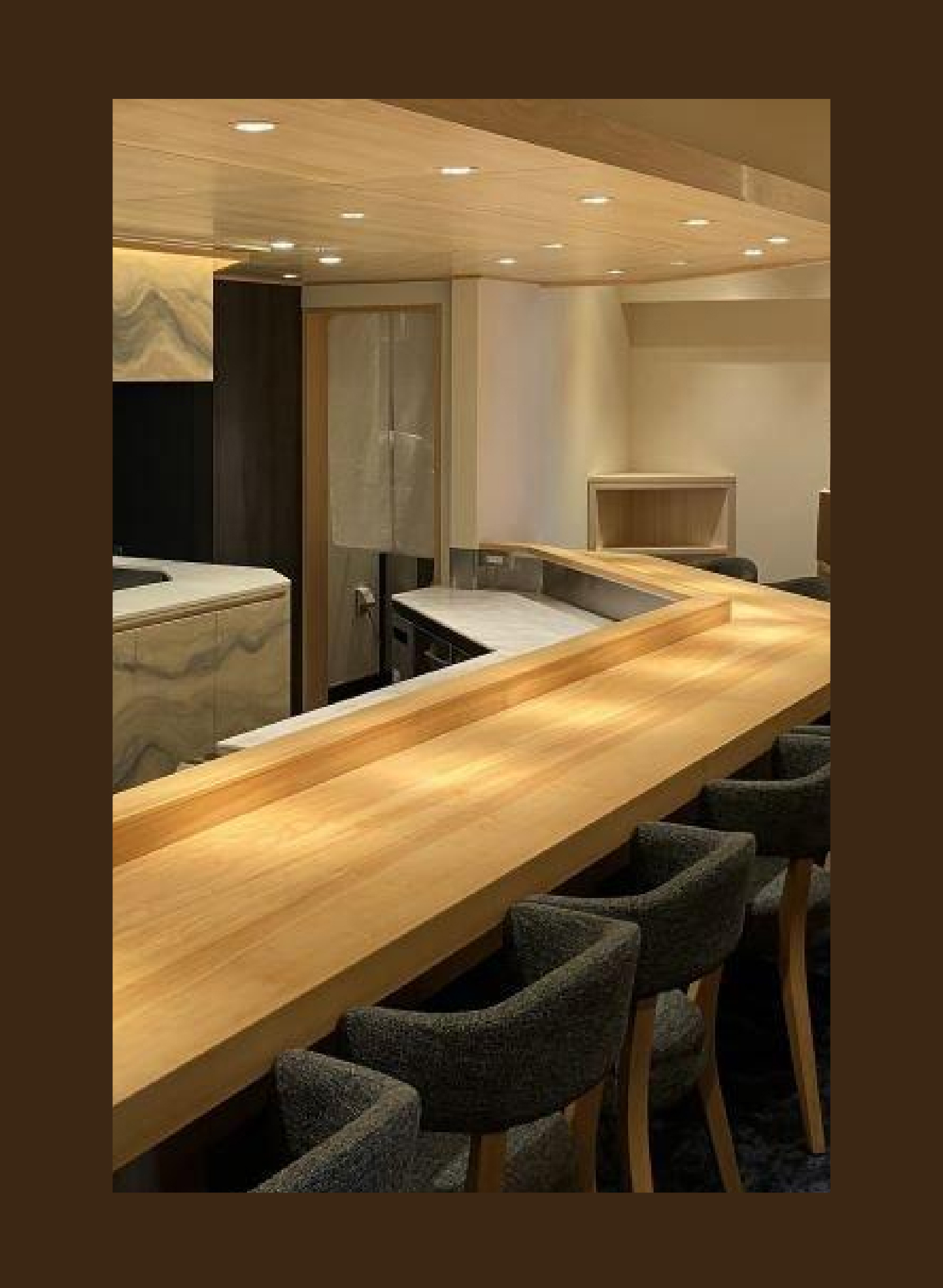
日本银杏木色泽淡雅,纹理细腻舒展,能够柔和空间的线条感,浅暖的木色为空间带来明亮、轻盈的视觉感受。它可以轻松融入现代极简、日式侘寂与自然主义空间,在简洁的设计语言中保留自然温度,营造出素净、清雅而富有东方气息的空间氛围。
Japanese ginkgo has a pale, elegant color and fine, flowing grain that soften the linearity of a space, while its light, warm tone creates a bright and airy visual impression. It fits naturally into modern minimalist, Japanese wabi-sabi, and naturalist interiors, retaining the warmth of nature within a clean design language and creating an atmosphere that is pure, graceful, and distinctly East Asian.
 04
日本屋久杉
Yakusugi cedar
「基本性质」
Basic Properties
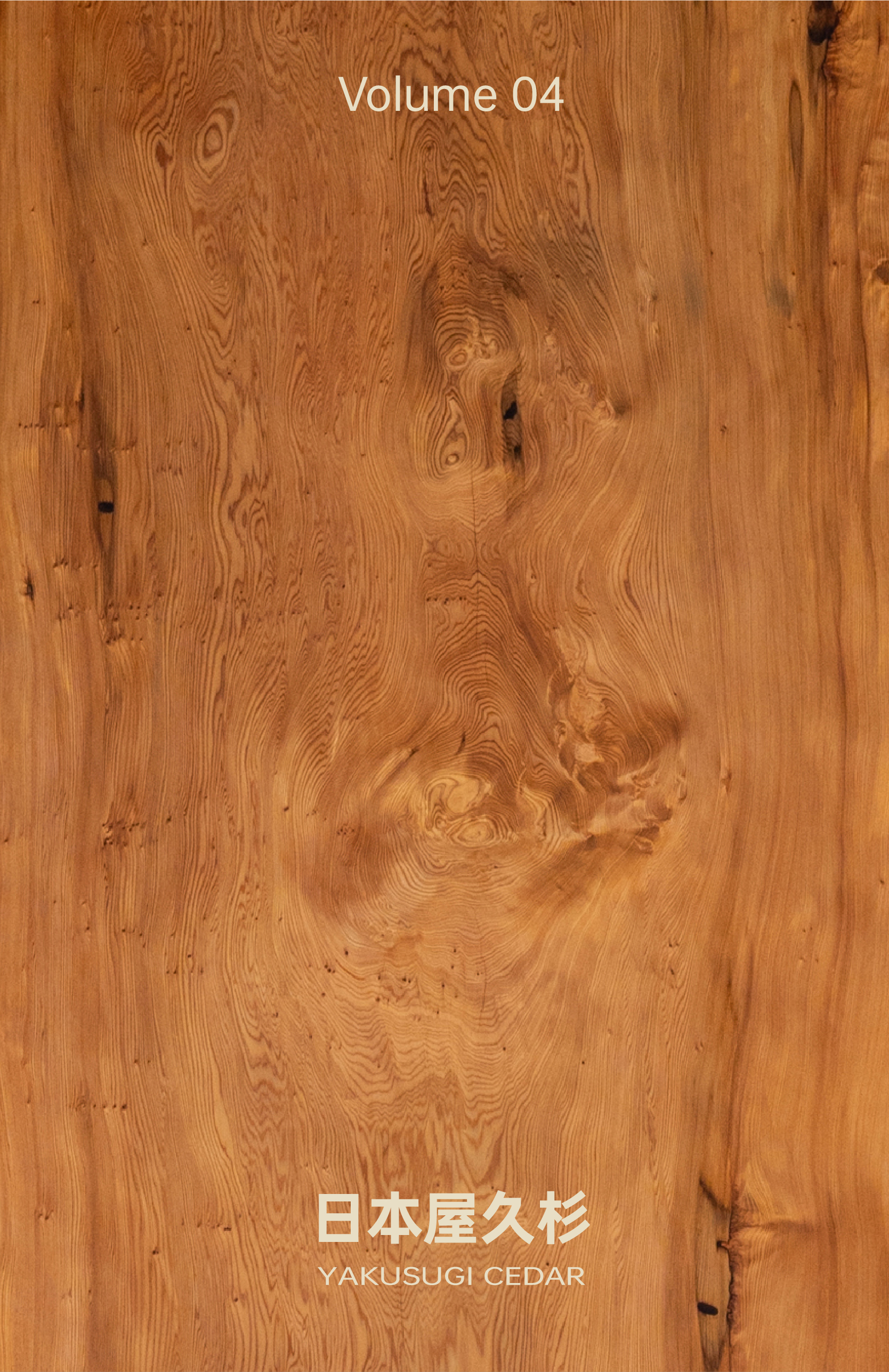
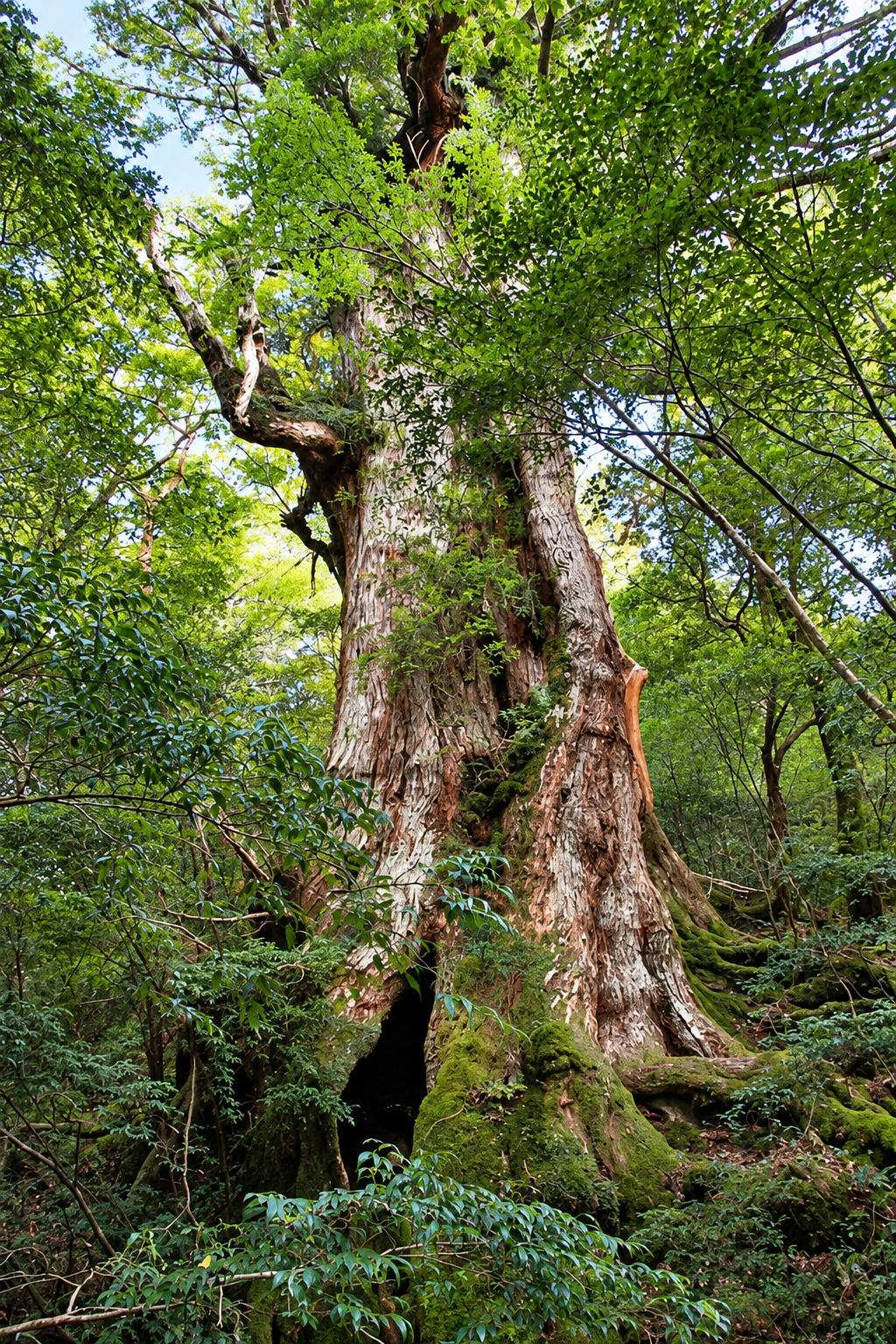
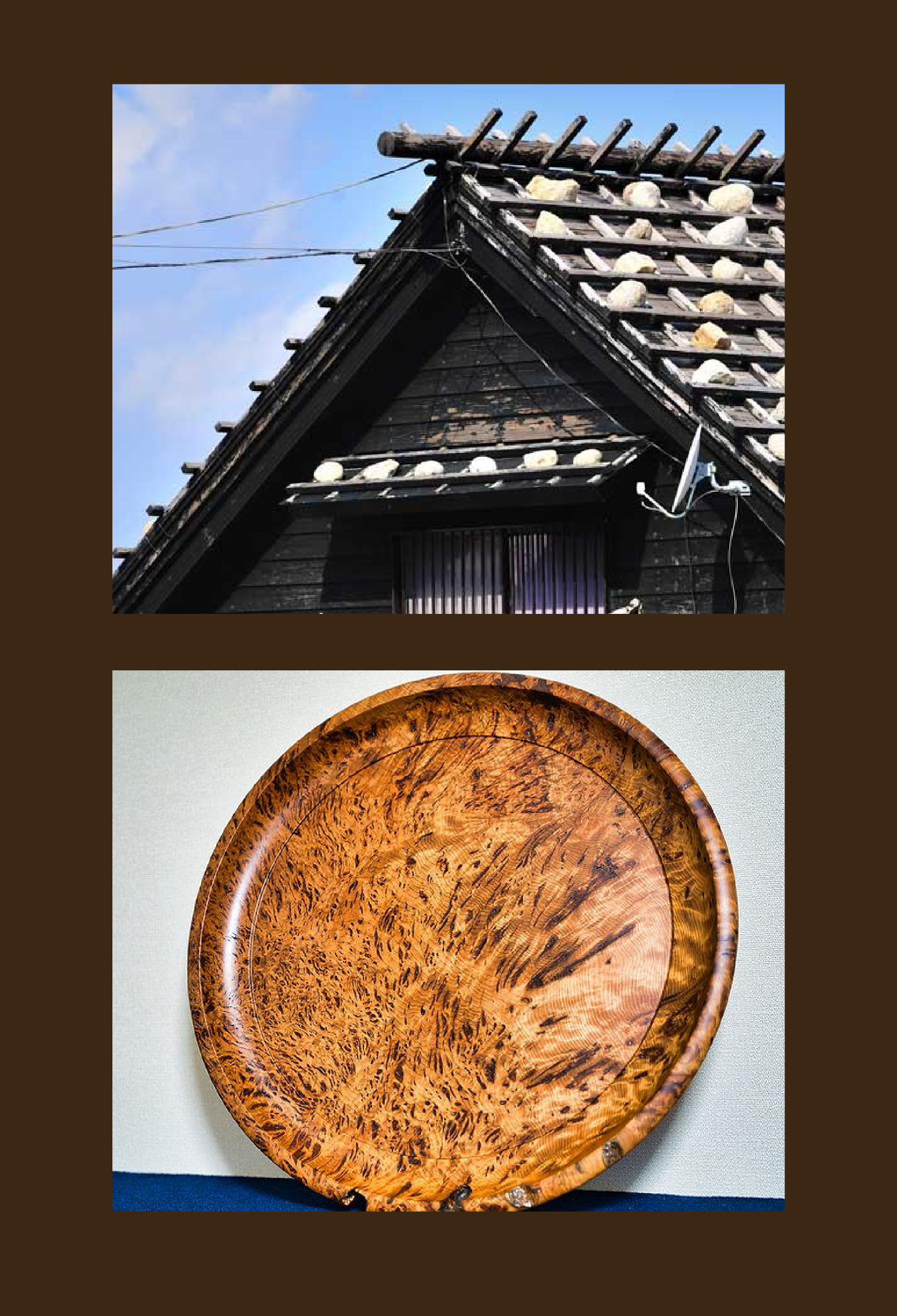
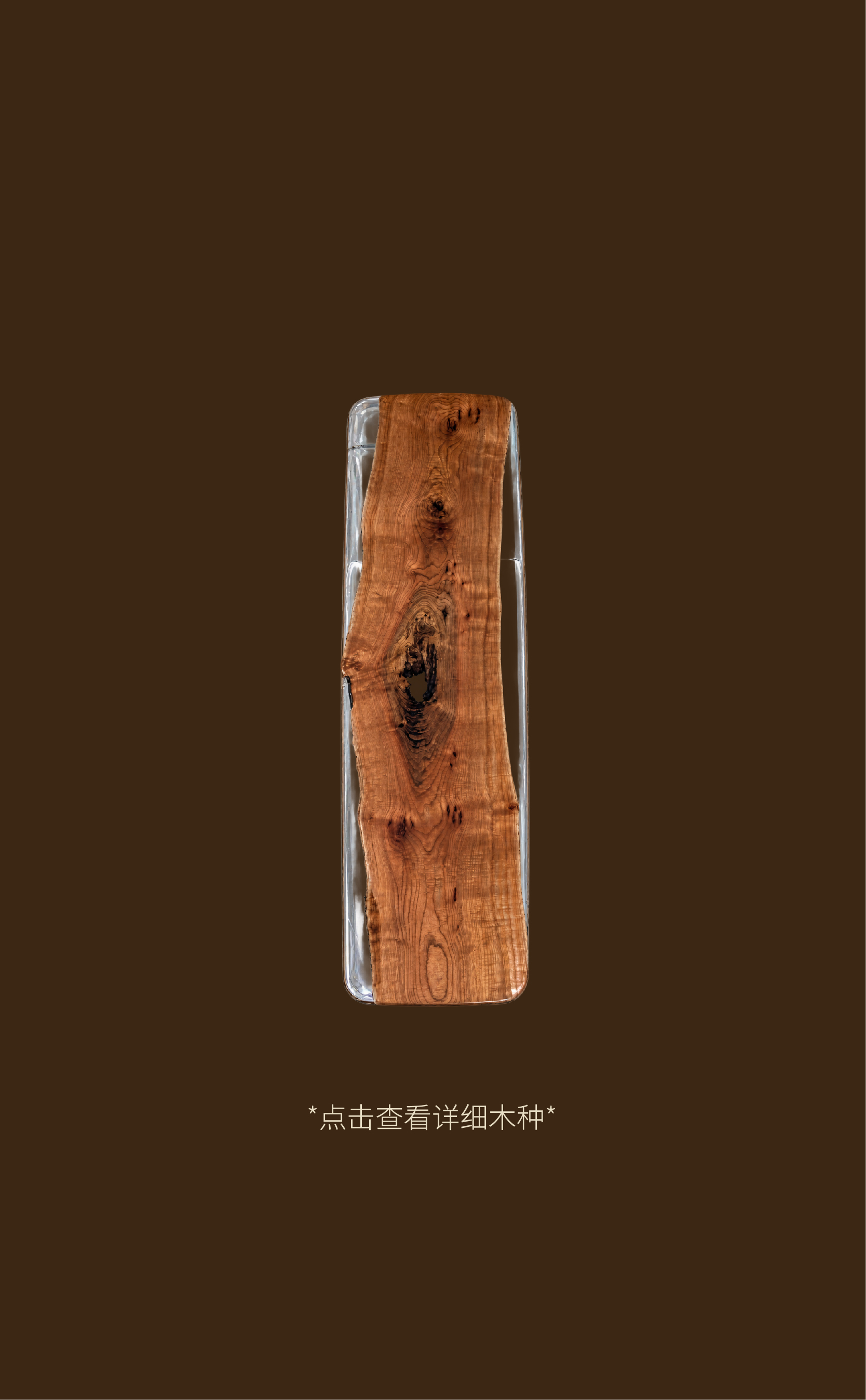
屋久杉是生长在日本鹿儿岛县屋久岛的日本柳杉,当地通常把树龄超过一千年的天然杉称为“屋久杉”,较年轻者称“小杉”。岛上多雨、贫瘠而多山的环境使其生长缓慢,年轮紧密、树脂丰富;木色从金黄、橙褐到深红褐不等,常伴随流动般的纹理与浓郁香气。
Yakusugi cedar is Japanese cedar that grows on Yakushima Island in Kagoshima Prefecture, Japan. Locally, naturally grown cedars more than one thousand years old are generally called “Yakusugi,” while younger trees are known as “kosugi.” The island’s rainy, nutrient-poor, mountainous environment slows their growth, producing tight growth rings and abundant resin. The wood ranges from golden yellow and orange-brown to deep reddish brown, often accompanied by flowing grain and a rich aroma.
「应用与价值」
Applications and Value
屋久杉早期被视为神木,十七世纪后才逐渐成为岛民的重要资源。江户时代,岛民曾以杉木屋面薄板纳税;二十世纪林业兴盛后,天然屋久杉于2001年停止采伐。如今工艺用材主要来自旧伐木残材、树根与自然倒木,统称“土埋木”。能够追溯来源并开出完整宽板的老料,已十分有限。
Yakusugi was initially regarded as sacred wood and only gradually became an important resource for islanders after the seventeenth century. During the Edo period, residents paid taxes in thin cedar roofing boards. After forestry expanded in the twentieth century, the felling of natural Yakusugi ceased in 2001. Today, craft material mainly comes from remnants of earlier logging, roots, and naturally fallen trees, collectively known as “domaiboku.” Old material with traceable provenance that can yield complete wide boards is now extremely limited.
「现代空间表现」
Expression in Contemporary Spaces
屋久杉大板桌有一种沉静的时间感。作为餐桌,密集年轮与金褐色泽带来温度;作为茶桌,香气与旋涡般的纹理更显幽深;作为书桌,则有稳定而内敛的陪伴感。它适合以留白、低矮家具和柔和照明衬托,抛开复杂的设计基础,简单的木材本身便足以成为空间的视觉中心。
A Yakusugi cedar slab table carries a quiet sense of time. As a dining table, its dense growth rings and golden-brown color bring warmth; as a tea table, its fragrance and vortex-like grain feel deeper and more contemplative; as a desk, it offers a steady, reserved companionship. It is best set off by open space, low furniture, and soft lighting. Without a complex design framework, the wood itself is enough to become the visual center of the room.
05
日本楝木
Japanese melia
「基本性质」
Basic Properties
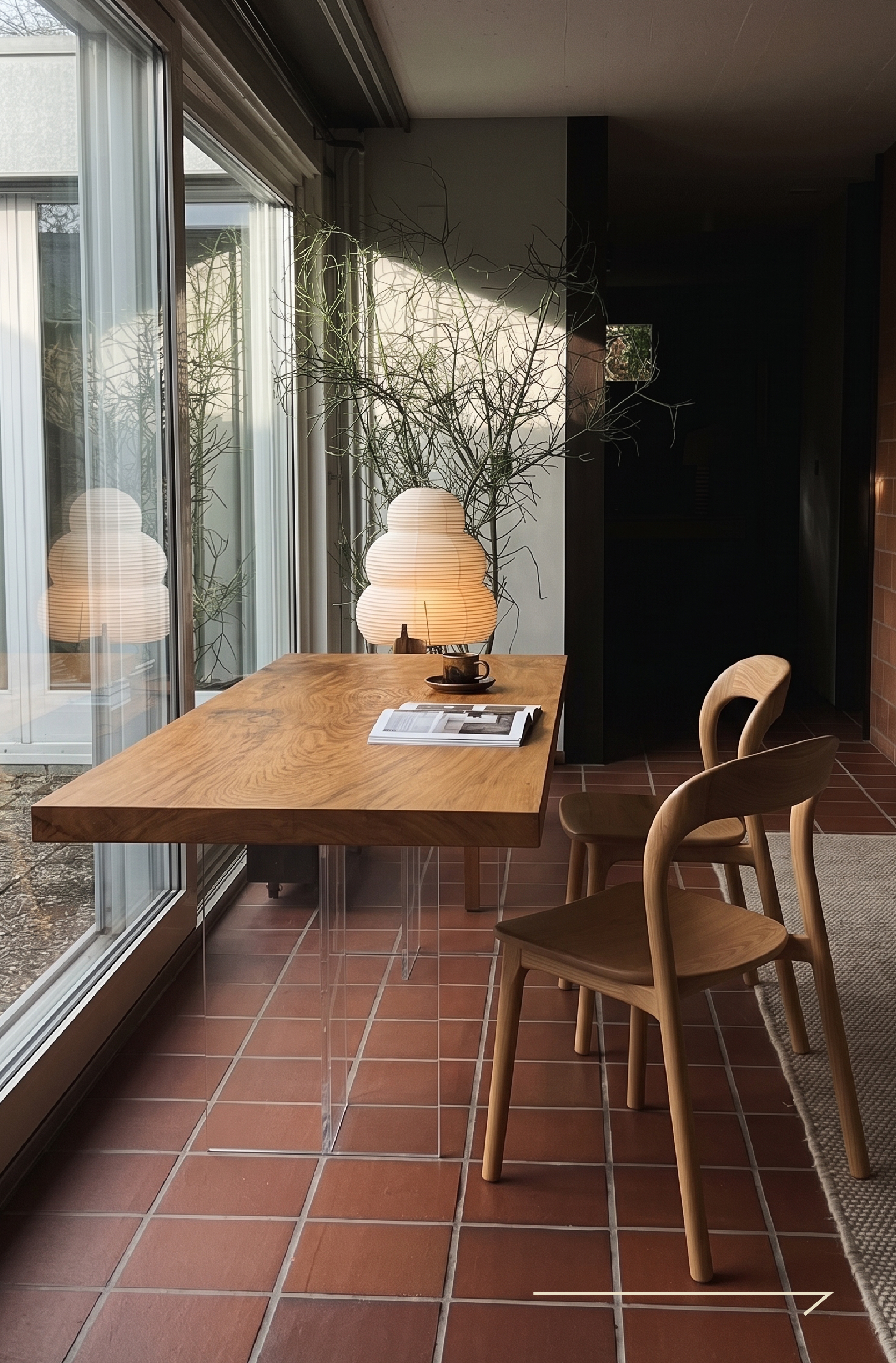
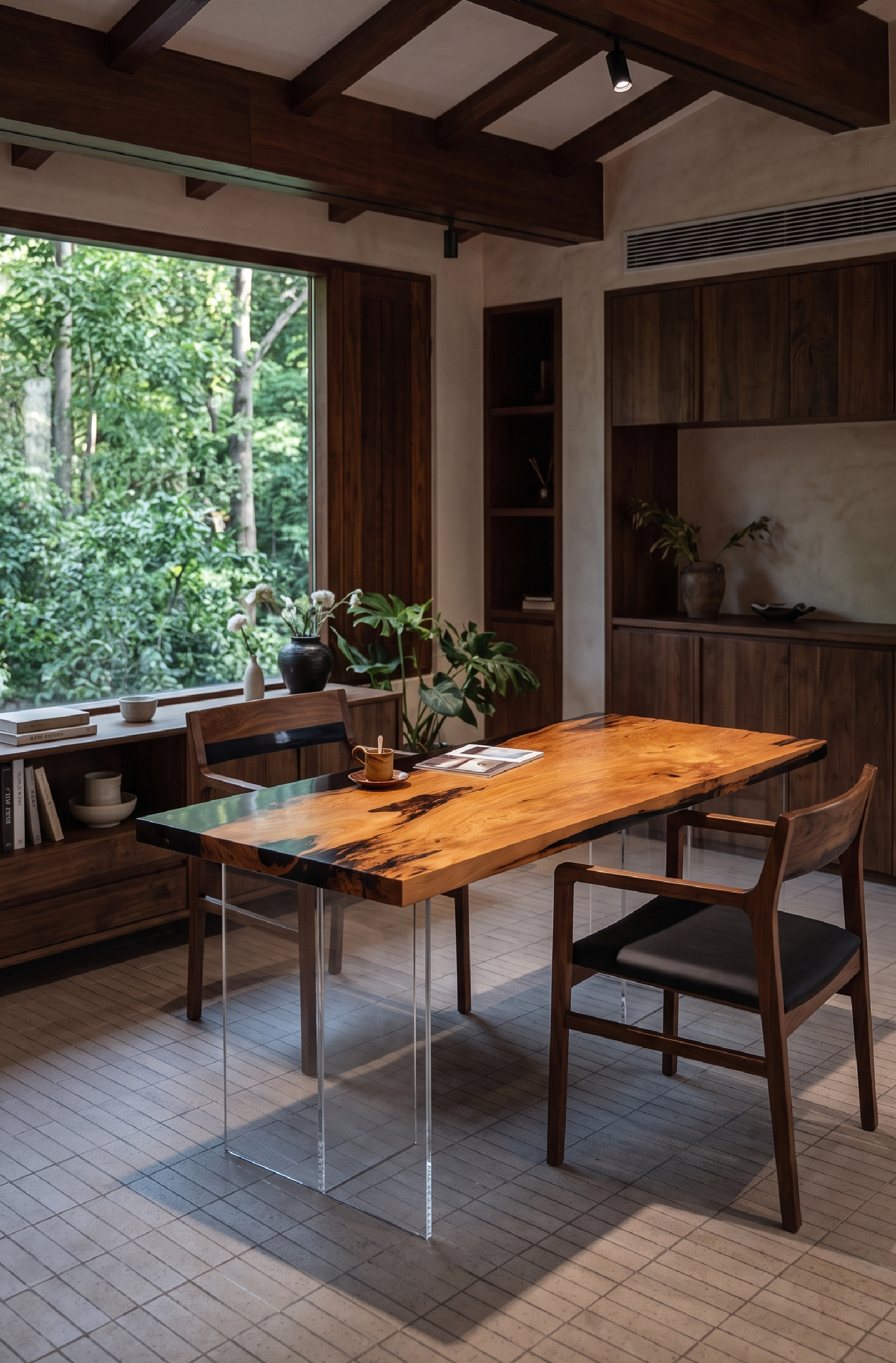
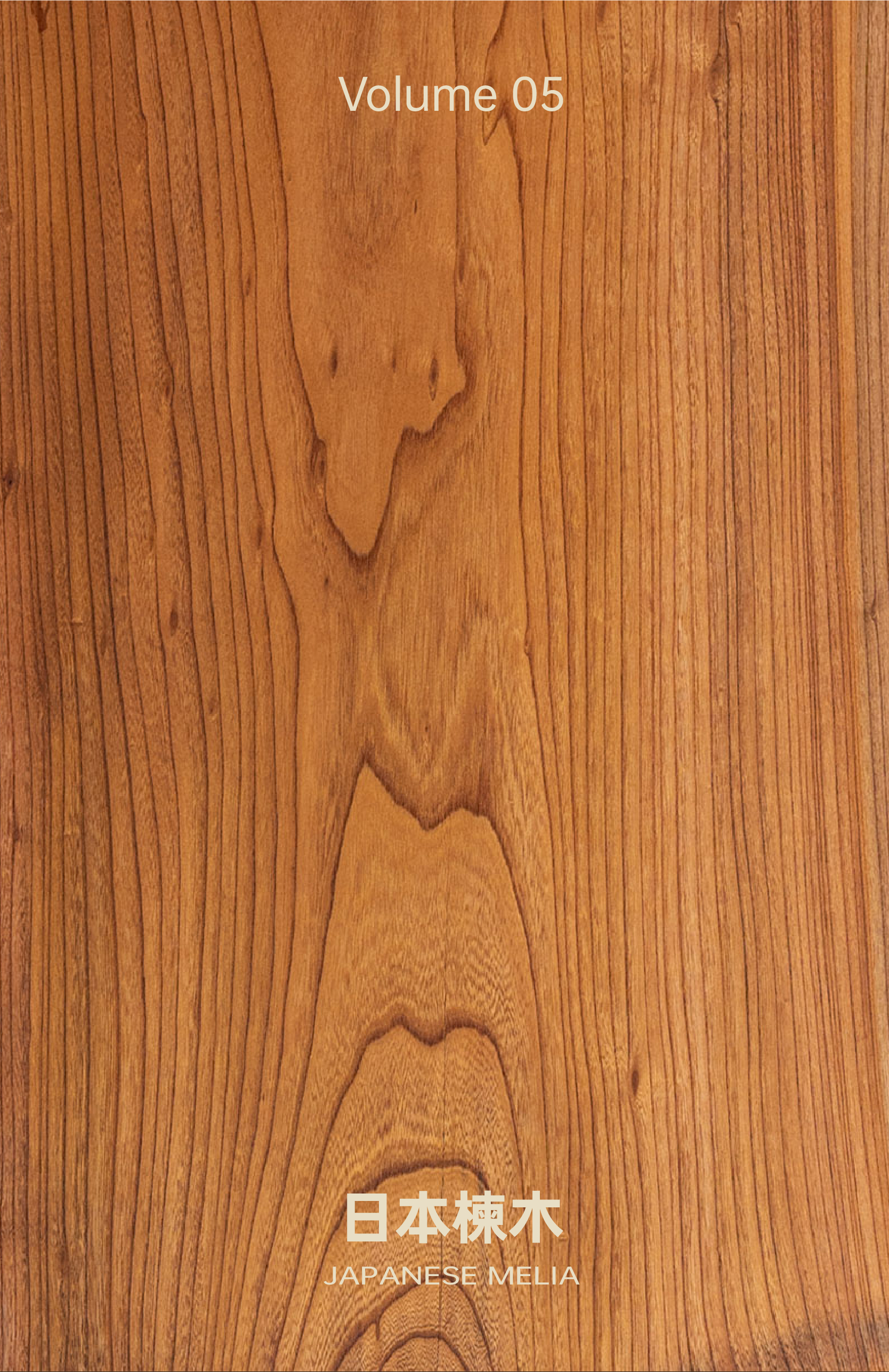
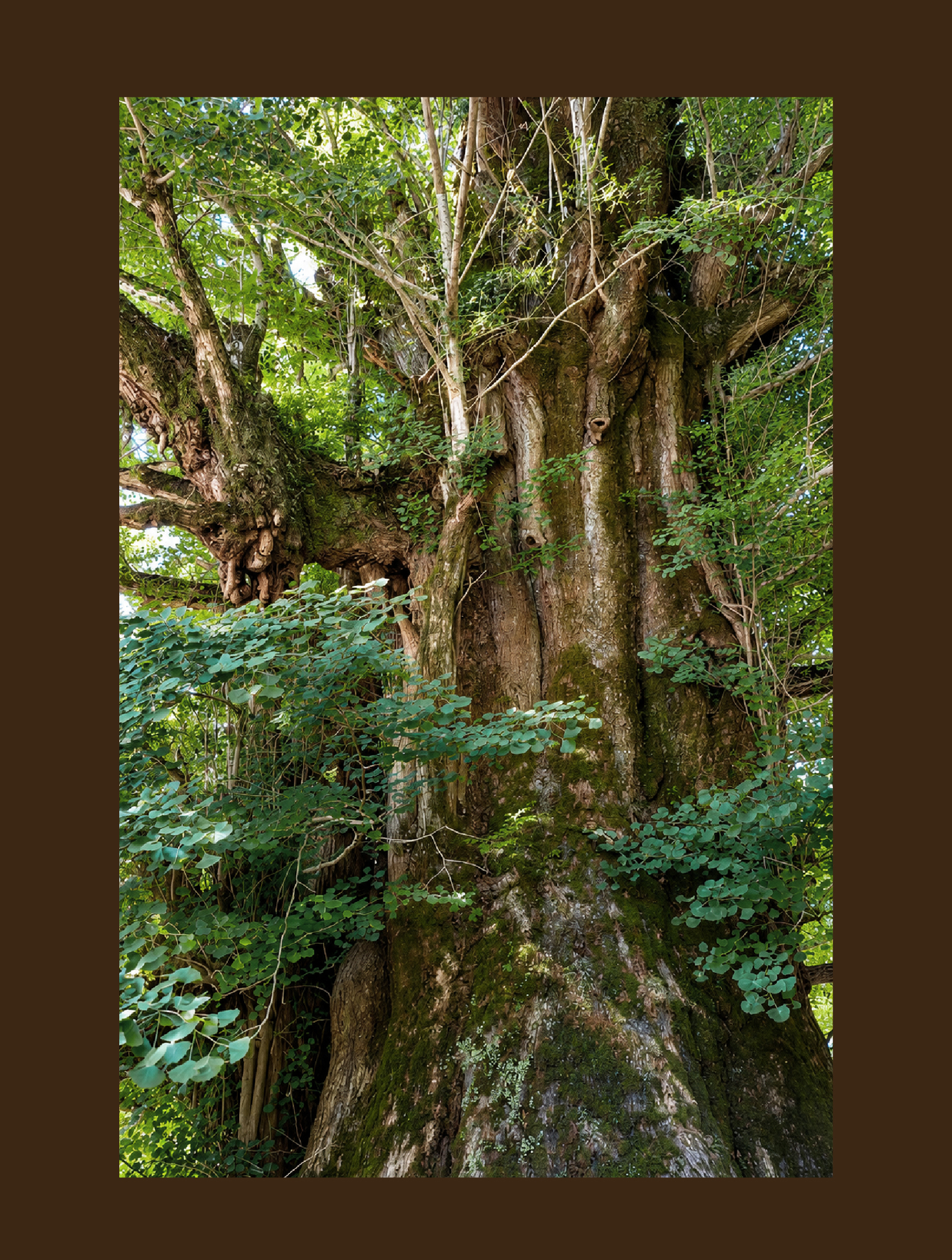
日本楝木通常指日本所称的“栴檀”,即楝科楝属的落叶乔木,分布于日本较温暖地区及东亚。它生长较快,属于中等重量的阔叶材,木理通直而环孔结构清晰;边材偏黄白,心材常见淡黄褐、粉褐至红褐色,山形纹舒展,弦切面山形纹开阔,外观近似榉木却更轻快。
Japanese melia usually refers to the tree known in Japan as “sendan,” a deciduous species of the genus Melia in the mahogany family, distributed across the warmer regions of Japan and East Asia. Fast-growing and of medium weight, it is a hardwood with generally straight grain and a clearly defined ring-porous structure. The sapwood is yellowish white, while the heartwood commonly ranges from pale yellowish brown and pinkish brown to reddish brown. Its broad cathedral grain resembles that of Japanese zelkova but feels lighter and more open.
「应用与价值」
Applications and Value
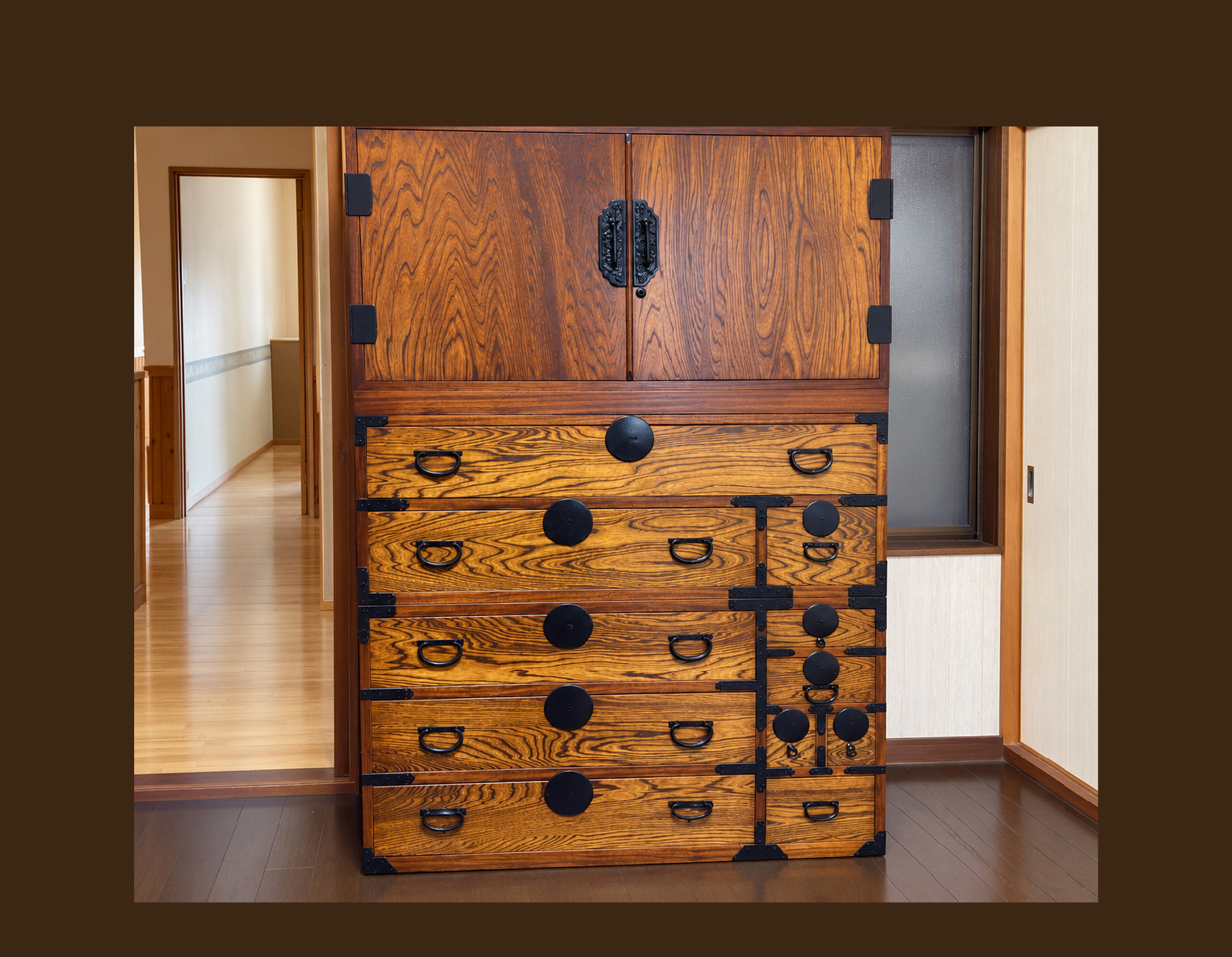
日本民间有“楝似榉”的说法。因纹理开阔、加工顺手,楝木过去多用于箱柜、抽屉、器具、木屐与室内木作,也曾作为榉木不足时的替代材。但传统散生的楝树多枝、易弯,真正通直、少节且足够宽阔的板材仍需良好培育与严格选材。
A Japanese saying holds that “melia resembles zelkova.” Because of its broad grain and workability, melia was traditionally used for chests, drawers, implements, wooden clogs, and interior joinery, and also served as a substitute when zelkova was scarce. Yet traditionally scattered melia trees tend to branch heavily and grow crooked, so truly straight, minimally knotted boards of sufficient width still require careful cultivation and rigorous selection.
「现代空间表现」
Expression in Contemporary Spaces
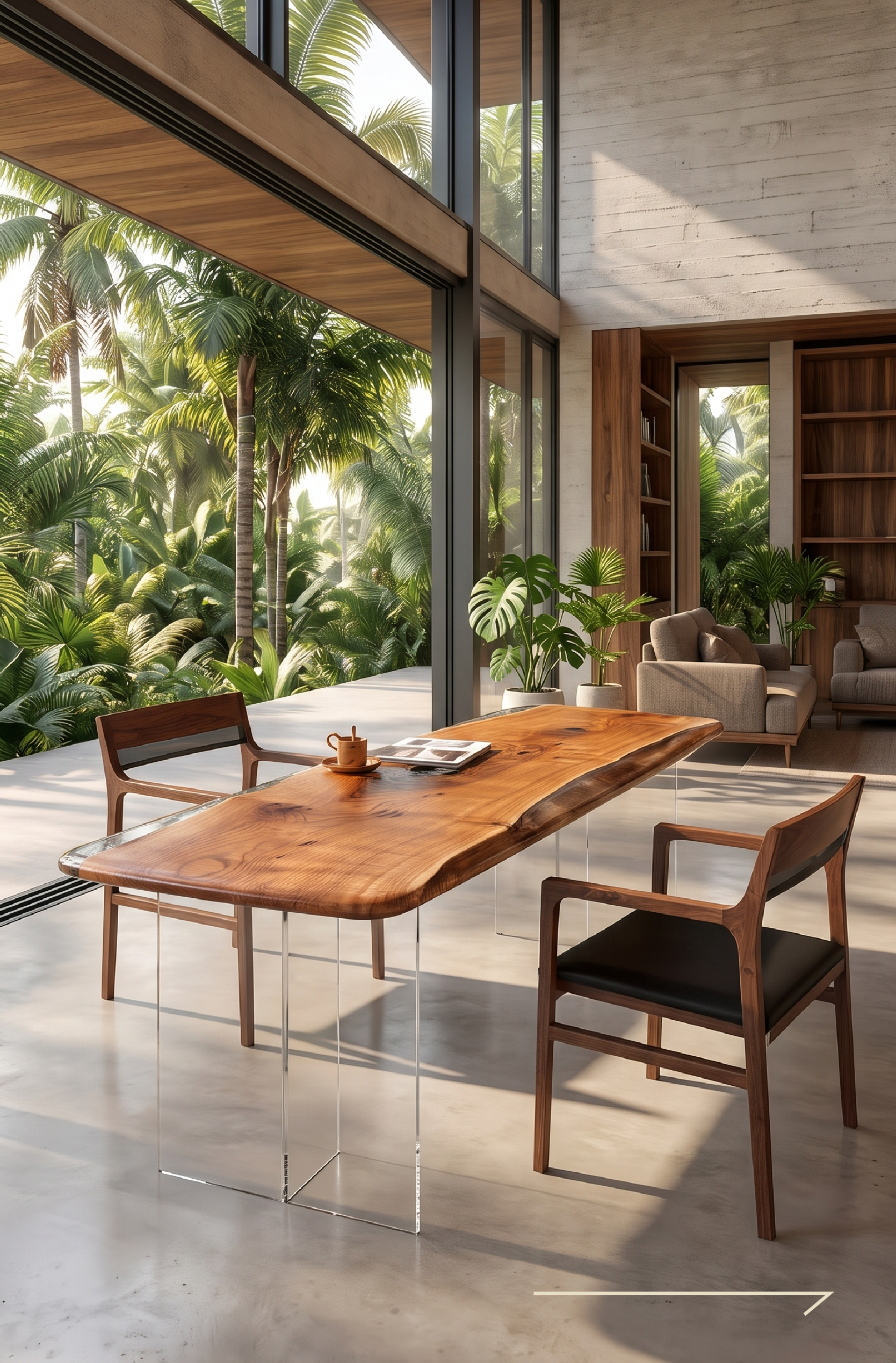
日本楝木有一种清雅而舒展的力量。作为餐桌,开阔山形纹让长桌更显纵深;作为茶桌,浅褐色调温和安静;作为书桌,则轻盈而不失骨架。它可以融入现代简约、日式侘寂与自然主义空间,暖色能消解水泥、玻璃与金属的冷感,清晰而不过分强烈的纹理又可稳住较大的空间尺度,营造出明净、从容的空间氛围。
Japanese melia has an elegant, expansive strength. As a dining table, its broad cathedral grain gives a long tabletop greater depth; as a tea table, its pale brown tone feels gentle and quiet; as a desk, it appears light yet structurally assured. It works well in modern minimalist, Japanese wabi-sabi, and naturalist interiors. Its warm color softens the coolness of concrete, glass, and metal, while its clear but restrained grain anchors larger spaces, creating a bright and composed atmosphere.
06
日本黄菠萝
Amur cork tree
「基本性质」
Basic Properties
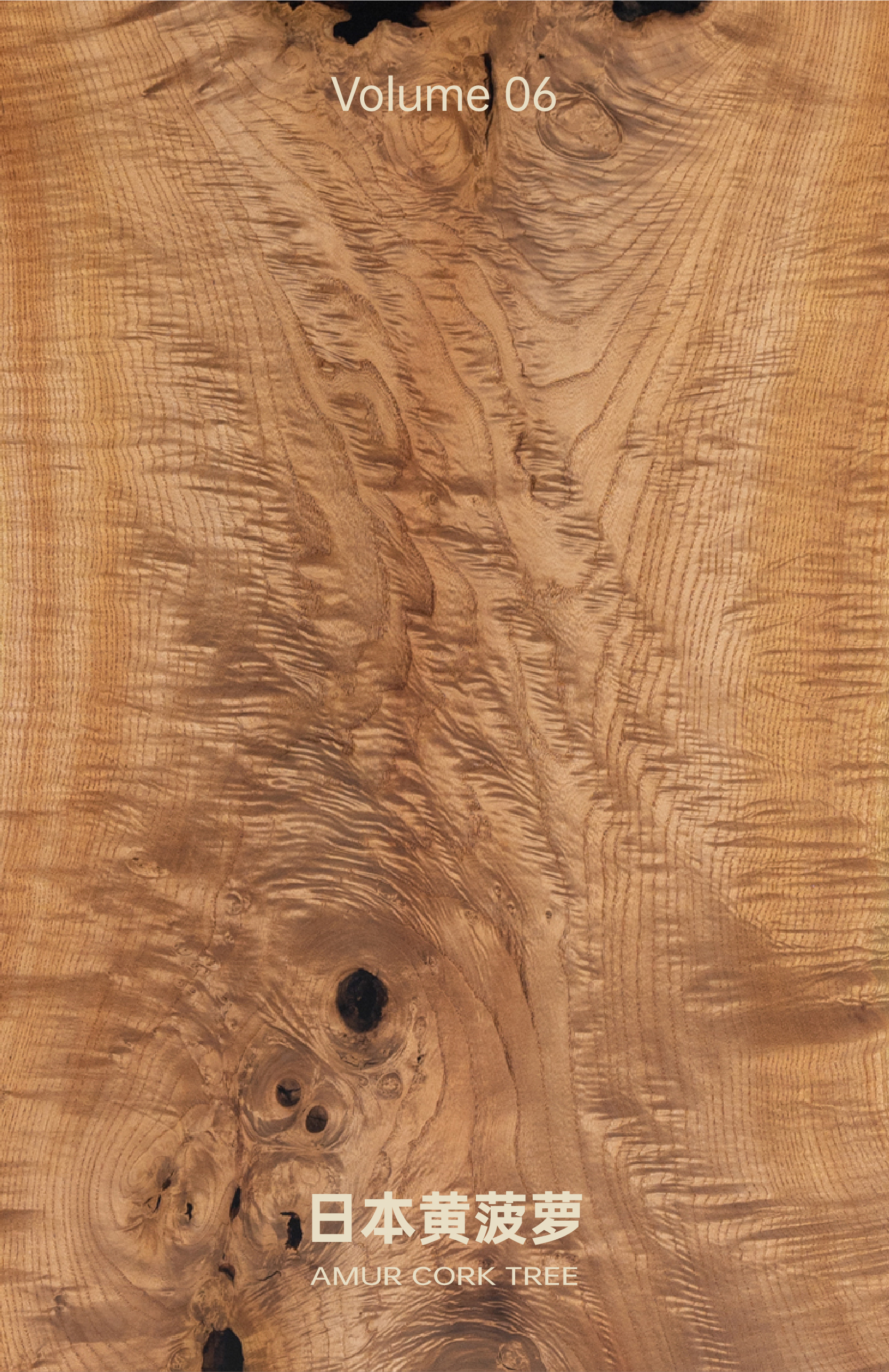
日本黄菠萝即黄檗、黄肌木,属于黄檗属,分布于日本、东北亚及阿穆尔河流域,多生于山地湿润而排水良好的环境。它是环孔阔叶材,年轮清楚,质地较轻软;边材黄白,心材初呈灰绿调的黄褐色,接触空气与日光后逐渐转为安定的褐色,板面兼有直纹与舒展的山形纹。
Amur cork tree from Japan, also known as kihada, belongs to the genus Phellodendron. It is distributed across Japan, Northeast Asia, and the Amur River basin, usually in moist, well-drained mountain environments. A ring-porous hardwood with clear growth rings, it is relatively light and soft. The sapwood is yellowish white, while the heartwood initially has a gray-green cast over yellowish brown and gradually turns a stable brown when exposed to air and sunlight. Boards display both straight grain and broad cathedral patterns.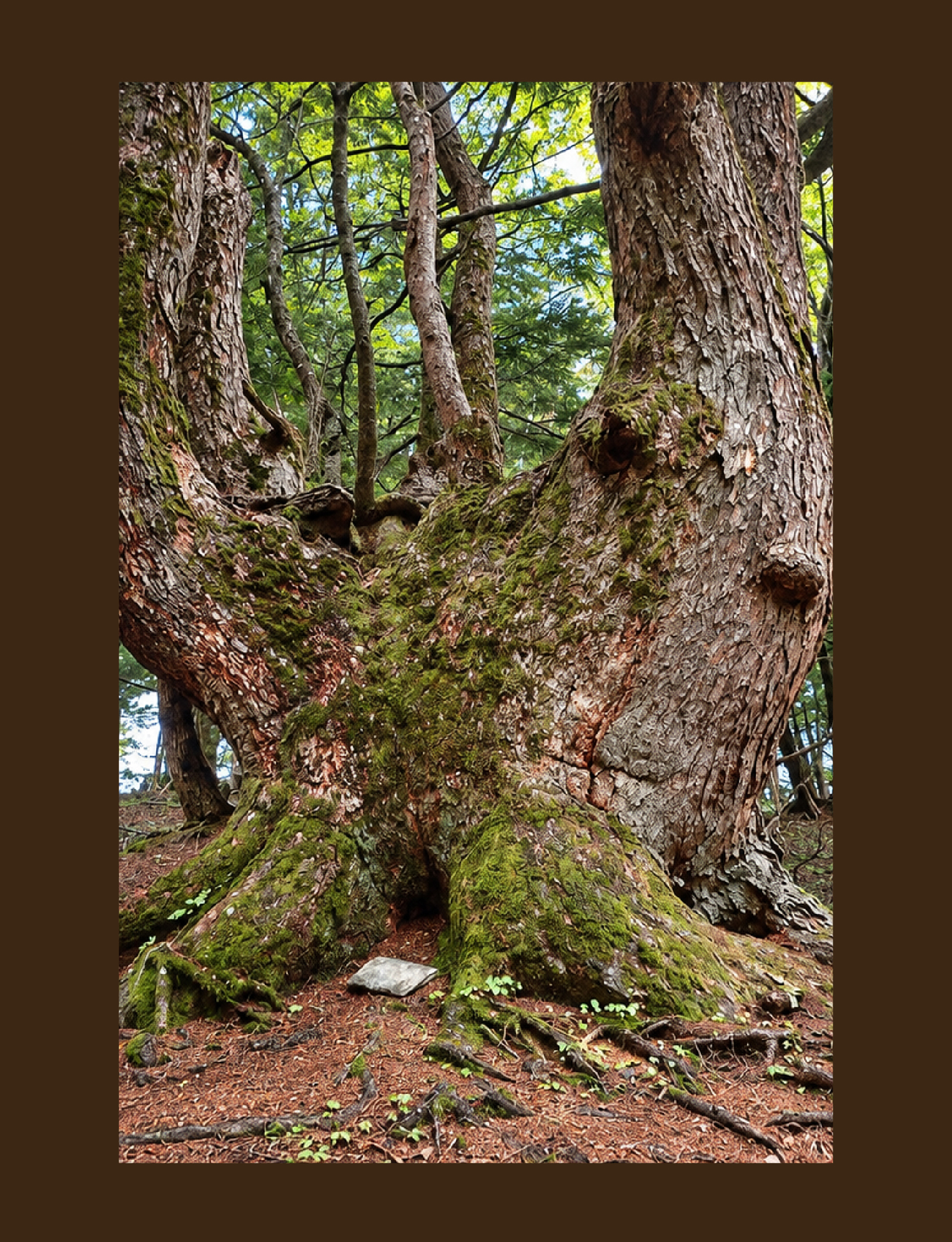
「应用与价值」
Applications and Value
“黄檗”之名来自鲜黄色内树皮,其中所含成分长期用于药材与染料;以其染成的黄色纸张又曾用于佛教典籍和册页封面,使这种颜色兼具护藏与清净的文化联想。木材本身多作建筑造作、箱柜、器具和雕刻,天然大径木数量有限,粗大导管、节疤与心材缺陷还会压低整板出材率,色泽匀净而纹理连续者尤难得。
The Japanese name “kihada” refers to the tree’s vivid yellow inner bark, whose compounds have long been used in medicine and dyeing. Paper dyed this yellow was once used for Buddhist scriptures and album covers, giving the color cultural associations with preservation and purity. The timber itself has been used for architectural joinery, chests, implements, and carving. Naturally occurring large-diameter trees are limited, while coarse pores, knots, and heartwood defects further reduce the yield of full slabs; pieces with even color and continuous grain are especially rare.
「现代空间表现」
Expression in Contemporary Spaces
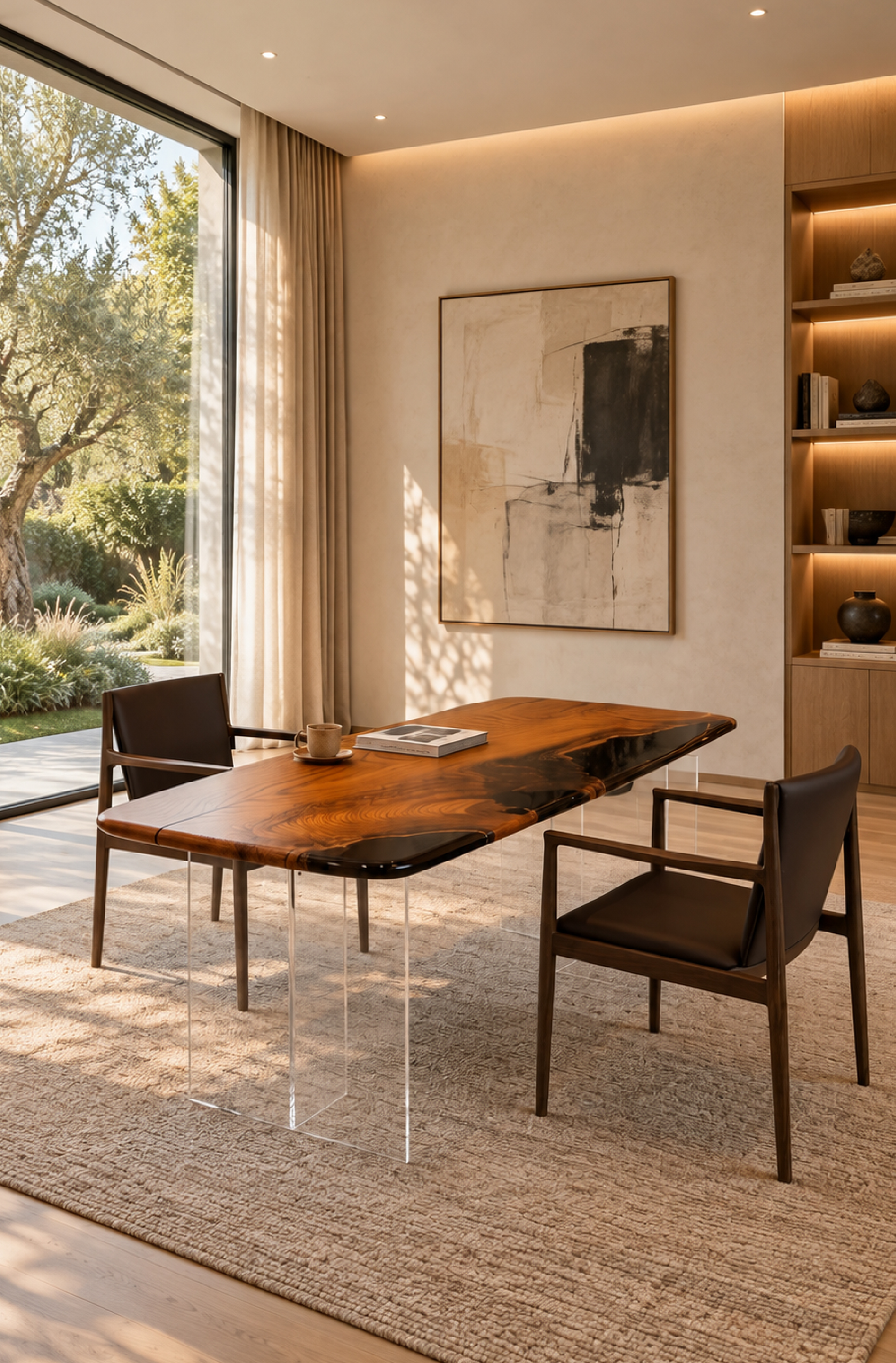
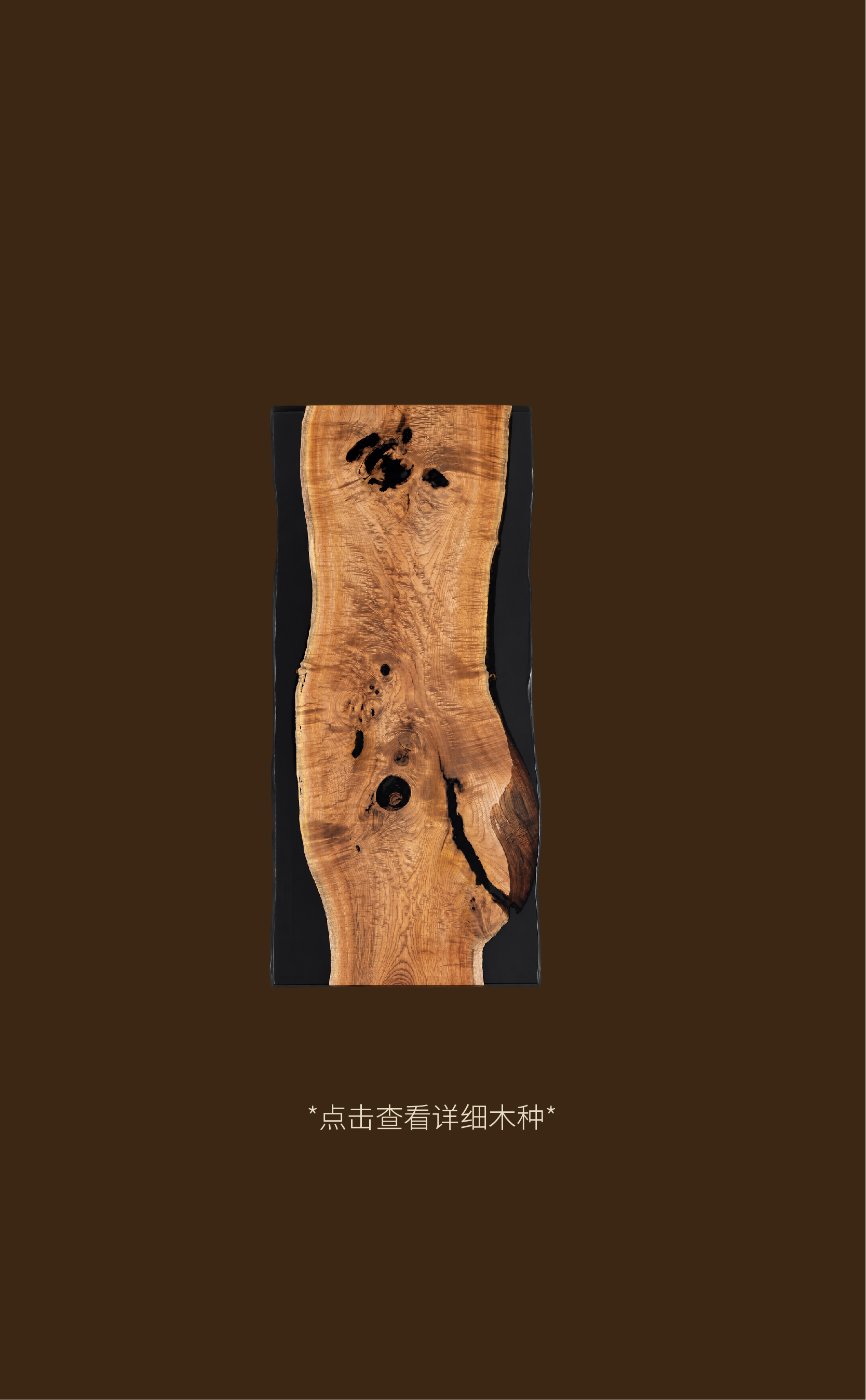
黄菠萝大板桌以低饱和的金褐色为底,年轮从板心向两侧层层展开,使板面带有近似山石与水流的动势。它更适合作为起居区的视觉主桌、酒店休息区的中心陈设,或独立置于留白充分的艺术空间。搭配灰色地面、深色木椅与低照度暖光,能够形成古朴、沉着又富有张力的空间表现。
Amur cork tree slab tables have a low-saturation golden-brown ground, with growth rings spreading outward from the center in layers and giving the surface a movement reminiscent of rock formations and flowing water. The wood is especially suited to a principal table in a living area, a central feature in a hotel lounge, or a freestanding piece in an art space with ample negative space. Paired with gray flooring, dark wood chairs, and low-intensity warm lighting, it creates an interior expression that is rustic, composed, and full of tension.
07
日本栗木
Japanese chestnut
「基本性质」
Basic Properties
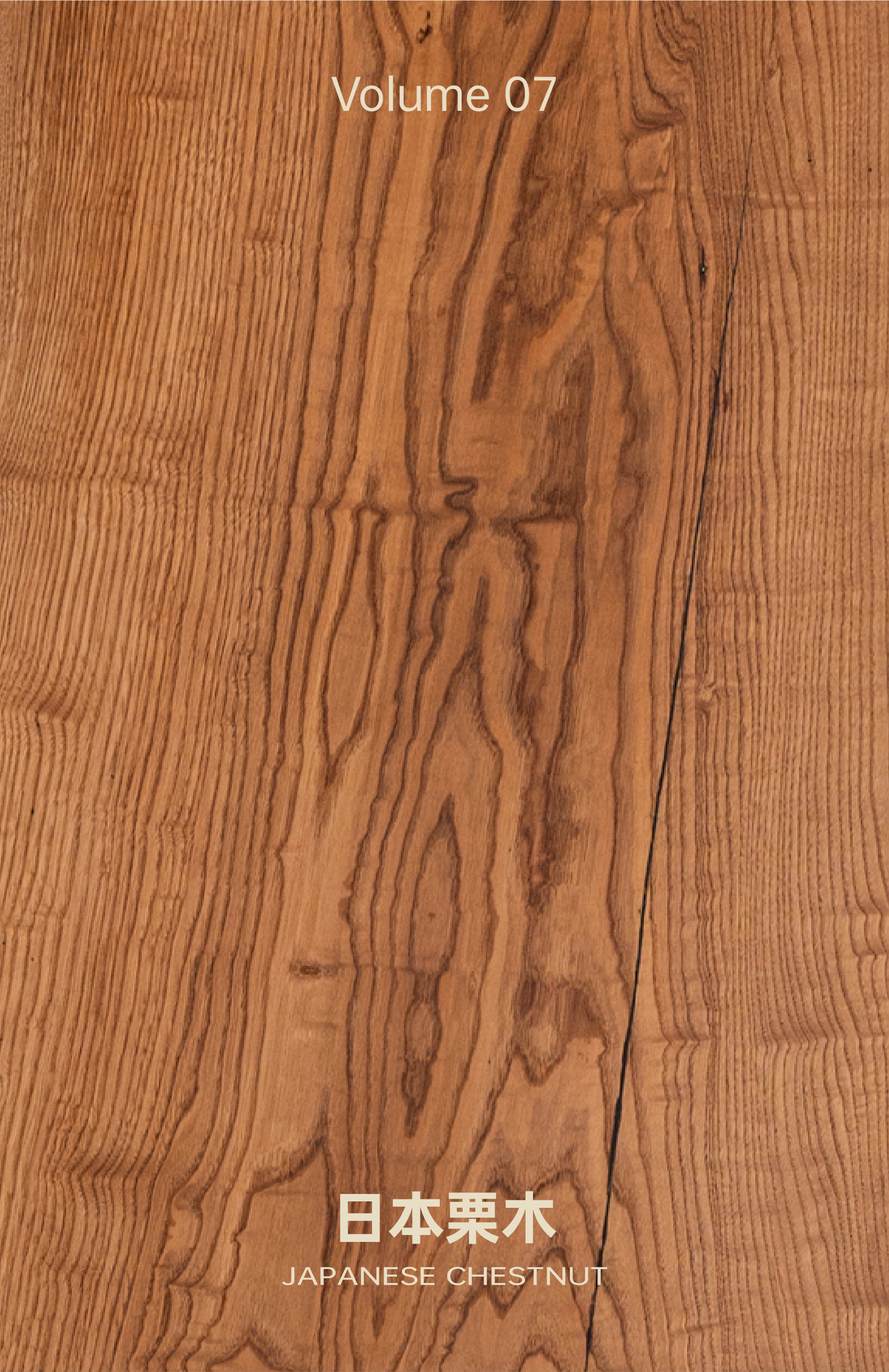
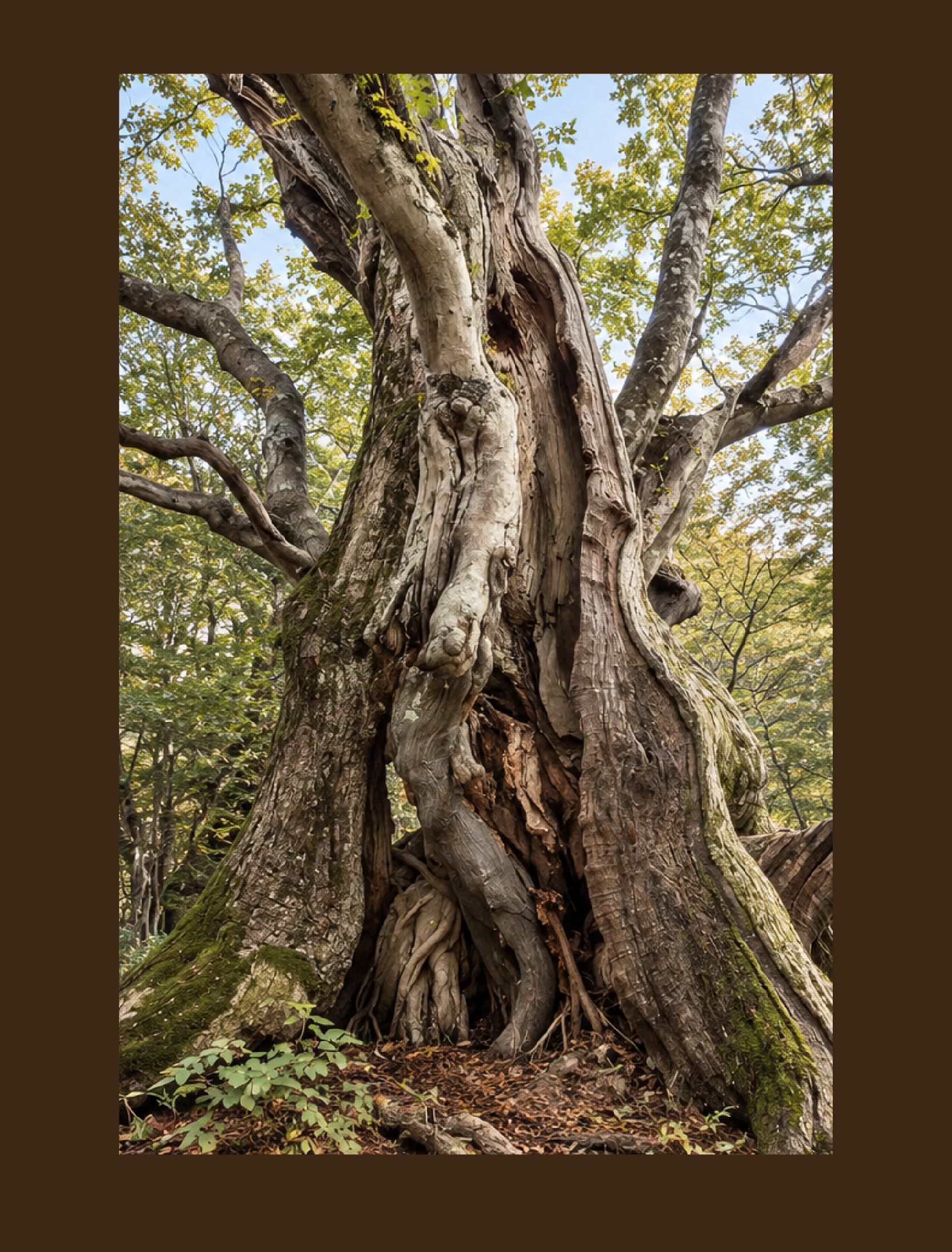
日本栗木广泛生长于北海道西南部至本州、四国、九州的山野。它是强韧的环孔阔叶材,粗大导管与年轮界限鲜明,耐湿、耐朽性出色;边材较浅,心材从黄褐、金褐逐渐转为深褐,板面常出现粗犷的山形纹。使用日久之后,色泽会更沉稳,质地也更具手作感。
Japanese chestnut grows widely in the mountains and countryside from southwestern Hokkaido through Honshu, Shikoku, and Kyushu. It is a tough, ring-porous hardwood with large vessels and sharply defined growth rings, and it performs exceptionally well against moisture and decay. The sapwood is pale, while the heartwood matures from yellowish and golden brown to deep brown; bold cathedral grain often appears across the board. With age and use, the color grows more subdued and the texture gains a more handcrafted character.
「应用与价值」
Applications and Value
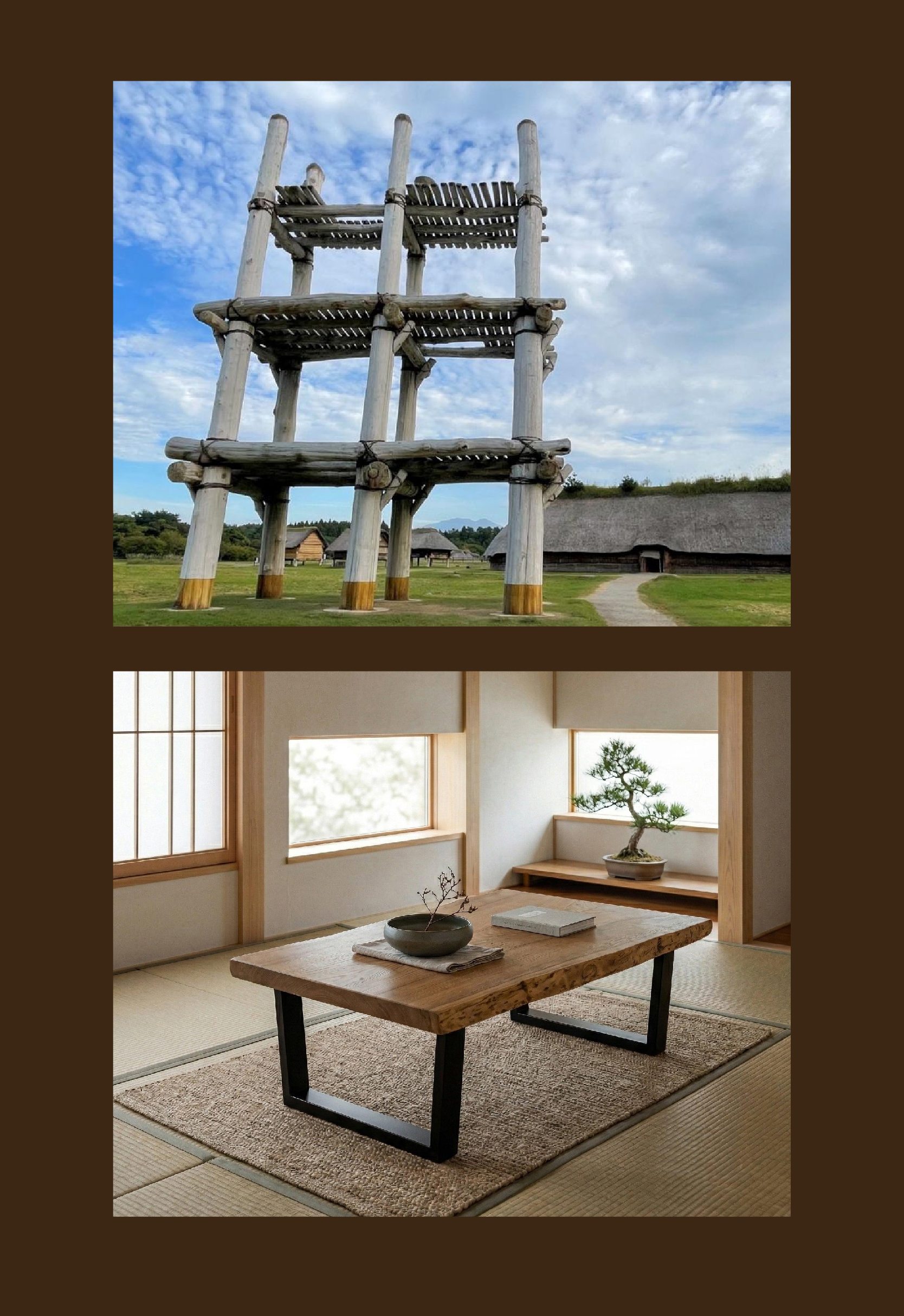
栗木在日本的利用可追溯至绳文时代。约四千六百年前的三内丸山遗址,出土大型掘立柱建筑所用的巨型栗木柱;凭借耐湿耐朽的特性,它也长期用于房屋地基、桥梁、木桩、铁路枕木、器具与漆器木胎。优质老栗日渐减少,加上干燥时容易开裂,大口径而稳定的整板需要更耐心的选材与加工。
The use of chestnut in Japan can be traced to the Jomon period. At the Sannai-Maruyama site, dating to around 4,600 years ago, archaeologists uncovered massive chestnut posts used in a large raised-post structure. Thanks to its resistance to moisture and decay, the wood was also used for house foundations, bridges, piles, railway sleepers, implements, and lacquerware cores. High-quality old chestnut is becoming scarcer, and because the wood is prone to checking during drying, stable, large-diameter full slabs demand particularly patient selection and processing.
「现代空间表现」
Expression in Contemporary Spaces
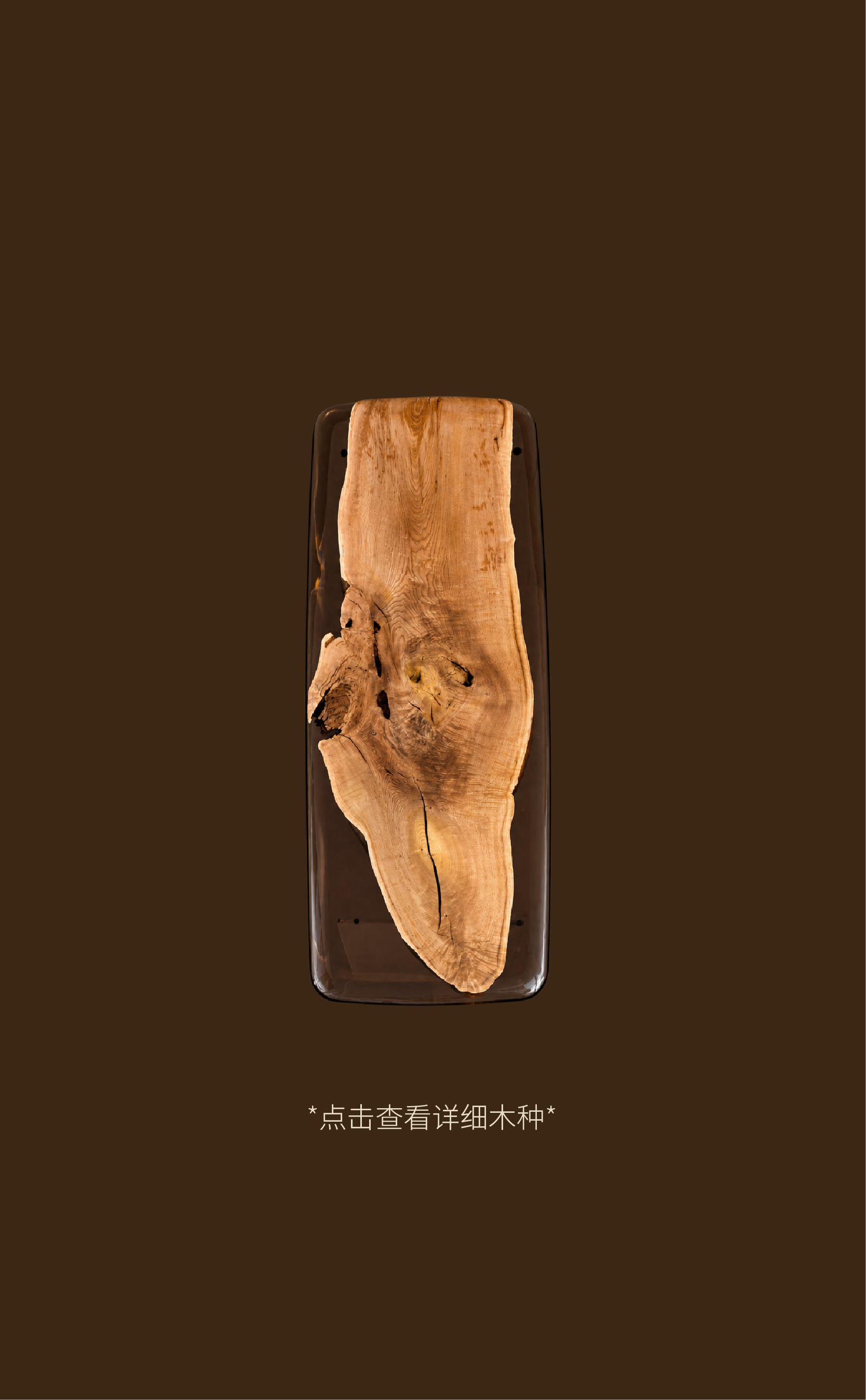
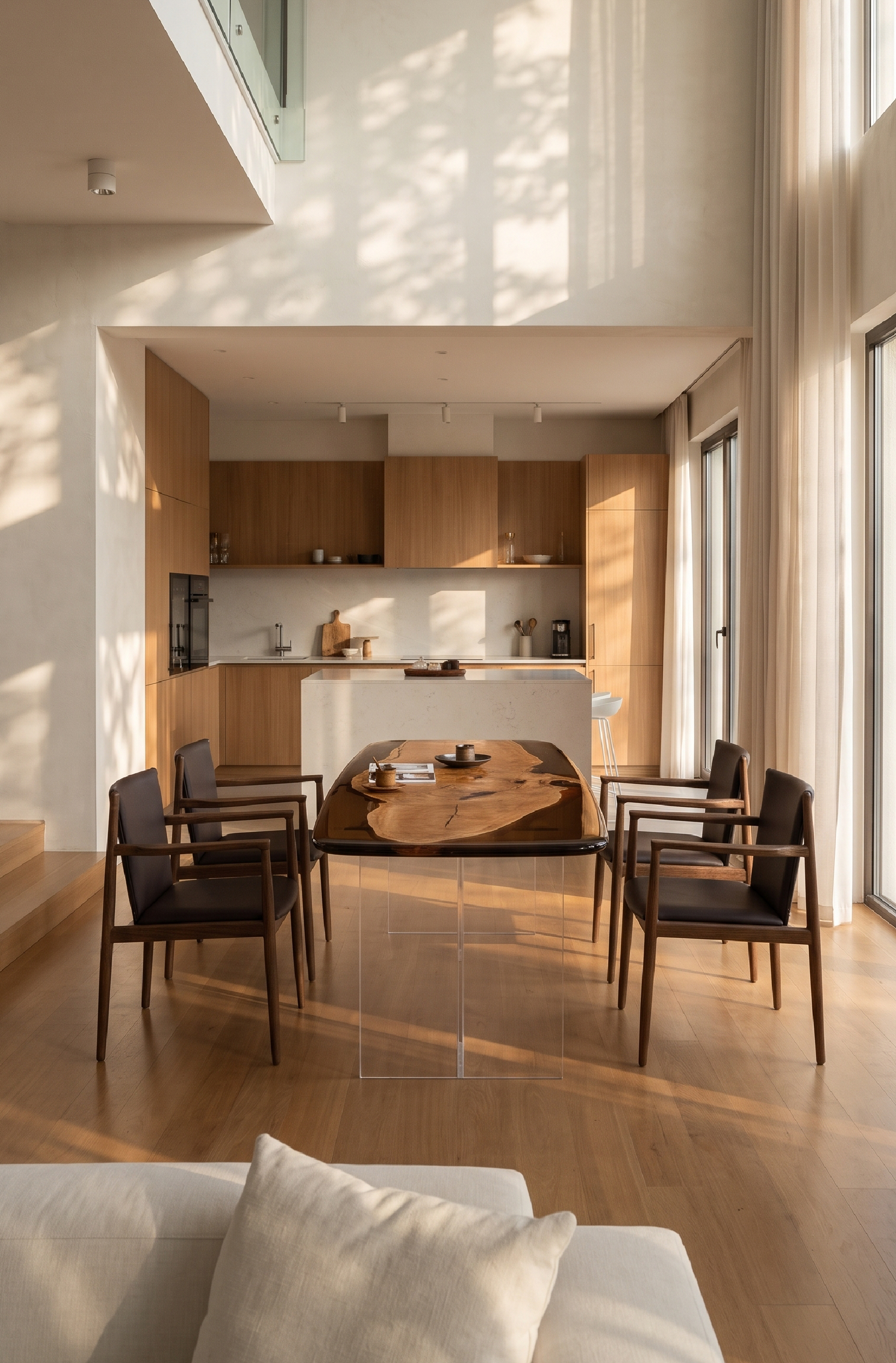
在近似岛屿的天然轮廓之下,浅金褐色木面呈现出舒展的年轮与自然的孔洞、裂隙,保留木材未经规整的原生形态。无论是以原木形态融入现代空间,还是与冰晶工艺结合,呈现木质与晶体之间的材质对比,都能展现出不同的视觉效果与空间气质,在自然质感与当代设计之间,形成多样的表达。
Beneath a natural outline resembling an island, the pale golden-brown surface reveals expansive growth rings along with organic voids and fissures, preserving the wood’s untrimmed original form. Whether introduced into a modern interior in its natural state or combined with an ice-crystal technique to contrast timber and crystal, it can produce distinct visual effects and spatial characters, enabling varied expressions between natural materiality and contemporary design.
08
美国黄杨木
Tulipwood
「基本性质」
Basic Properties
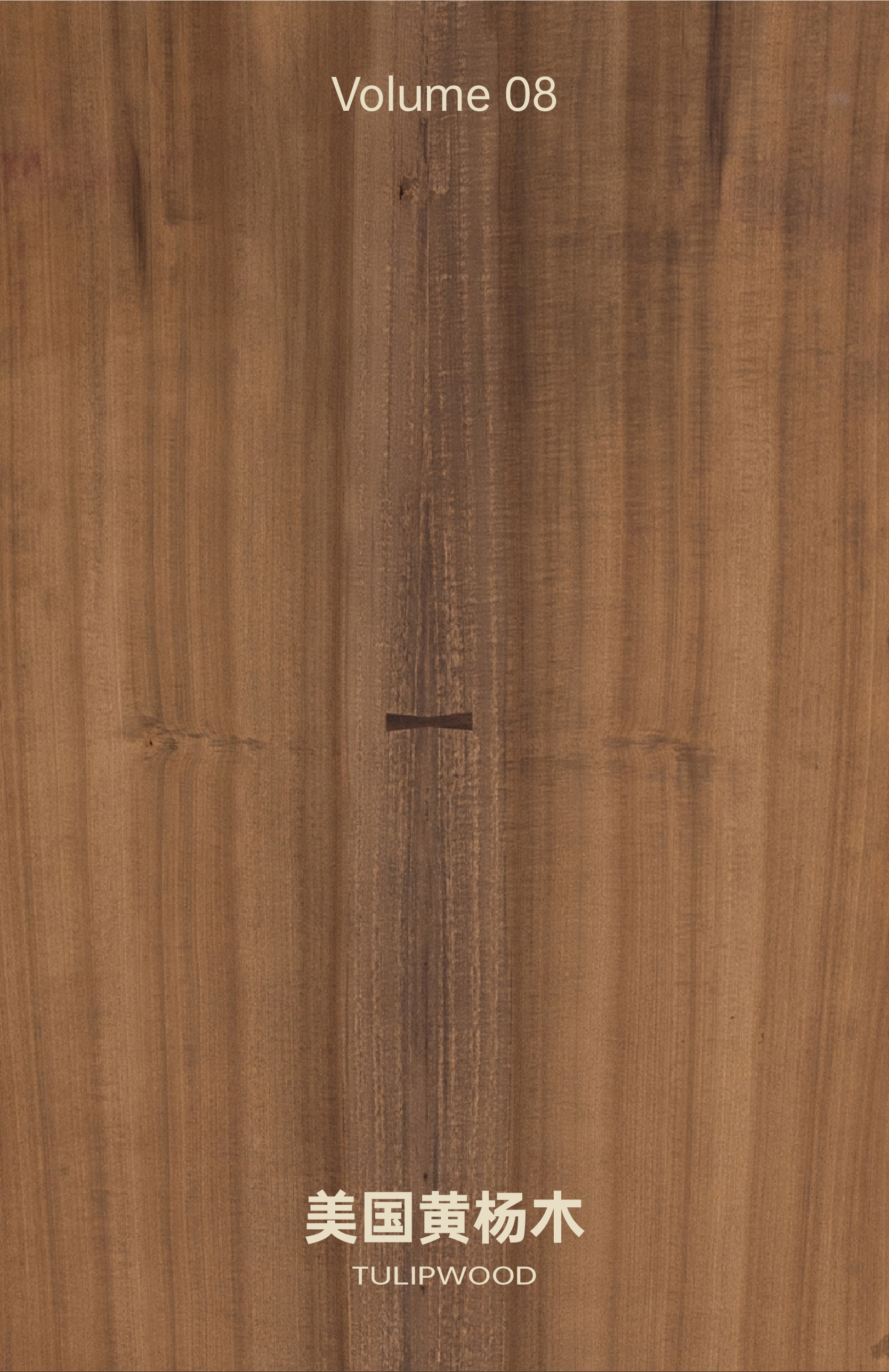
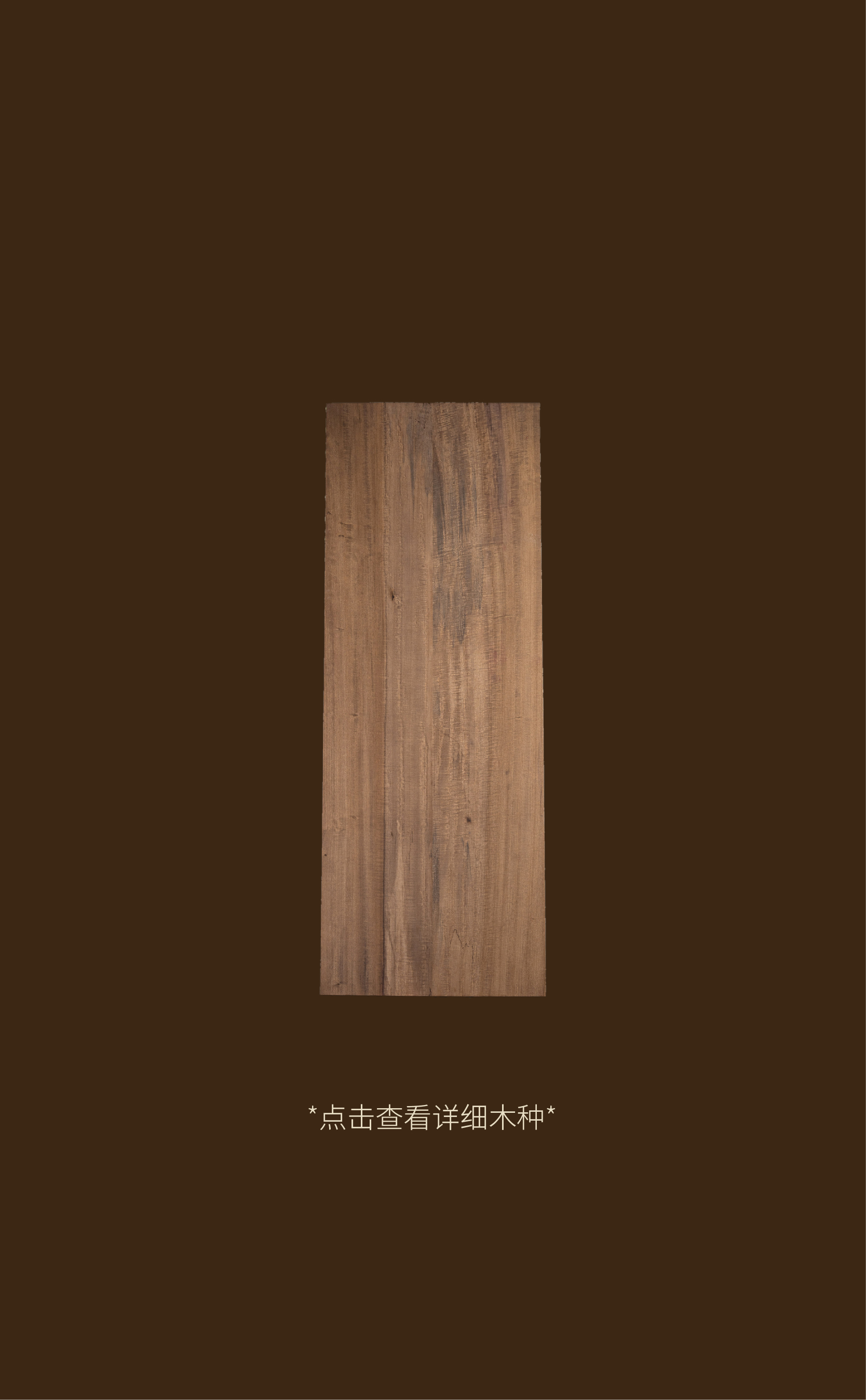
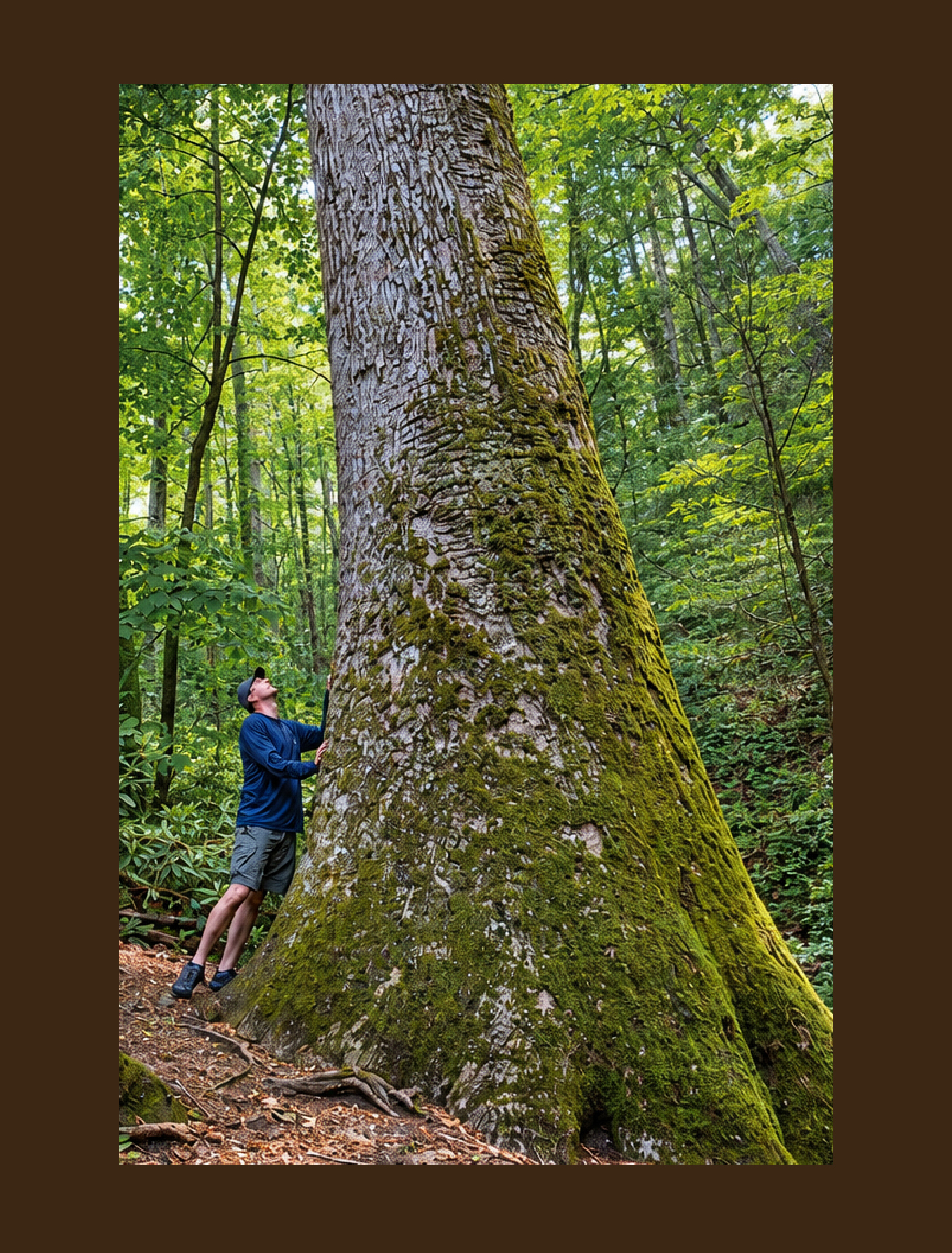
美国黄杨木,多指北美鹅掌楸,也称美国杨木,它广布于美国东部,在俄亥俄河谷及阿巴拉契亚山地生长尤佳,树干高直、少枝,容易取得长而清爽的材面。木质中等偏轻,纹理通常通直而均匀;边材乳白,心材由浅黄褐、绿褐至橄榄色变化,偶尔穿插紫褐、蓝黑或深绿色矿物纹。
Tulipwood here refers primarily to the North American tulip tree, also known as American poplar. It is widespread across the eastern United States and grows especially well in the Ohio Valley and Appalachian regions. Its trunks are tall, straight, and lightly branched, making it possible to obtain long, clean surfaces. The wood is moderately light, with grain that is usually straight and even. The sapwood is creamy white, while the heartwood ranges from pale yellowish brown and greenish brown to olive, sometimes streaked with purple-brown, blue-black, or dark green mineral coloration.
「应用与价值」
Applications and Value
北美原住民曾以高直的大径树干凿制独木舟,因此其也有“独木舟木”之称;早期拓殖生活中,它也用于木屋构件、屋面板、箱柜与各类容器,后来成为家具内构、门窗、木饰面和乐器的常用材料。黄杨木树种资源总体并不稀缺,珍贵之处在于从高等级原木中筛得宽阔、少节、色带自然连贯的整板,尤其是保留绿褐与紫黑矿物纹的木材,每一块都难以复制。
Indigenous peoples of North America hollowed the tall, large-diameter trunks into dugout canoes, giving the species its association with “canoe wood.” In early settler life it was also used for log-building components, roof boards, chests, and containers, and later became a common material for furniture frames, doors and windows, wood paneling, and musical instruments. Tulipwood as a species is not generally scarce; its value lies in selecting wide, minimally knotted slabs with naturally continuous color bands from high-grade logs. Boards that retain green-brown and purplish-black mineral streaking are especially impossible to duplicate.
「现代空间表现」
Expression in Contemporary Spaces
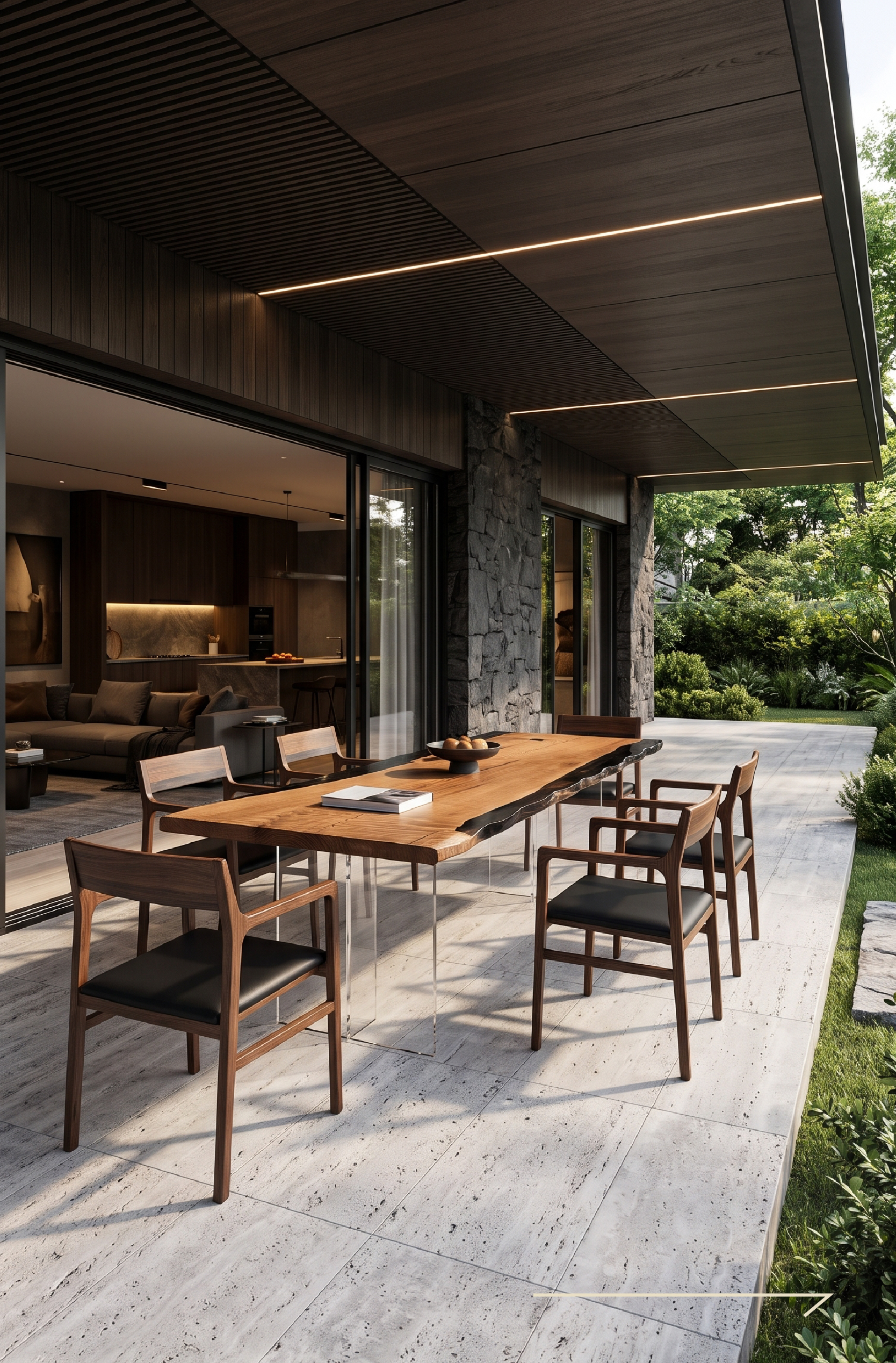
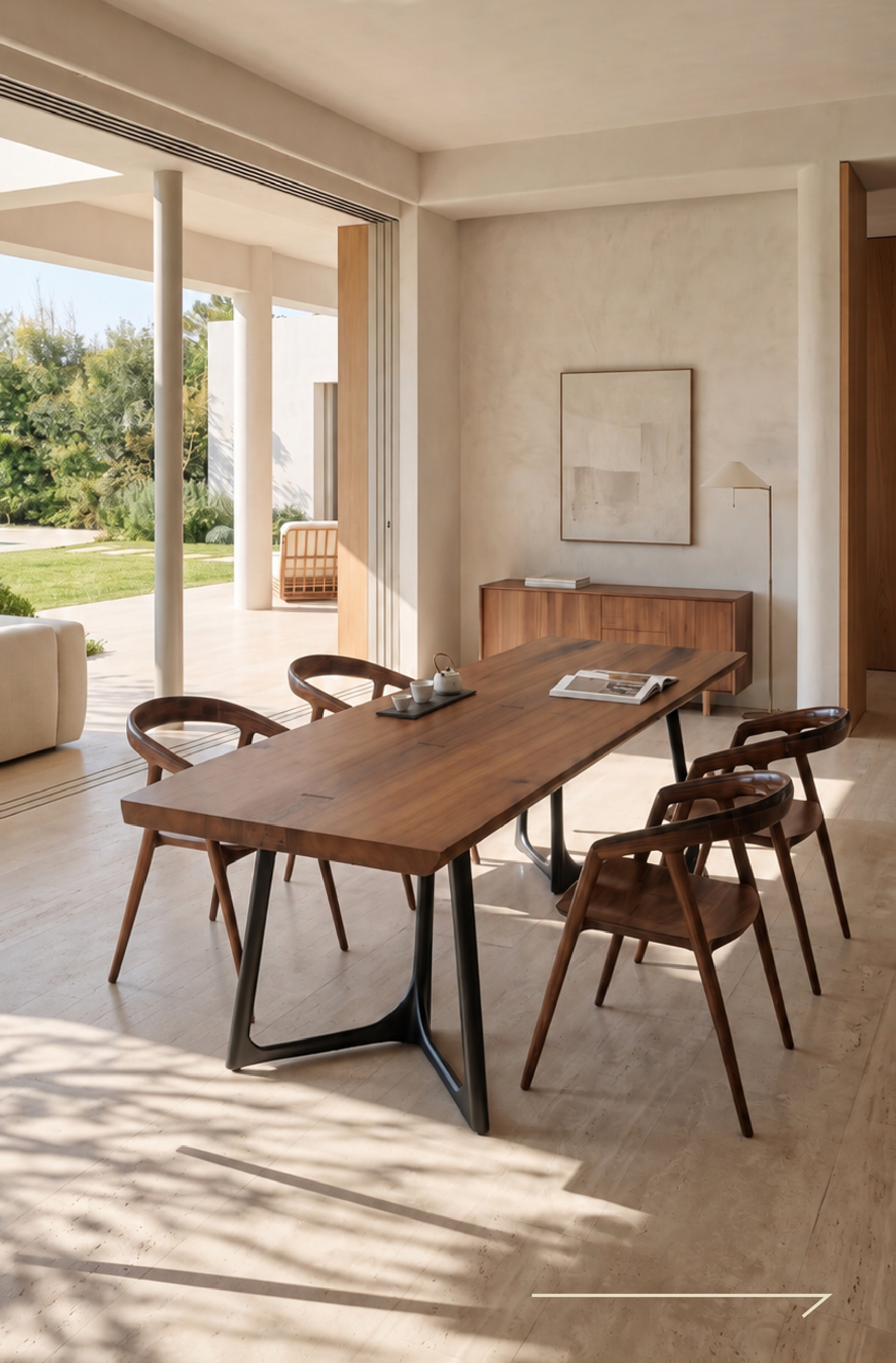
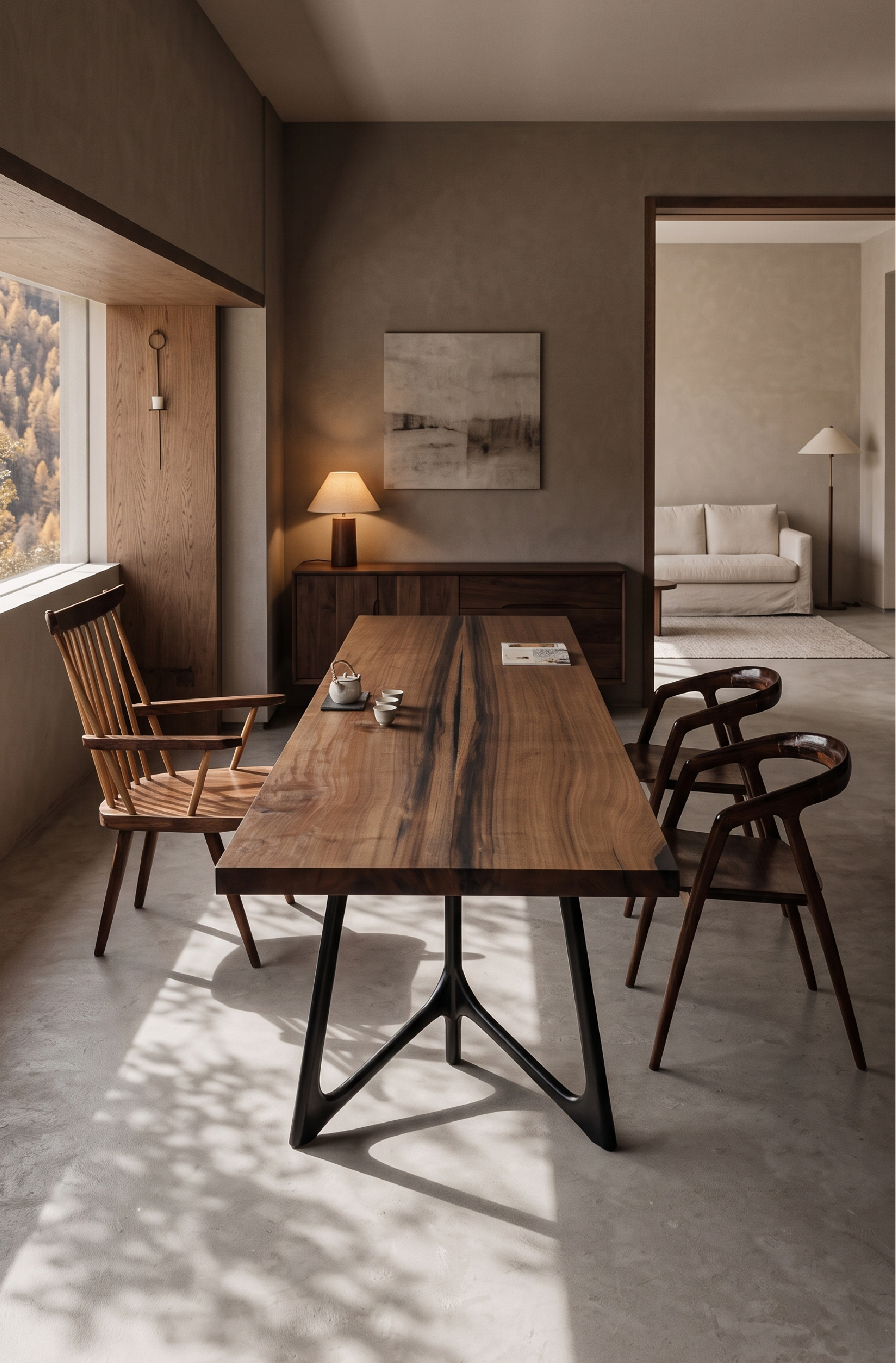
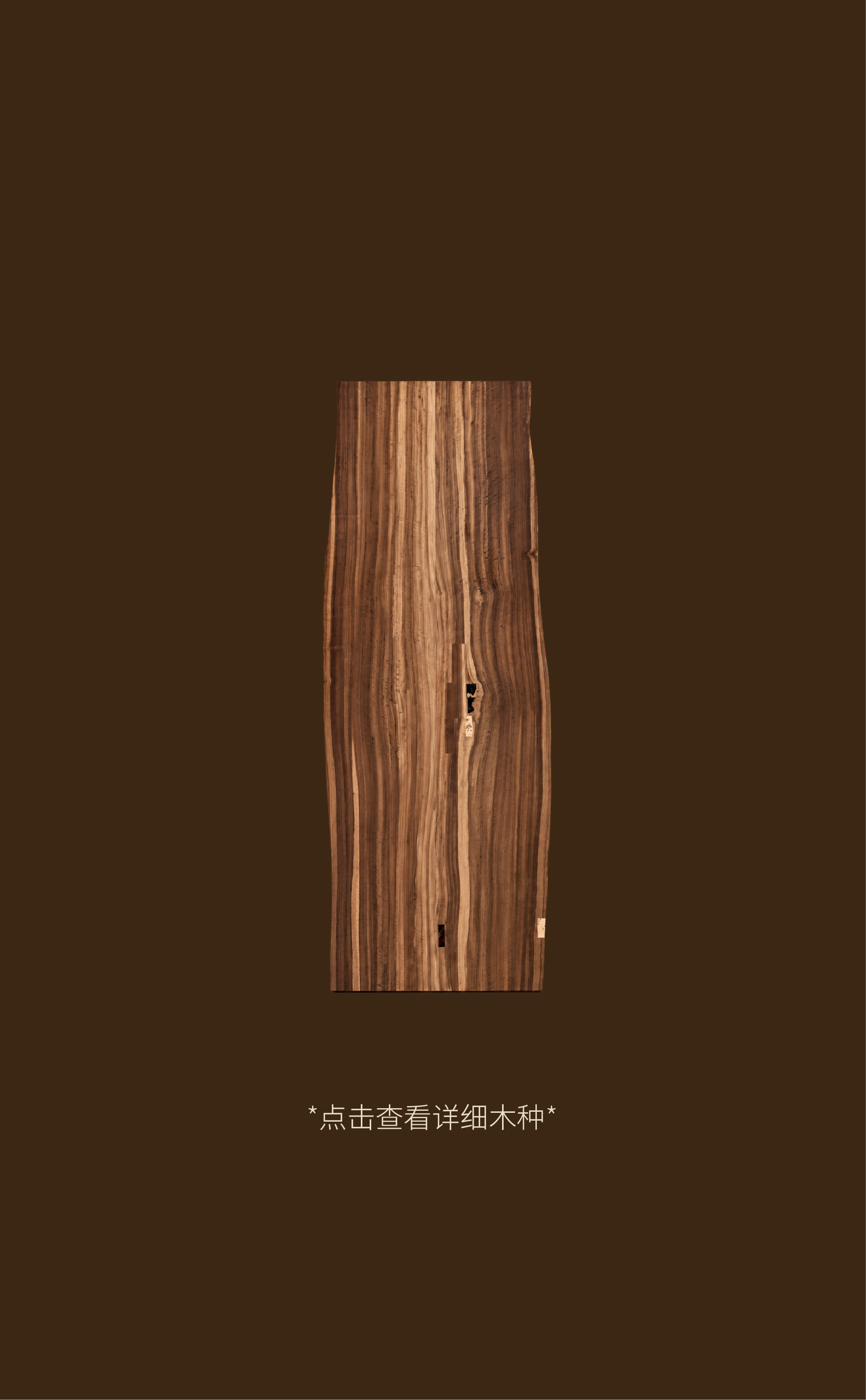
美国黄杨木板面由深浅相间的褐色长纹连续铺开,线条平直,色差克制,只有少量节眼打破均匀节奏。这样的材面适合长尺度会议桌、开放式工作台或现代住宅中的中岛,纵向纹理能够延伸视线,细窄桌面又保持轻盈。与黑色细腿、灰色地坪及低饱和家具搭配,可营造理性、清爽而不失温度的现代氛围。
Across a Tulipwood board, alternating light and dark brown longitudinal grain runs continuously, with straight lines and restrained color variation interrupted only by a few small knots. This character suits long conference tables, open worktables, or kitchen islands in modern homes. The lengthwise grain extends the eye, while a slender tabletop keeps the form light. Paired with slim black legs, gray flooring, and low-saturation furnishings, it creates a modern atmosphere that is rational, crisp, and still warm.
09
澳洲尤加利
Australian eucalyptus
「基本性质」
Basic Properties
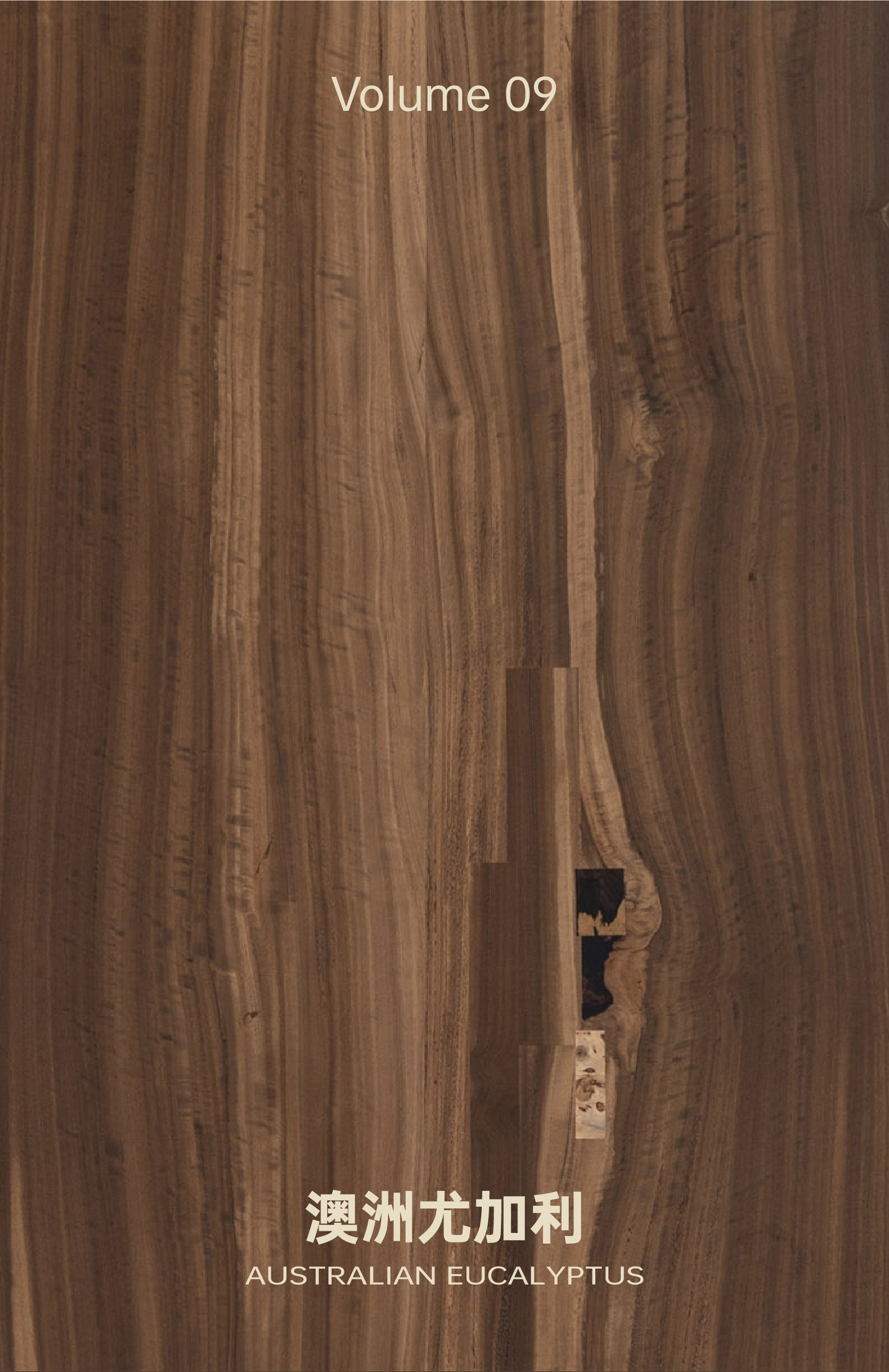
“澳洲尤加利”是桉属及近缘树种的统称,澳大利亚拥有数百种桉类,不同树种的密度、耐久性与色泽差异显著。用于大板的通常是强度较高的硬木,纹理可通直、交错,也可能伴有树胶脉与自然裂隙;色彩从浅黄褐、粉红褐延伸至浓郁红褐,部分老龄材会出现火焰纹、瘿纹和强烈明暗变化,如同澳洲旷野的地貌切片。
“Australian eucalyptus” is a collective term for species of Eucalyptus and related genera. Australia has hundreds of eucalypt species, with substantial differences in density, durability, and color. Woods used for slabs are typically high-strength hardwoods whose grain may be straight or interlocked and may include gum veins and natural fissures. Colors range from pale yellowish brown and pinkish brown to rich reddish brown. Some old-growth material develops flame figure, burl figure, and dramatic light-dark variation, like a cross-section of the Australian outback.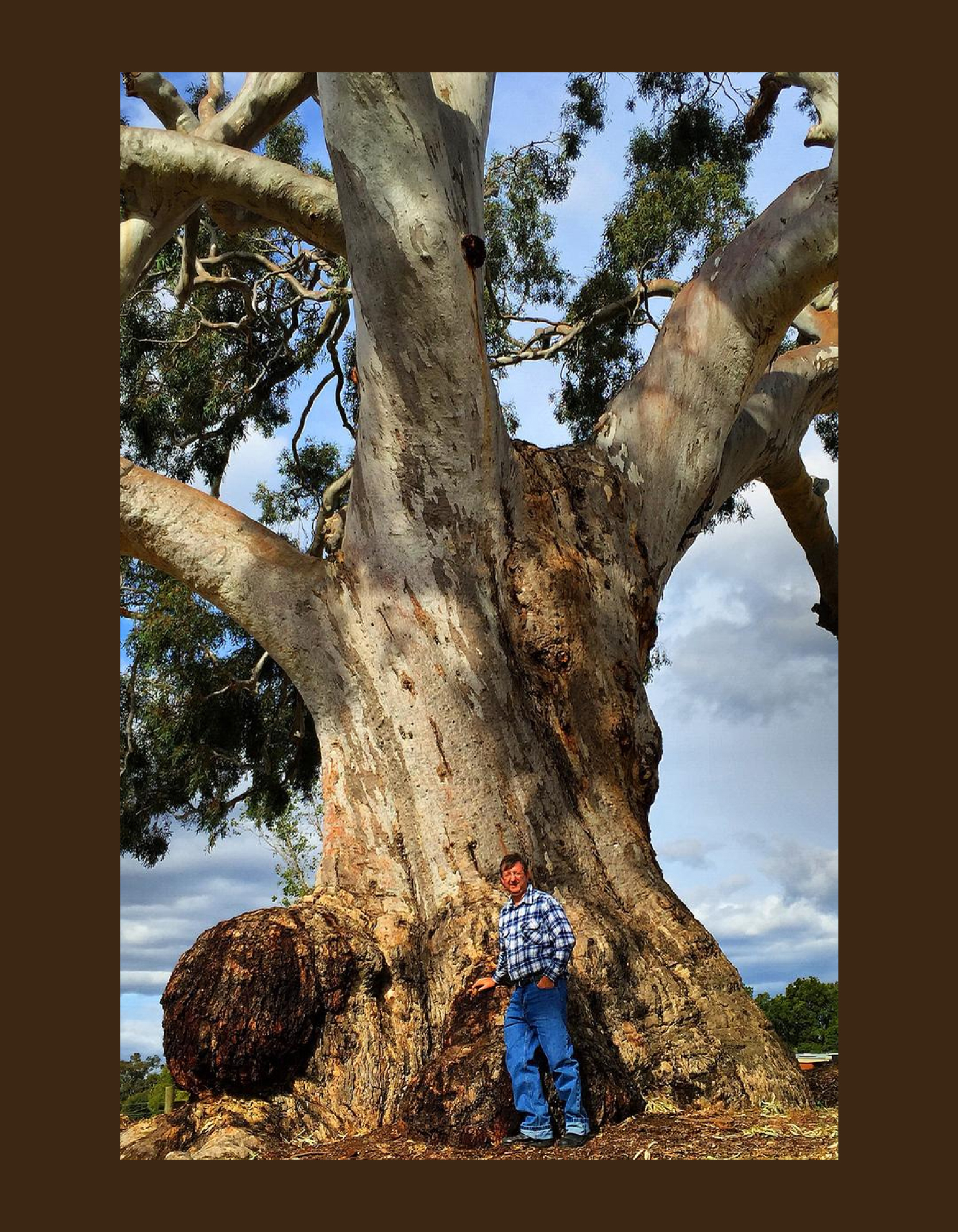
「应用与价值」
Applications and Value
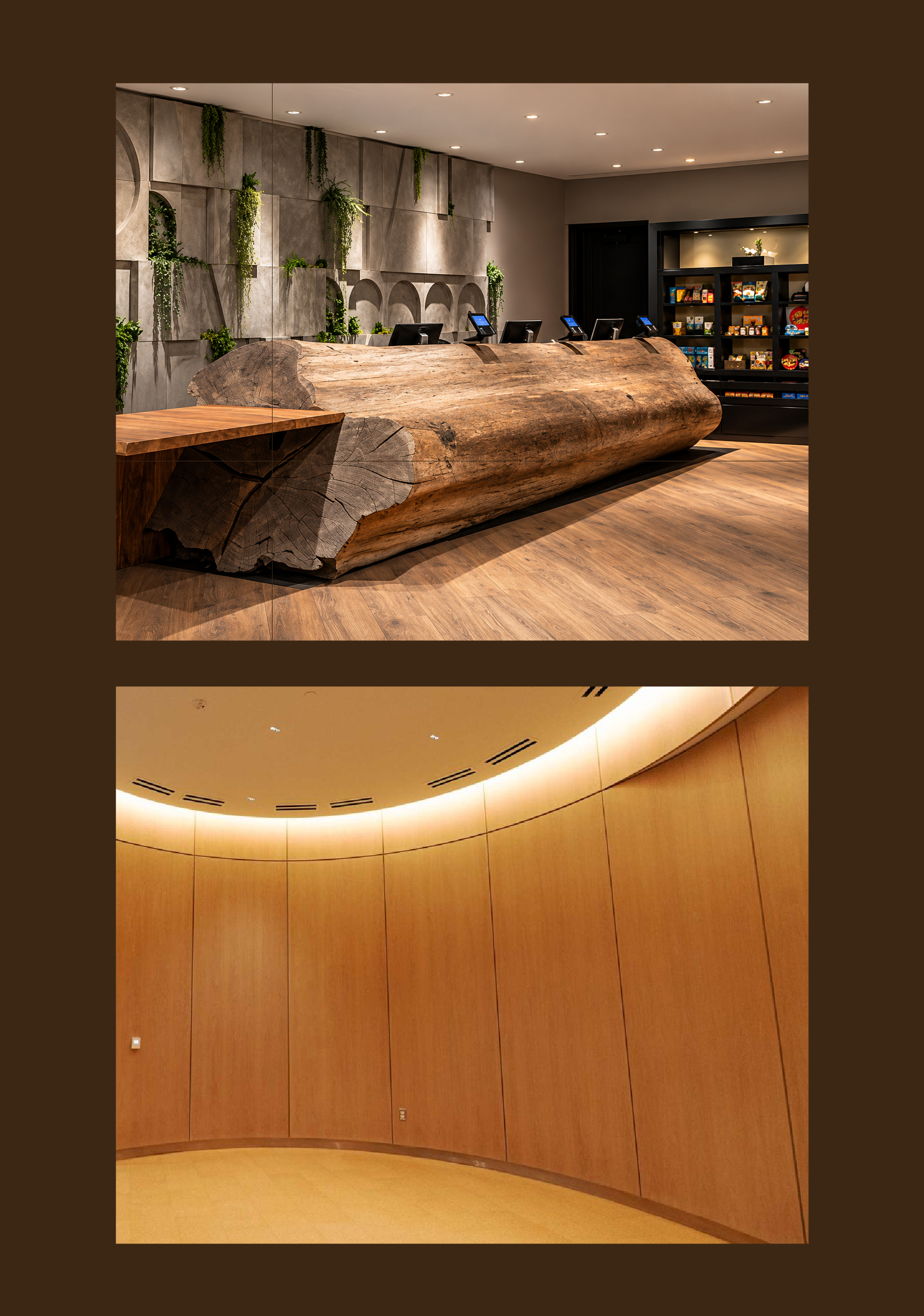
桉类木材构成澳大利亚硬木工业的重要基础,同时持续支撑澳大利亚的城市与交通建设,十九世纪以来,不同树种被广泛用于住宅、桥梁、码头、铁路枕木和船用构件;其中,巨型红桉木构筑的埃楚卡码头,至今仍是墨累河航运贸易时代的重要见证。适合大板的老龄原木密重、内应力强,容易翘曲或开裂,从取材、缓慢干燥到校直,损耗与技术门槛都很高。
Eucalypt timbers form an important foundation of Australia’s hardwood industry and have continuously supported the country’s urban and transport infrastructure. Since the nineteenth century, different species have been widely used in houses, bridges, wharves, railway sleepers, and marine structures. The Echuca Wharf, built from massive red gum, remains an important witness to the era of Murray River shipping and trade. Old-growth logs suitable for slabs are dense and carry strong internal stresses, making them prone to warping or splitting; extraction, slow drying, and straightening all involve high losses and significant technical demands.
「现代空间表现」
Expression in Contemporary Spaces
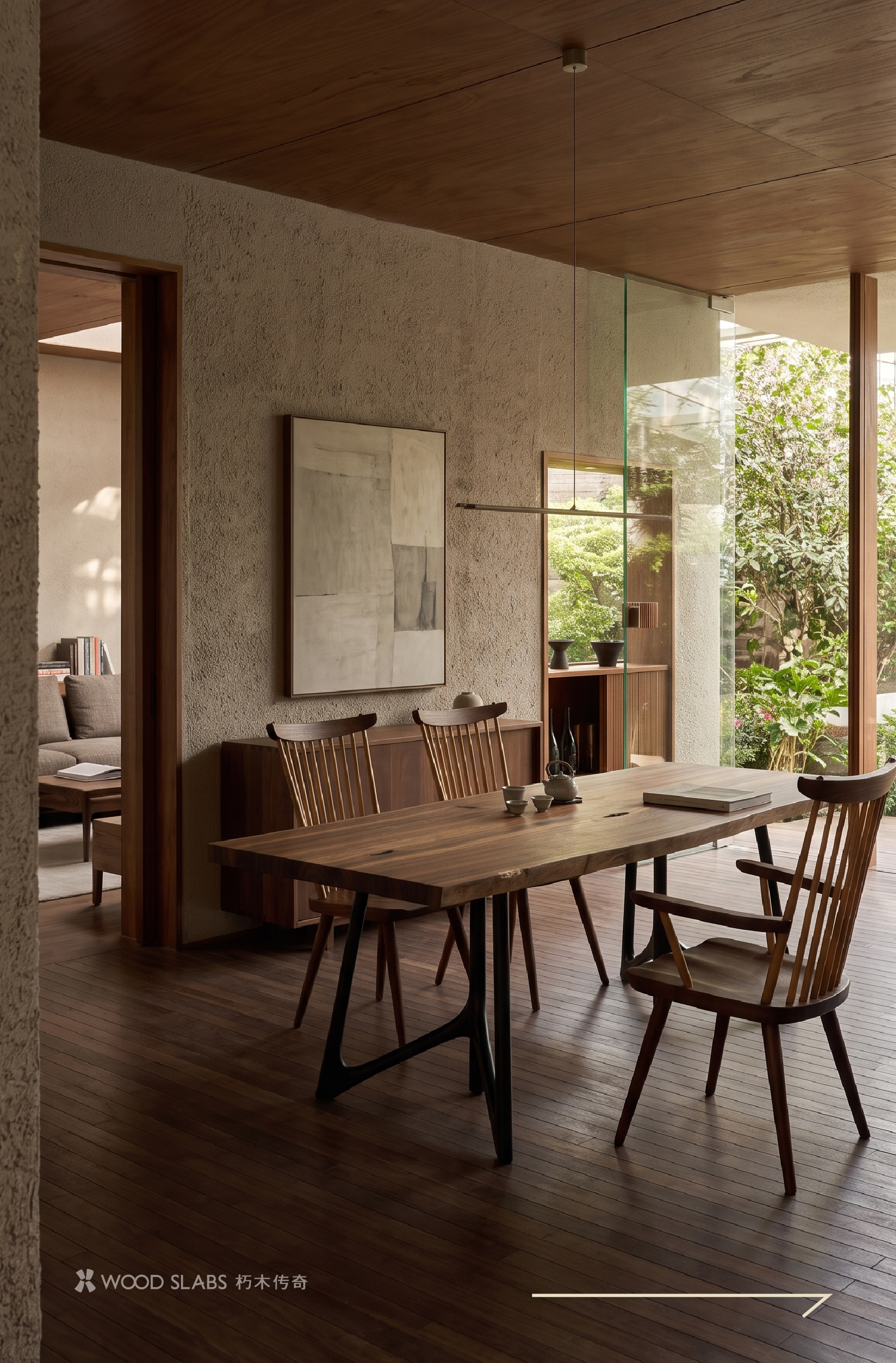
澳洲尤加利呈深胡桃至烟褐色,长而连续的深浅条纹贯穿板面,局部黑色矿物线与细小节眼被收束在稳定的纵向秩序里。它适合用于大尺度会议空间、私人会客厅或酒店公共区,既能以沉稳色调建立分量,又不会因纹理过于奔放而显得粗犷。搭配暖灰墙面、黑钢、皮革,可形成安静、成熟、略带建筑感的空间气质。
Australian eucalyptus ranges from deep walnut to smoky brown, with long, continuous bands of light and dark running across the board. Localized black mineral lines and small knots remain contained within a stable longitudinal order. It suits large conference spaces, private reception rooms, or hotel public areas, establishing weight through its composed color without feeling coarse or unruly. Paired with warm gray walls, blackened steel, and leather, it creates a quiet, mature interior with a subtle architectural quality.
10
日本杉木
Sugi
「基本性质」
Basic Properties
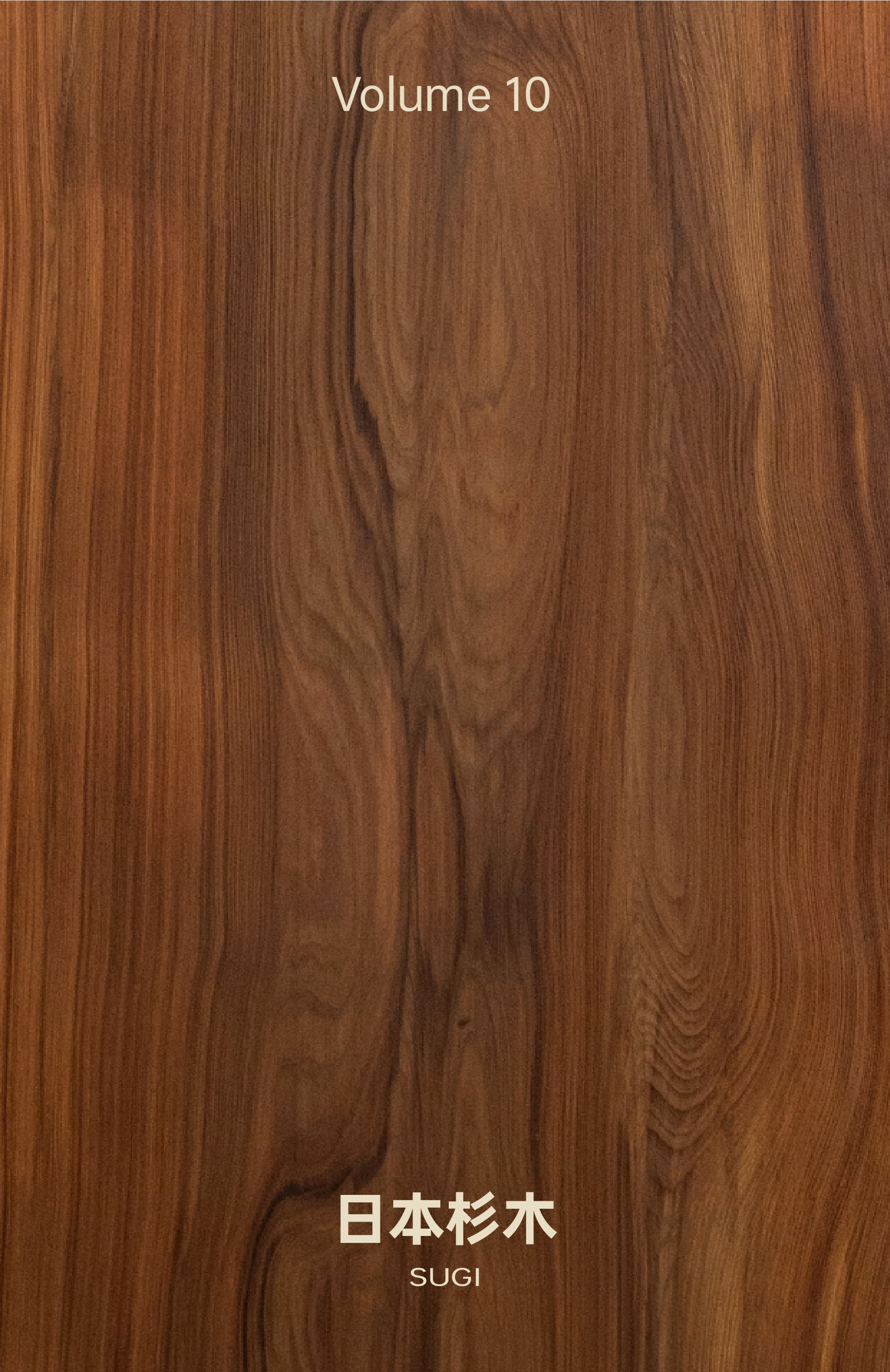
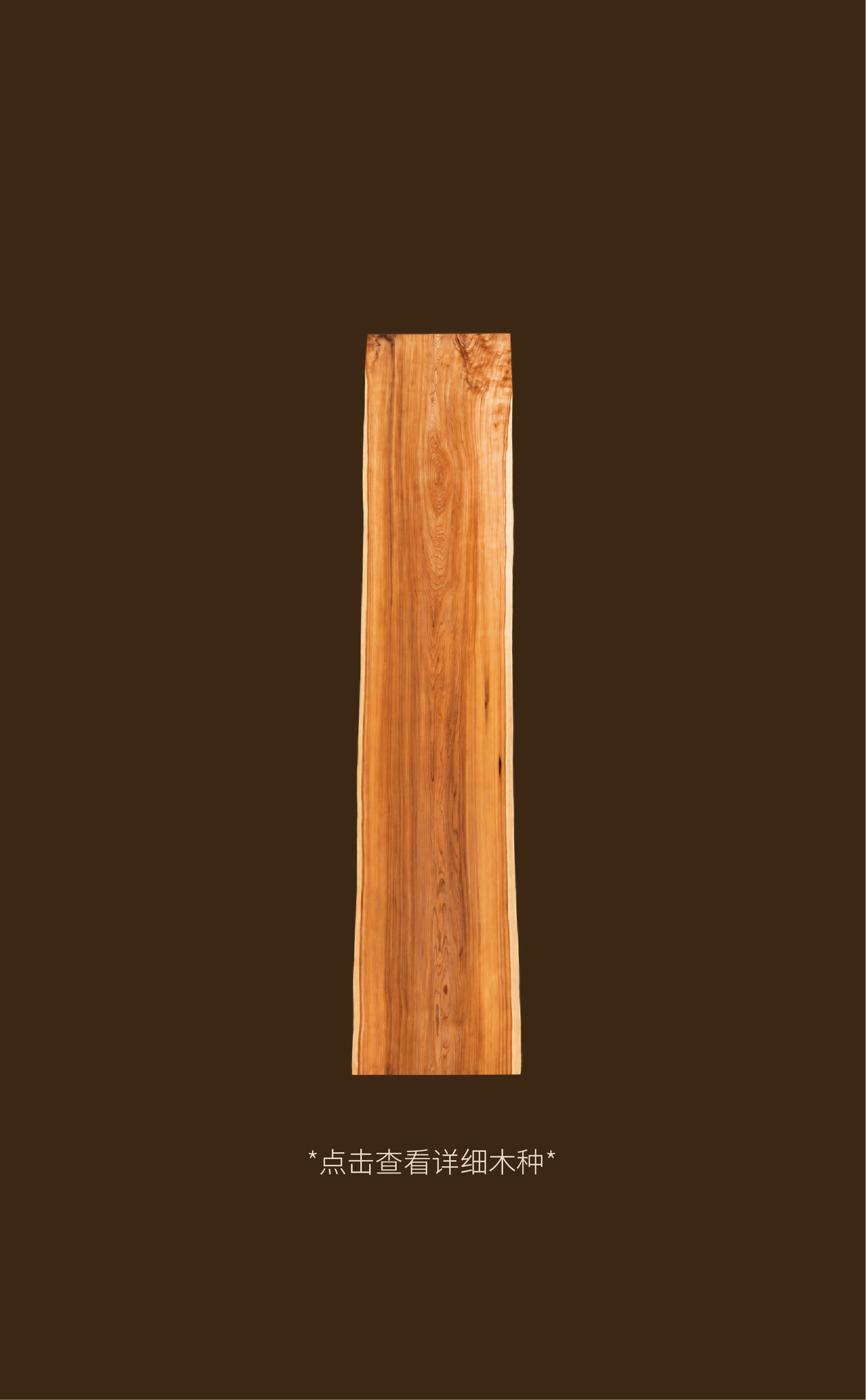
日本杉木通常指日本特有的日本柳杉,自本州北部至四国、九州均有天然分布。木材轻软,纹理通直,切削与加工性能良好,带清新的树脂香;边材呈黄白或乳白色,心材则由淡粉、橙红过渡至赤褐色,部分老龄材可见更深的褐色沉积。弦切面常呈舒展的山形纹,径切面则表现为细长、连贯的平行直纹。
Sugi generally refers to Cryptomeria japonica, a species native to Japan and naturally distributed from northern Honshu through Shikoku and Kyushu. The wood is light and soft, with straight grain, good cutting and working properties, and a fresh resinous fragrance. The sapwood is yellowish or creamy white, while the heartwood transitions from pale pink and orange-red to reddish brown; some old-growth material shows darker brown deposits. Tangential cuts often reveal broad cathedral grain, while radial cuts show fine, continuous parallel lines.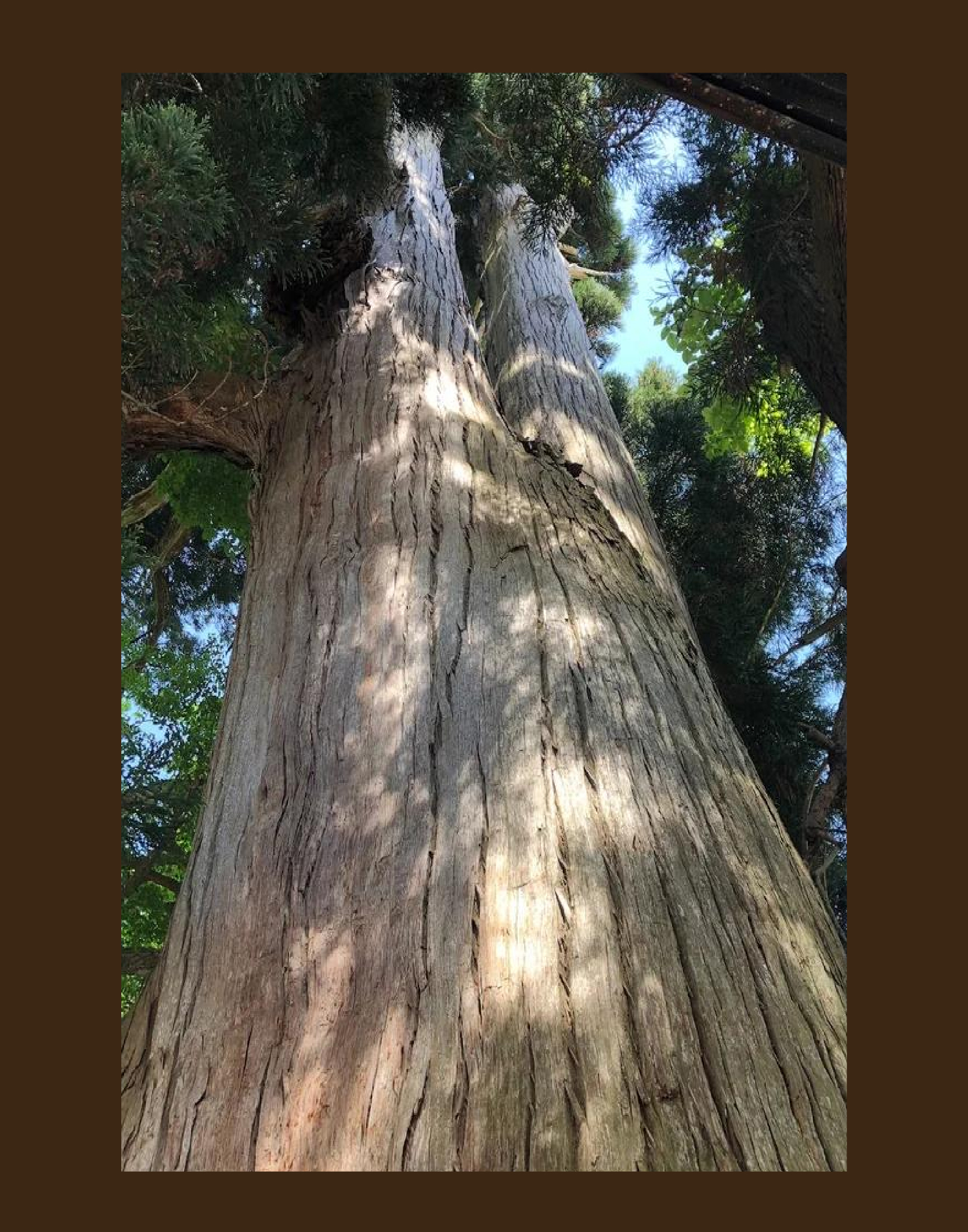
「应用与价值」
Applications and Value
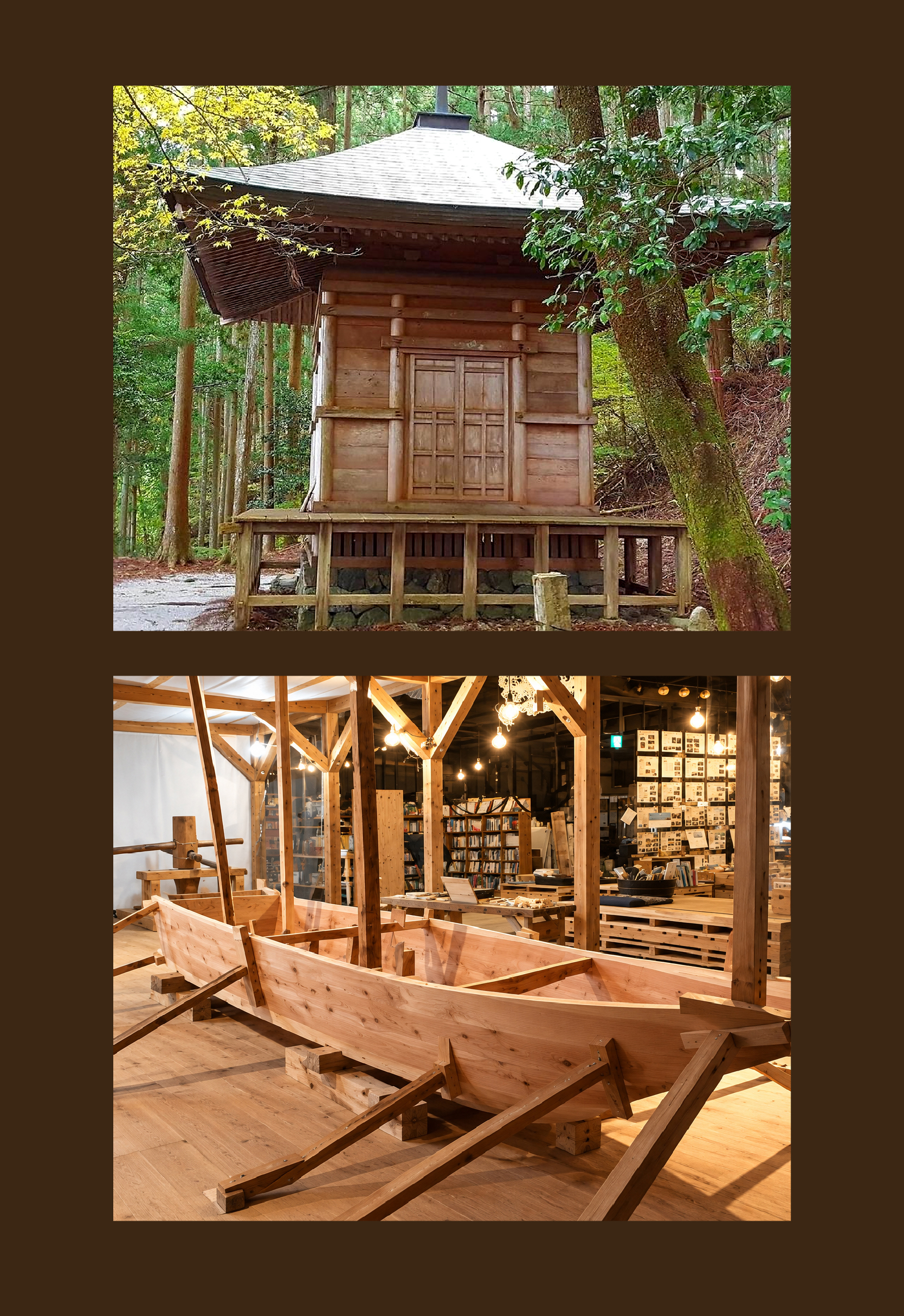
杉木在日本自古用于舟船、房屋、寺社构件、木桶与生活器具,是日本木文化中最普遍也最深厚的材料之一。中世以后,吉野等地逐渐形成长期育林与密植培育传统,为建筑提供通直而少节的良材。普通杉材资源丰富,但年轮细密、色泽稳定的老龄大径材需要漫长生长,适合一枚板的宽材更考研原木的品质。
Sugi has been used in Japan since ancient times for boats, houses, temple and shrine components, wooden tubs, and household implements, making it one of the most widespread and deeply rooted materials in Japanese wood culture. From the medieval period onward, places such as Yoshino gradually developed traditions of long-term silviculture and dense planting to supply straight, minimally knotted construction timber. Ordinary sugi is abundant, but old-growth, large-diameter material with tight growth rings and stable color takes many years to develop, and wide boards suitable for single-slab use place even greater demands on log quality.
「现代空间表现」
Expression in Contemporary Spaces
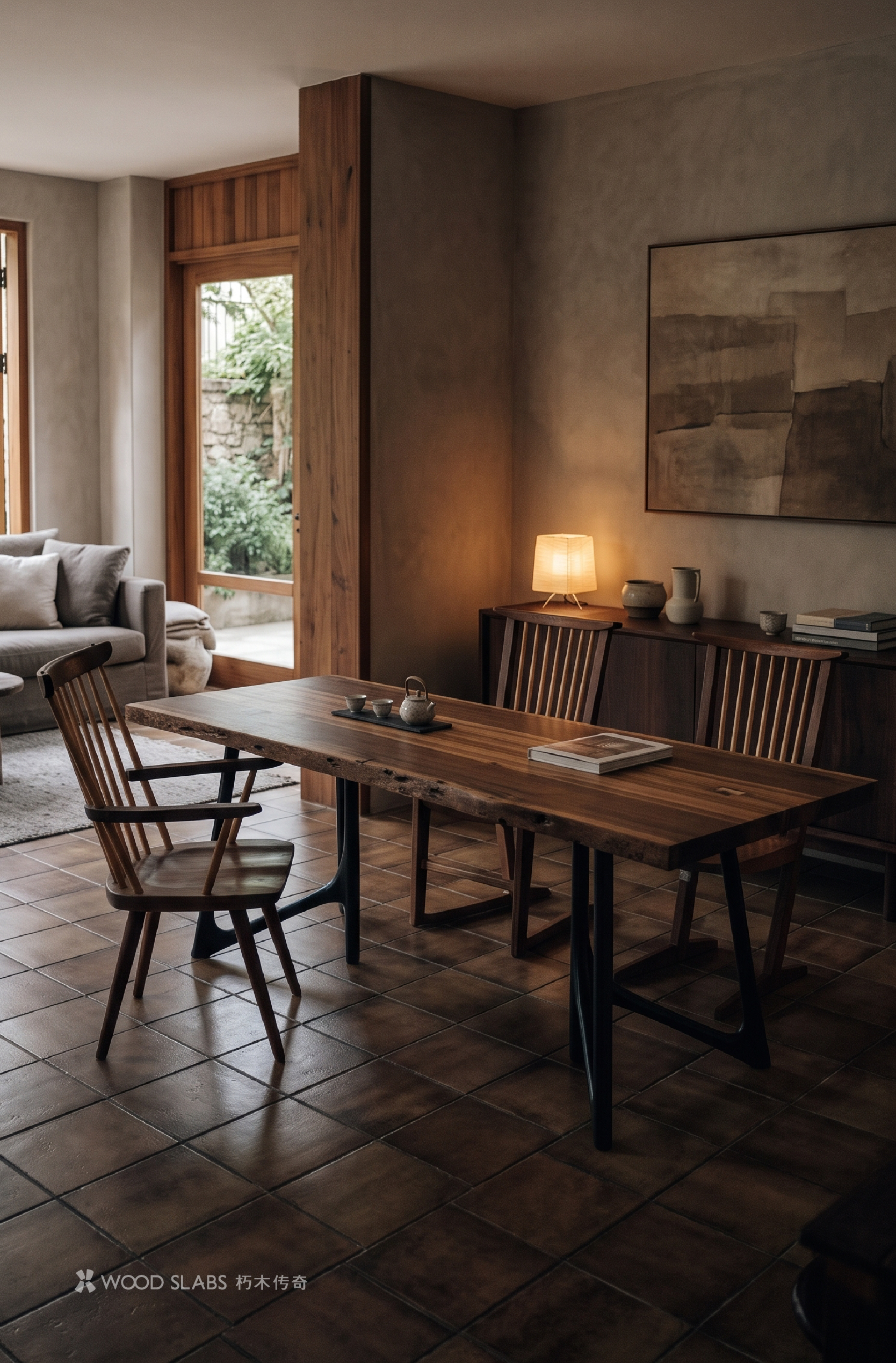
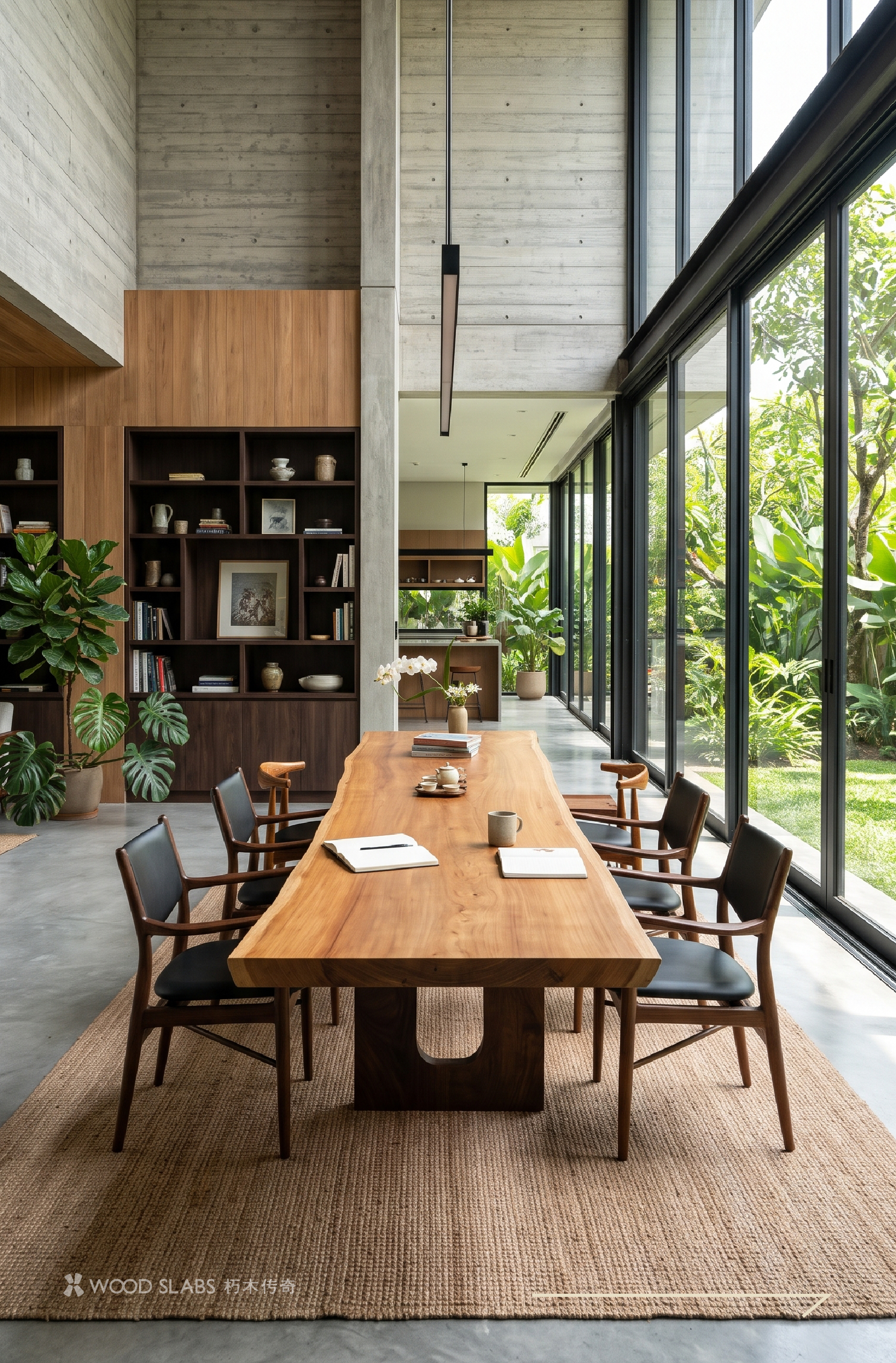
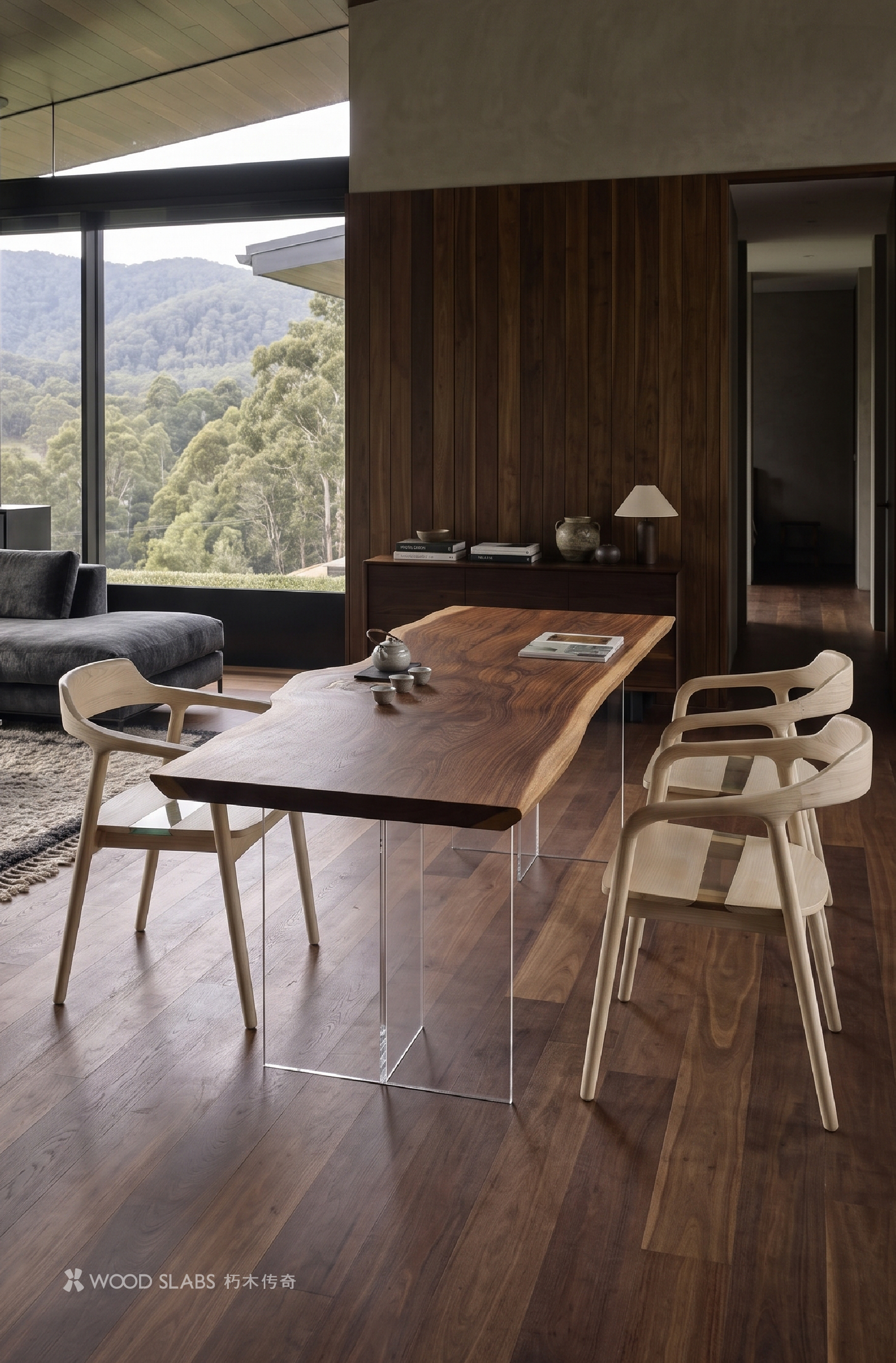
日本杉木的色彩由浅蜜黄过渡至柔和橙褐,细直年轮沿长度自然延伸,板面开阔而少有繁杂变化,呈现出轻和而安然的空间感,尤其适合连续长案、共享工作台、阅读区或公共空间使用,纵向木纹会拉伸空间,轻暖色调则降低大体量家具的压迫感。与白墙、纸灯、浅色织物和黑色细构件搭配,可营造明亮、松弛且富有呼吸感的日式氛围。
Sugi shifts from pale honey yellow to soft orange-brown. Fine, straight growth rings extend naturally along its length, while the broad surface remains free of busy variation, creating a light and tranquil spatial quality. It is particularly suited to continuous long tables, shared worktops, reading areas, and public spaces: the longitudinal grain visually lengthens the room, while the light, warm tone reduces the visual weight of large furniture. Paired with white walls, paper lanterns, pale textiles, and slender black elements, it creates a bright, relaxed Japanese atmosphere with room to breathe.
11
老挝寮桧
Cypress
「基本性质」
Basic Properties
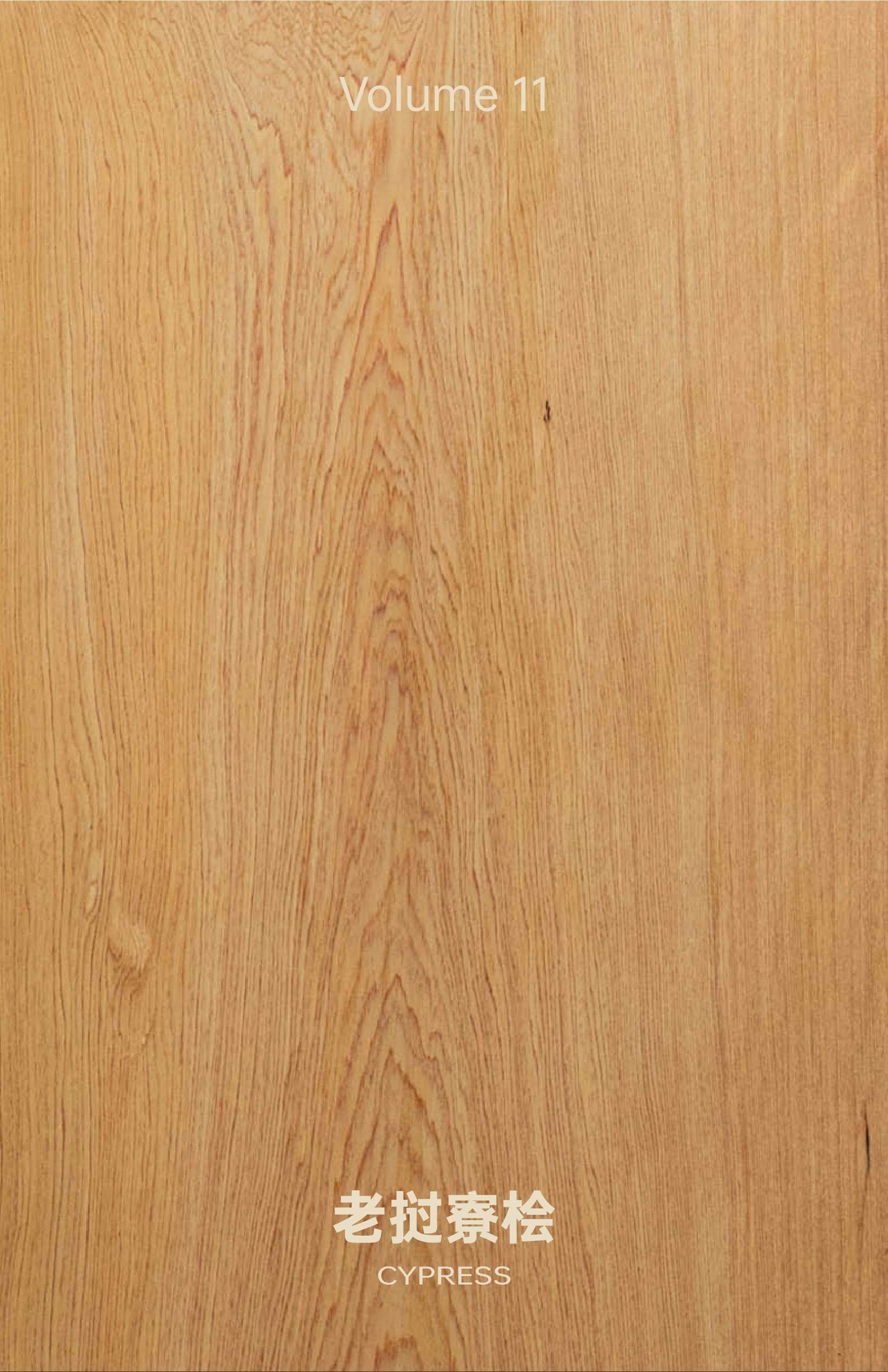
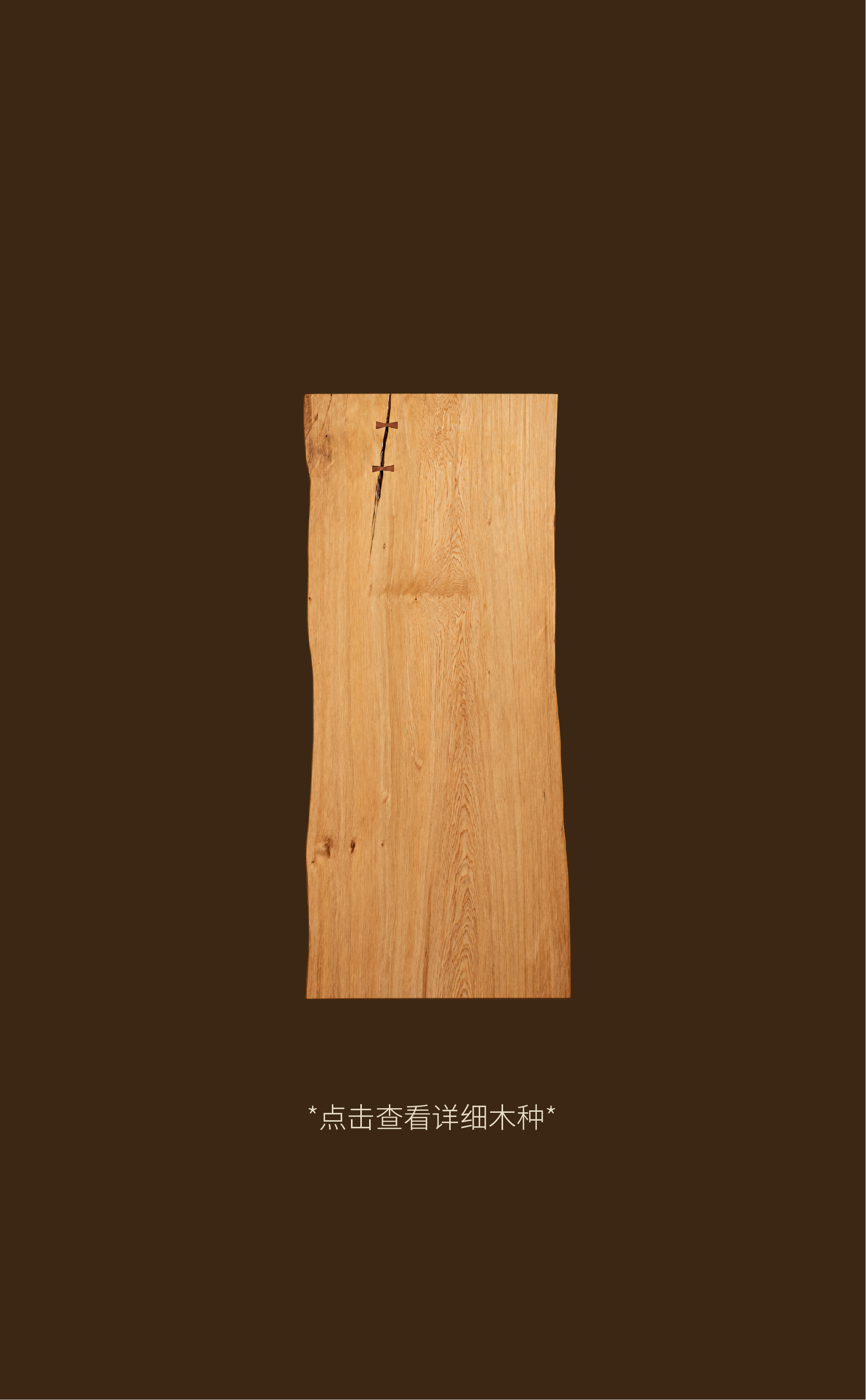
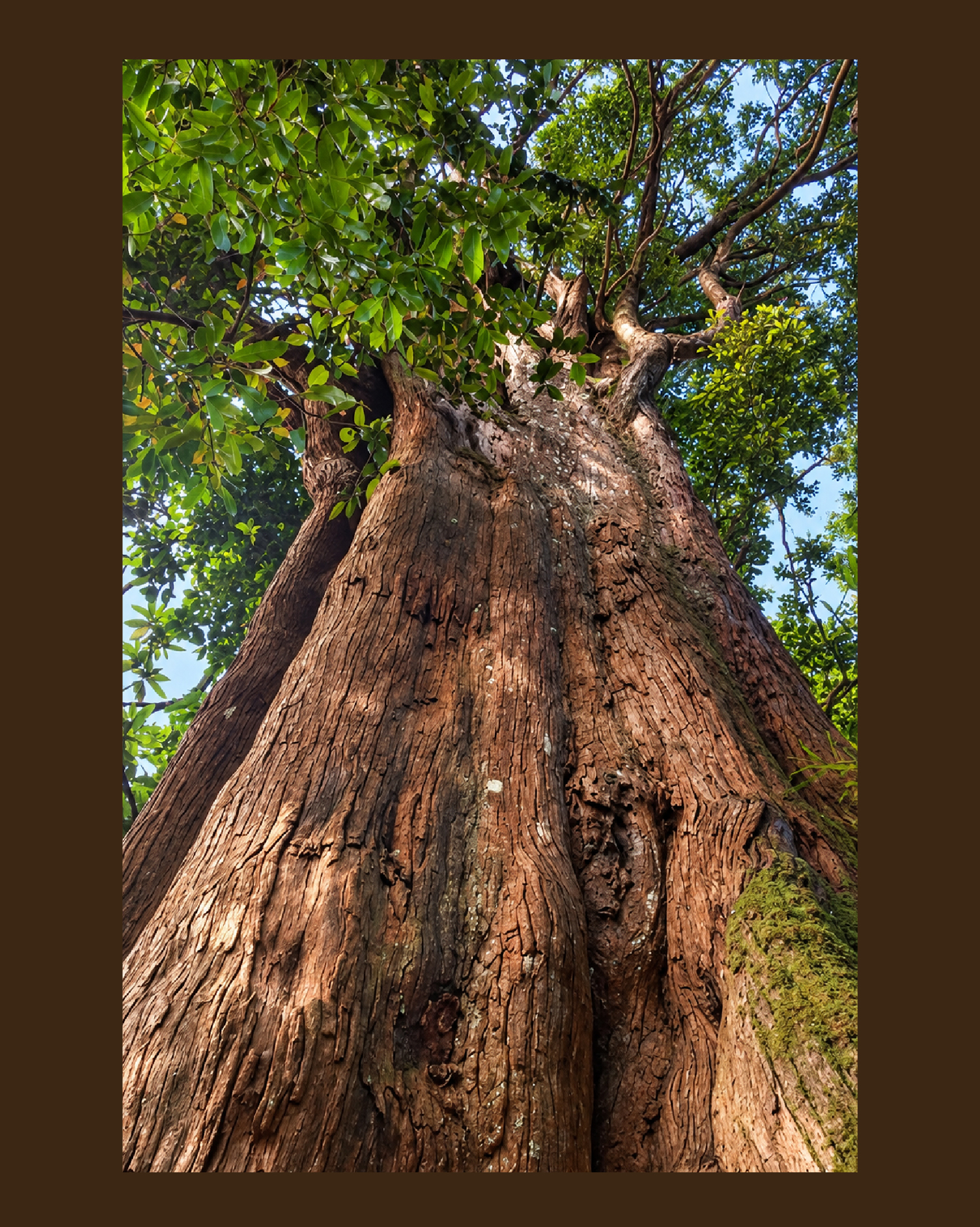
老挝寮桧多生长于湿润的山地森林,生长周期较长。其边材色浅,心材呈黄褐、蜜褐至深褐色,界限分明;木纹细密清晰,打磨后表面细腻,带有柔和光泽。木材富含油脂与芳香成分,木质香气鲜明持久。其材质轻重适中,易于锯切、雕刻和打磨,心材耐腐、抗潮,并具有一定的防虫性,适用于建筑、家具、精细雕刻及器物制作。
Cypress from Laos grows mainly in moist mountain forests and has a relatively long growth cycle. Its sapwood is pale, while the heartwood ranges from yellowish and honey brown to deep brown, with a clear boundary between the two. The grain is fine and distinct; after sanding, the surface is smooth with a gentle sheen. Rich in oils and aromatic compounds, the wood has a pronounced, long-lasting fragrance. It is moderate in weight, easy to saw, carve, and polish, while the heartwood resists decay and moisture and offers some insect resistance, making it suitable for architecture, furniture, fine carving, and crafted objects.
「应用与价值」
Applications and Value
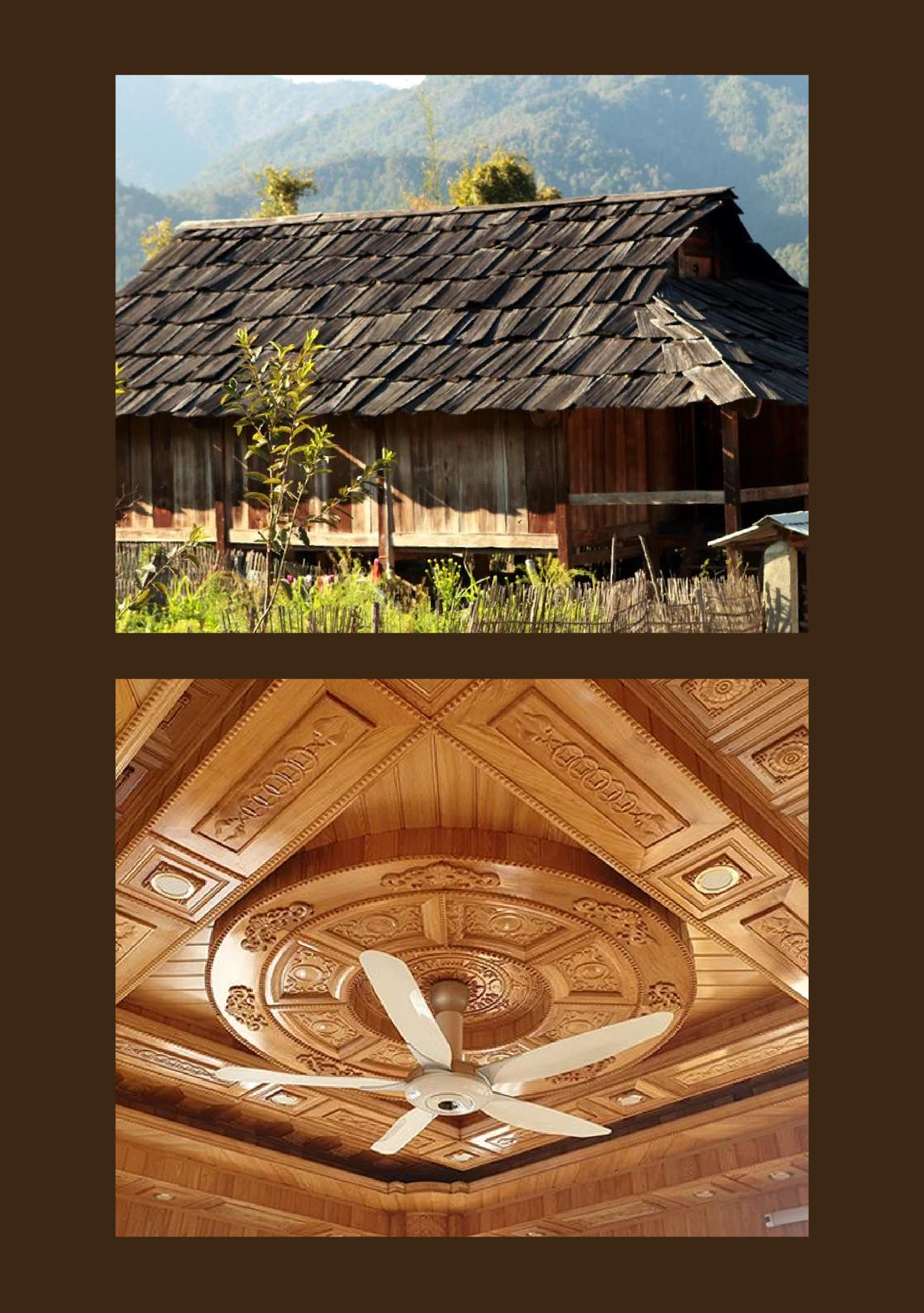
在老挝及中南半岛的传统用材中,寮桧因耐久、易加工而备受重视,广泛用于房屋构件、木瓦、门窗、家具及生活器具。其纹理细密,也适合制作木雕、人物造像和装饰构件。老木、根部及加工余料还可提取芳香精油,用于香料和传统芳香制品。从建筑、家具到雕刻与制香,寮桧不仅是一种优质木材,也承载着当地的居住方式、木作技艺与文化传统。
In the traditional timber culture of Laos and the Indochinese Peninsula, Cypress has long been prized for its durability and workability and widely used for structural house elements, shingles, doors and windows, furniture, and household implements. Its fine grain also suits woodcarving, figurative sculpture, and decorative components. Old wood, roots, and processing offcuts can be distilled for aromatic oil used in fragrances and traditional scented products. From buildings and furniture to carving and incense-making, Cypress is not only a high-quality timber but also a bearer of local ways of living, woodworking skills, and cultural traditions.
「现代空间表现」
Expression in Contemporary Spaces
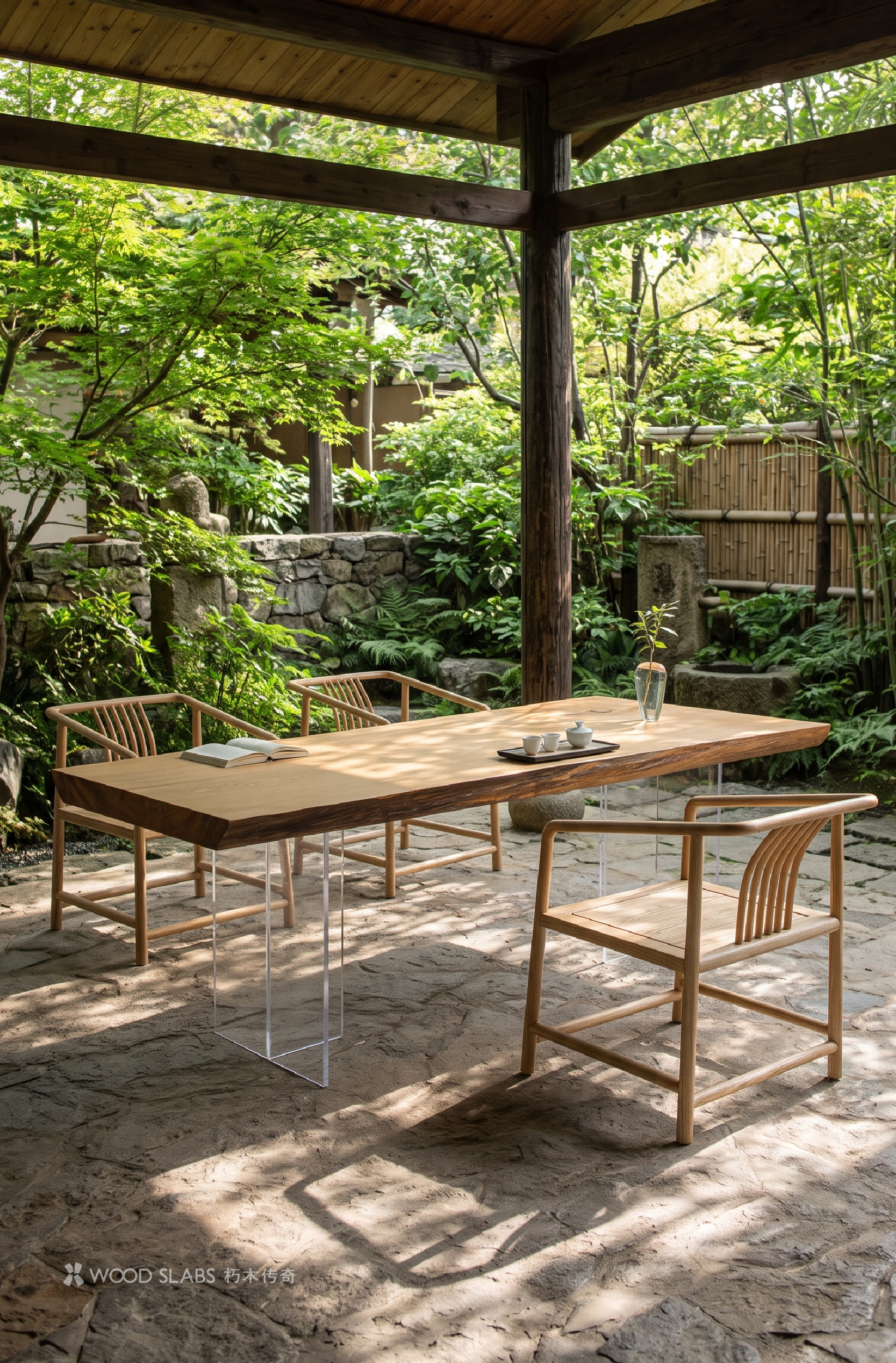
老挝寮桧色泽温润,由淡蜜黄过渡至柔和金褐,细直的纹理沿板面安静铺陈。作为大板桌置于现代空间,它的存在感并不来自浓重的颜色,而在于克制的光泽与隐约木香。与素墙、石材、亚麻和深色木作相配,能够缓和空间的冷峻,让环境显得清净、沉着。人在其中,会自然慢下来。
Cypress from Laos has a warm color that shifts from pale honey yellow to soft golden brown, with fine, straight grain spreading quietly across the board. As a slab table in a modern interior, its presence comes not from a heavy color but from its restrained sheen and subtle woody fragrance. Paired with plain walls, stone, linen, and dark woodwork, it softens an austere setting and makes the environment feel clear and composed. People naturally slow down within it.
12
欧洲尼斯木
European lacewood
「基本性质」
Basic Properties
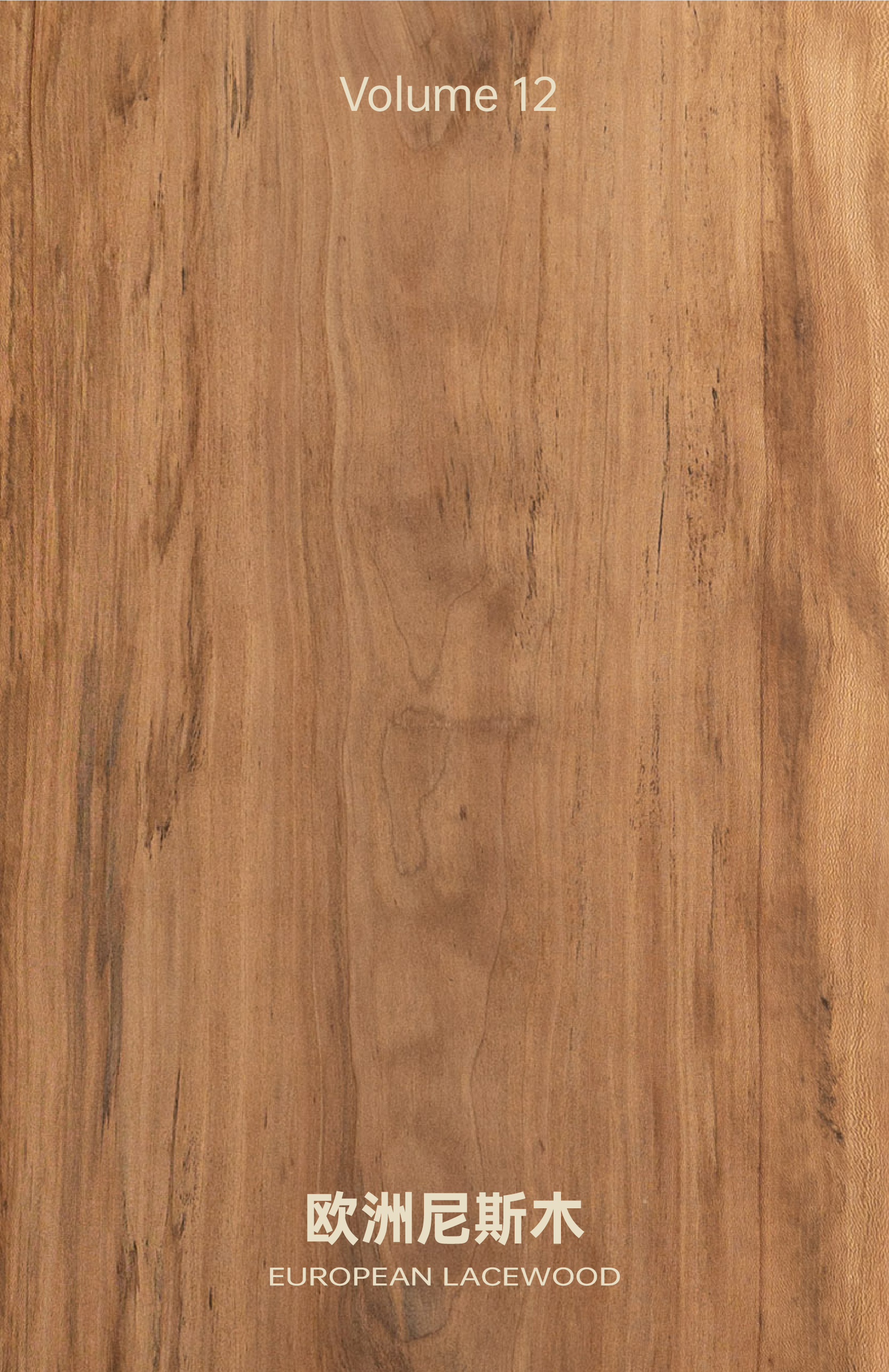
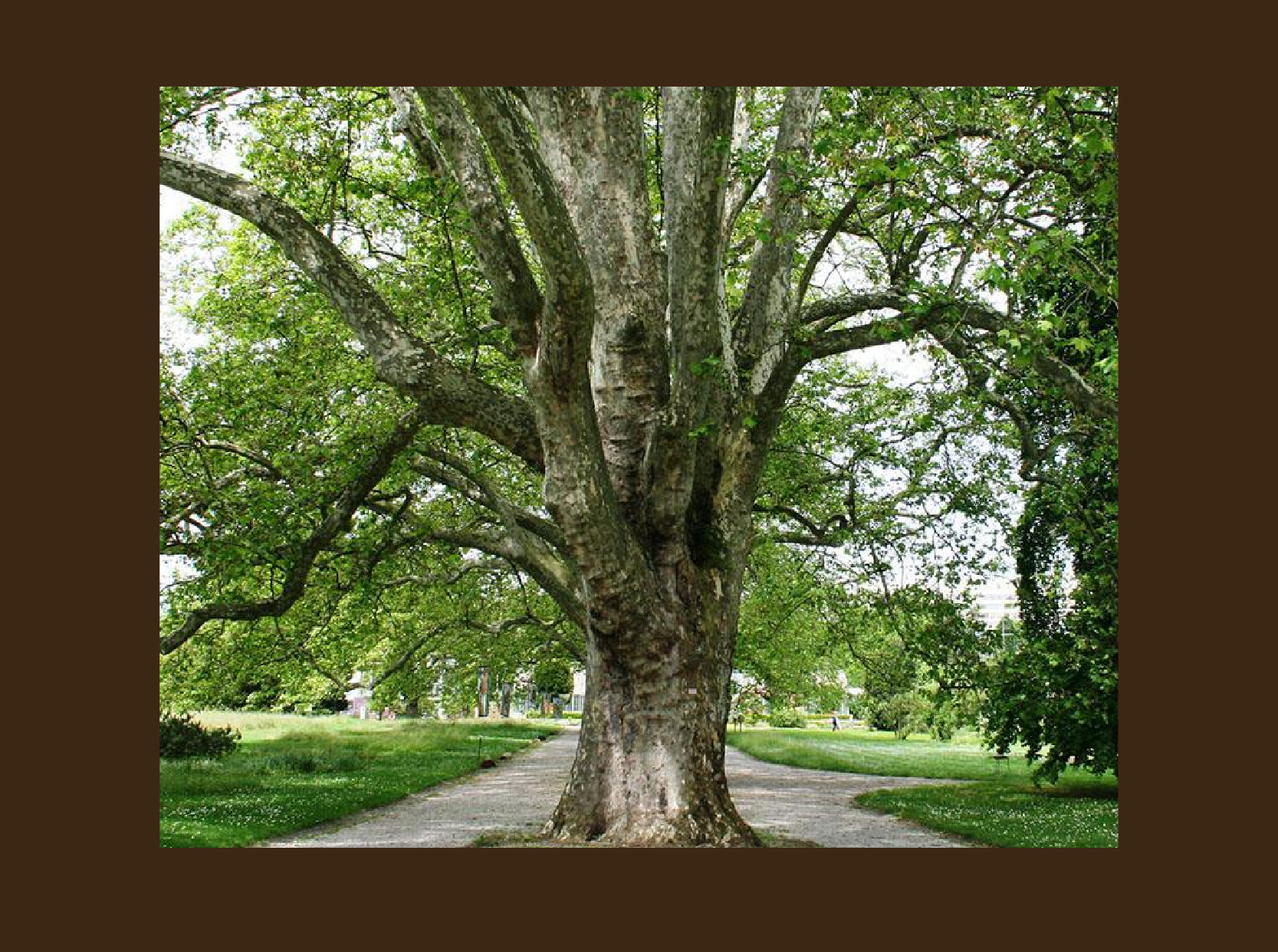
欧洲尼斯木,通常指产自英国、法国、比利时及欧洲其他地区的悬铃木属木材,木材质地细密,边材呈乳白至浅黄色,心材则由淡金褐、粉褐逐渐过渡至温暖的红褐色。其最鲜明的特征是宽大的木射线,径切时会形成连续的鳞片、网格或蕾丝状斑纹,并随光线显现细微光泽;弦切时纹理则更舒缓,呈现云雾般的深浅变化。
European lacewood usually refers to wood from plane trees grown in Britain, France, Belgium, and other parts of Europe. The wood is fine-textured, with sapwood ranging from creamy white to pale yellow and heartwood transitioning from light golden and pinkish brown to warm reddish brown. Its most distinctive feature is its broad rays: when quarter-sawn, they form continuous scale-like, netted, or lace-like figure with a subtle sheen that shifts in the light. On tangential cuts, the grain is more relaxed, with cloud-like variations of light and shade.
「应用与价值」
Applications and Value
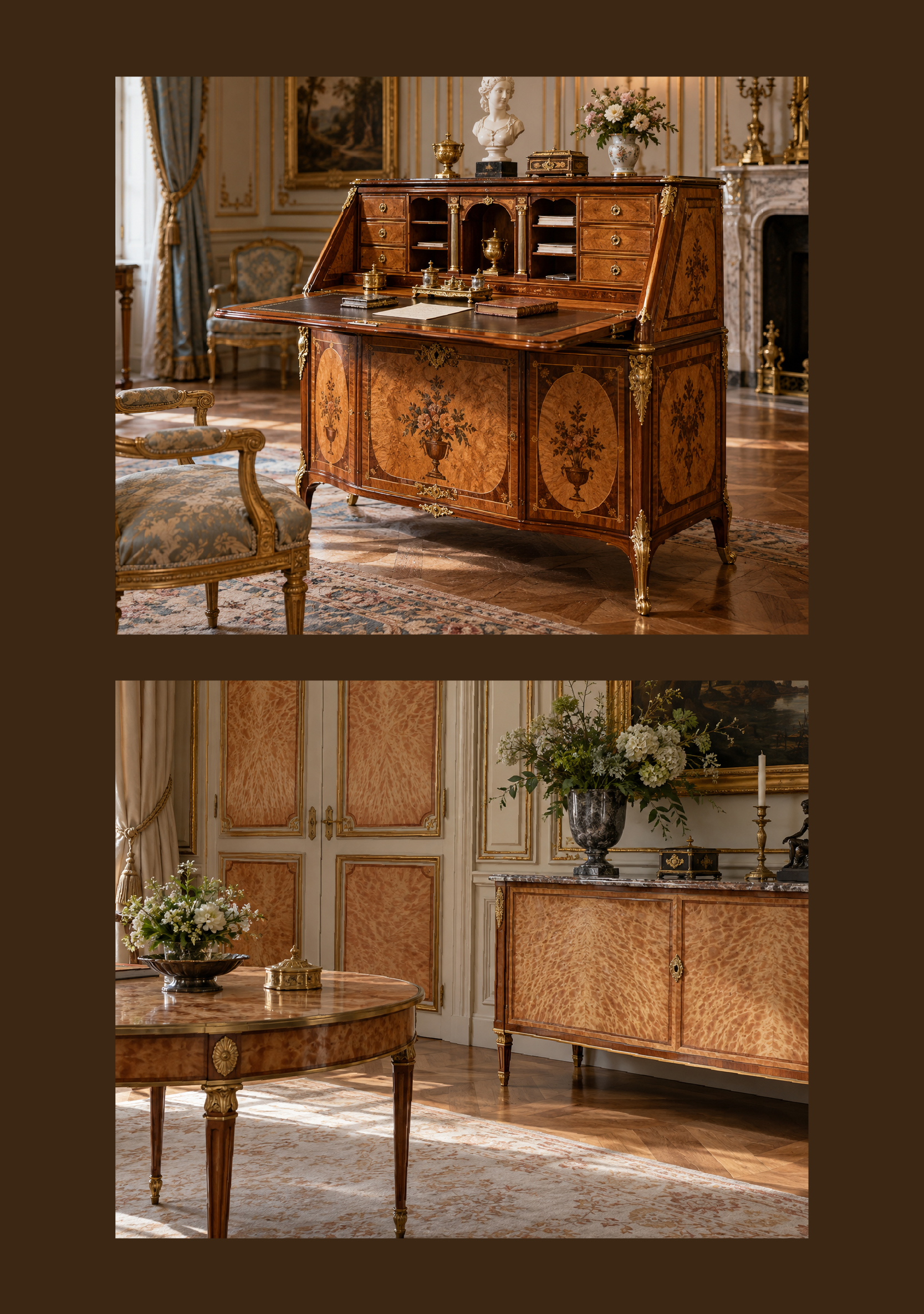
十八世纪的欧洲精细家具中,尼斯木已被用于木皮、拼花与镶嵌装饰。英国斯科特尼城堡收藏的一件约1790年彭布罗克桌,便以尼斯木配合多种英国本土木材完成复杂拼花;德国伦琴工坊为欧洲贵族制作的高级写字台中,也可见尼斯木皮的运用。它在历史上并非承担建筑结构的主材,而是凭借径切后细密而富有光泽的射线纹,进入高级家具与室内细木作体系。
By the eighteenth century, European lacewood was already used for veneer, marquetry, and inlay in fine European furniture. A Pembroke table dating to around 1790 in the collection of Scotney Castle in England combines lacewood with several native British timbers in intricate marquetry. Lacewood veneer also appears in high-end writing desks made for European aristocracy by the Roentgen workshop in Germany. Historically, it was not a primary structural building timber; instead, its fine, lustrous ray figure when quarter-sawn brought it into the traditions of luxury furniture and architectural joinery.
「现代空间表现」
Expression in Contemporary Spaces
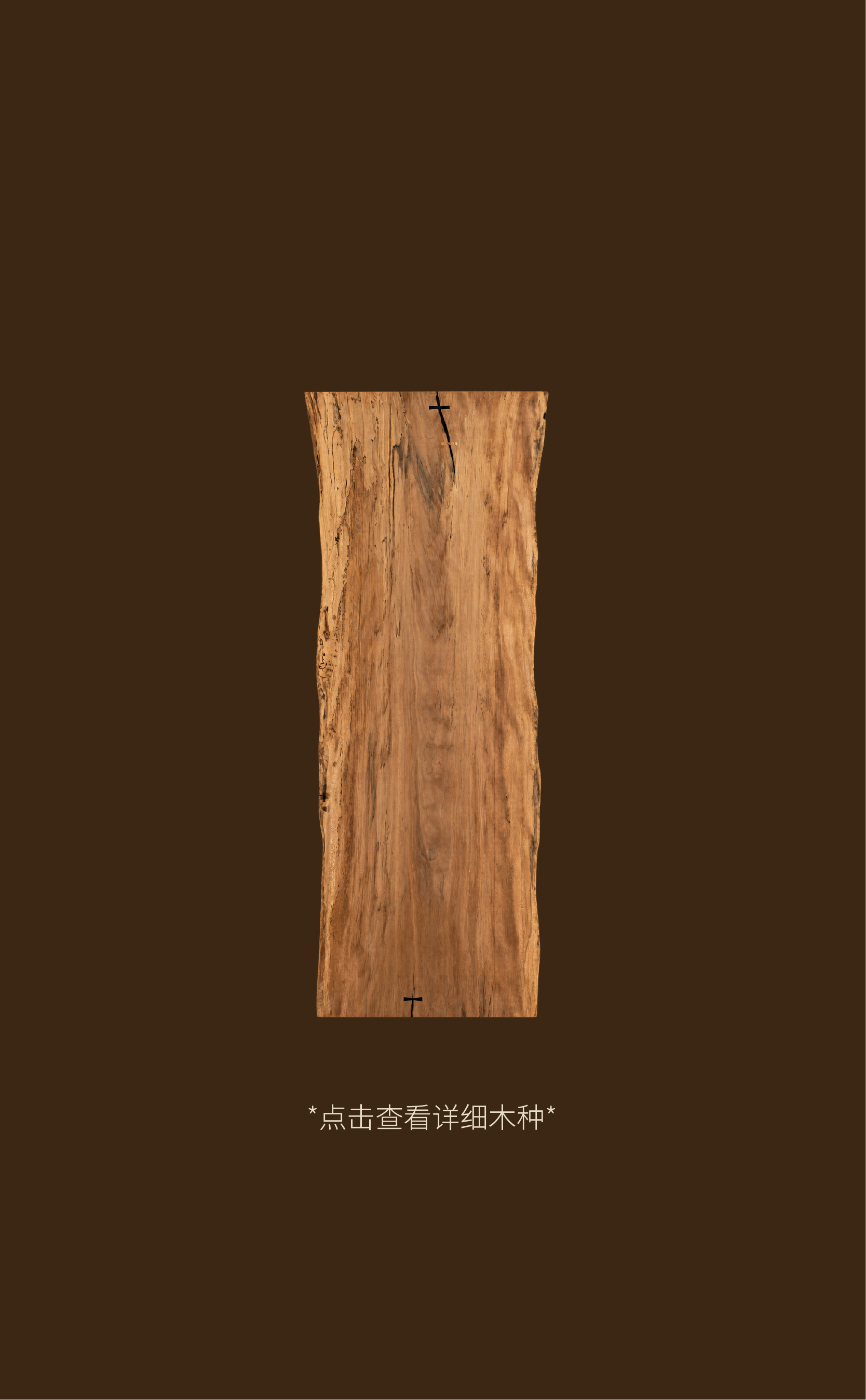
尼斯木的色泽介于浅褐与灰金之间,纹理细密,深浅变化如同薄雾缓慢铺开。作为大板桌置于现代空间,它不会带来过分强烈的视觉压迫,而是以温和的体量安定空间。天然边缘保留树木原有的生长痕迹,在利落的建筑线条之间留下一点松弛。搭配素墙、浅石材与低饱和织物,空间会显得安静、温润,有细节,却不急于表达。
European lacewood ranges from pale brown to gray-gold. Its fine grain and gradual shifts of light and dark unfold like a thin mist. As a slab table in a modern interior, it does not impose strong visual pressure; instead, its gentle mass gives the room stability. The natural edge preserves traces of the tree’s original growth, leaving a note of ease among crisp architectural lines. Paired with plain walls, pale stone, and low-saturation textiles, the space feels quiet and warm, rich in detail without insisting on attention.